

The entire automotive industry is moving towards developing innovative technologies to enable better connectivity solutions, improve vehicle safety, and enhance the in-vehicle user experience. One of the key technologies, which works as a focal point of all the modern automotive systems and integrates their functions to be controlled and monitored from one central unit, is “In-Vehicle Infotainment System”. In-vehicle infotainment systems have evolved from basic audio systems to advanced, integrated solutions that now serve as the central hub for entertainment, navigation, and connectivity in modern vehicles.
A Modern Solution for Your Car
Modern in-vehicle’s infotainment systems connect with all the smart automotive technologies like ADAS systems, V2X connectivity solutions, telematics devices, smartphones, sensors etc., and integrates them with each other to provide a great driving experience. Modern in-vehicle systems truly add a luxurious touch to vehicles and offer an interactive experience to the driver. A modern vehicle infotainment system includes features such as real-time traffic updates, smartphone integration, and voice control, making it more comprehensive and user-friendly. Besides playing your favorite song tracks or watching relaxing YouTube videos, you can now also get real-time traffic updates and call/text your loved ones without doing anything. Let’s explore more in this blog.
What is In-Vehicle Infotainment?
If you’re buying a new car, you’ll likely have come across the term ‘infotainment’. In fact, many consumers now consider the vehicle infotainment system as a key factor when deciding which vehicle to buy. Infotainment combines two words – ‘information’ and ‘entertainment’. Thus, the infotainment system in a car refers to a system that delivers a combination of information and entertainment content/services. Moreover, infotainment systems are in-built car computers that combine a wide range of functions – from digital radios to in-built reversing cameras.
The IVI can be described as a combination of vehicle systems which are used to deliver entertainment and information to the driver and the passengers through audio/ video interfaces, control elements like touch screen displays, button panel, voice commands, and more.
The market analysts predict that the global automotive infotainment market will generate $20,720 million by 2030 and grow at a decent 8.32% CAGR. So, let’s learn a little about these technologically advanced systems.
How does an In-vehicle Infotainment System work?
In-vehicle infotainment works in integration with many other in-vehicle and external systems to deliver entertainment and information to the driver and passengers.
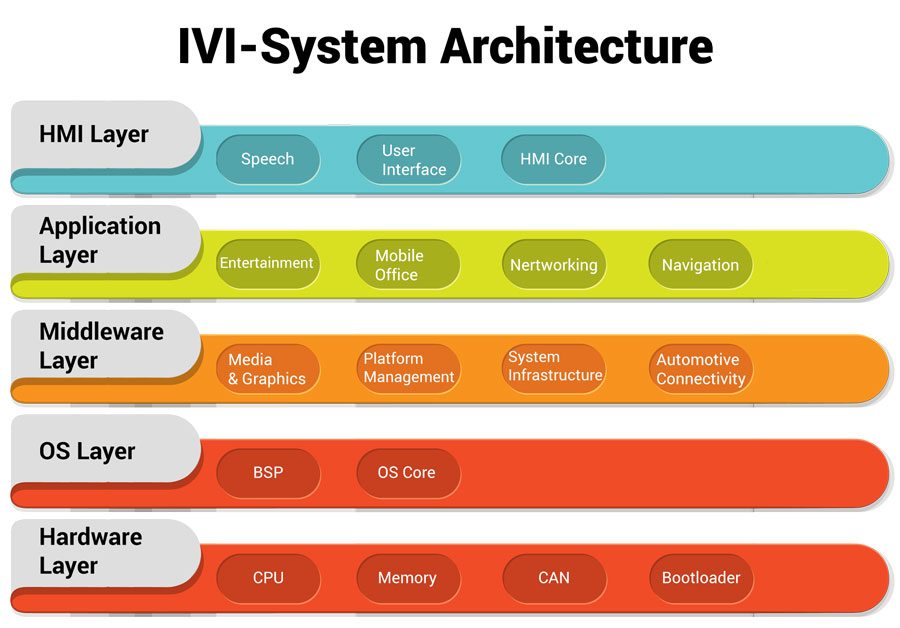
The main components of an in-vehicle infotainment system are:
Integrated Head-Unit: In-vehicle infotainment head unit is a touch-screen-based, tablet-like device, mounted on the vehicle’s dashboard. With a user-friendly HMI, the head unit acts as a perfectly connected control center for the infotainment system.
Heads-Up Display: Automotive heads-up display is an integral part of high-end infotainment systems, which displays the vehicle’s real-time information on the transparent screen integrated with the vehicle’s windshield. Heads-up display helps in reducing the driver’s distraction while driving and assists him with key details like speed, navigation maps, electronic digital cluster (information from the vehicle’s OBD port-II), climate, multimedia options, etc. The infotainment system can also provide turn-by-turn navigation instructions, giving clear turn guidance to assist drivers during their journeys.
High-end DSPs and GPUs to support multiple displays: New-age infotainment systems are powered by powerful automotive processors designed for advanced IVI systems. These automotive processors are capable of displaying content on multiple displays (e.g., head-up display or windshield, connected smartphones, head unit, and more) and deliver an enhanced in-vehicle experience to drivers and passengers.
Operating Systems: In-vehicle infotainment systems require operating systems that are capable of supporting connectivity, convenience functions, and downloadable software applications to integrate new functions in the system. Operating systems like Android, Linux, QNX, Windows are leading the infotainment segment.
CAN, LVDS and other network protocol support (as per the requirement): The electronic hardware components in infotainment systems are interconnected with certain standardized communication protocols such as CAN (Controller Area Network). CAN or any other network protocol support allows microcontrollers and devices to communicate with each other in applications without the host computer.
Connectivity Modules: Infotainment systems encompass GPS, Wi-Fi, and Bluetooth modules to provide connectivity with external networks and devices. These modules help in establishing services like navigation, internet connectivity and smartphone integration with the infotainment system.
Automotive Sensors Integration: Proximity sensors, gesture recognition sensors for detecting ambient light, camera sensors and many other in-vehicle sensors integrate with infotainment systems to provide safety-related information to the driver and passengers.
Digital Instrument Cluster: Hi-tech infotainment systems have transformed the automotive cockpit designs from static displays of the in-vehicle instruments to digital instrument clusters. Digital instrument clusters include digital displays of the traditional analog gauges in the vehicle like speedometer, RPM, odometer, etc.
Digital instrument clusters fetch information from the vehicle ECU unit via OBD port-II and display it in the display screen of the infotainment system. Being a part of the digital cockpit system, the instrument cluster is integrated with other digital interfaces of the vehicle like Head Unit, Heads-up Display (HUD) HVAC and Infotainment systems.
Features of an in-vehicle infotainment system
Some of the key features of in-vehicle infotainment system are as follows:
- Embedded Processors: The Driver Drowsiness Monitoring System uses automotive-grade image sensors that capture infrared images of the driver’s eyes. It uses patented pupil identification technology and a high-speed digital signal processor to analyze & identify if the driver is either drowsy or distracted and that could save the passengers and vehicles from many accidents.
- High Resolution Touch Screen: Touch Screens are mainly made up of LCD (Liquid Crystal Display) or TFT (Thin Film Transistors). Full-color, active-matrix LCD (AMLCD) TFTs are most suitable display technologies for complex and dynamic graphical displays. The automotive infotainment system display ranges from 2 inches to 12 inches in general, although some HD displays are 20 inches wide.
- Smartphone Pairing: Smartphones can be paired with the vehicle infotainment system using Bluetooth connectivity. Pairing the smartphone with the system enables the user to access features of the phone through the infotainment system. This feature allows users to manage incoming, outgoing, and conference calls via the infotainment system. It also allows users to view their phone contact list, call logs, mark favorite contacts, and read SMSs.
- Analog and digital tuners for multi-standard radio reception: This refers to AM and FM tuner bands for low to premium infotainment systems. AM and FM radio can be adjusted to auto or manual tuning or can be scanned for available radio stations.
- Multimedia Support: Modern infotainment systems transfer audio and video content to display screens, speakers and headphones via Bluetooth, HDMI cable, and USB. Audio and video data can be streamed from smartphones, tablets, etc. Bluetooth connectivity enables advanced features like hands-free calling, call log visibility, etc. MP3, .aac and FLAC are few of the best formats to support the audio files in the system. Images with JPEG, PNG and BMO formats and videos with .mp4 and .avi formats are more suitable for infotainment systems.
- Advanced Vehicular functions: In-vehicle infotainment systems support features like parking assistance, daytime running lights indicators, climate control in the vehicle, voice assistants to control system functionalities.
- Android Auto and Apple CarPlay Compatibility: Both of the platforms allow users to integrate their smartphones with their car’s infotainment system. While Android Auto supports apps from google (like google maps, google play music, etc.) through any of the android-based smartphone, Apple CarPlay supports iOS-based apps from the App Store.
Control Elements: All the functionalities in the latest in-vehicle infotainment systems can be accessed and controlled using touch screen panel of the head unit, button panel, steering wheel controls and voice commands.
- Support Vehicle Functions: Infotainment systems support vehicle functions like parking assistance and lighting features (DRL). Park Assistant notifies the driver in case of any obstacle in the vehicle’s path and helps to maintain a safe distance from the obstacle. Parking assistance system is equipped with a rear-view camera and video feed from the camera is displayed on the system screen only when reverse gear is engaged. If the vehicle is being driven in a dark location, DRL (Daytime running Lamps) can be switched on/ off via the infotainment system.
- Digital Instrument Cluster: The digital instrument cluster consists of digital displays of the traditional analog gauges like odometer, speedometer, RPM, and others.
- Automotive Sensors Integration: This component consists of gesture recognition sensors, proximity sensors, and camera sensors that integrate well with the infotainment system to provide safety-related information to the driver.
Please note that the use of certain vehicle infotainment system features may be subject to regulations that differ between states, especially regarding distracted driving laws and device usage restrictions.
Infotainment System Platforms
With increasing demand for highly customized in-vehicle infotainment systems, automotive solution providers are focusing on designing feature-rich, versatile, and powerful processors. For an immersive in vehicle infotainment experience, processors need to assist with high level of computing and intelligence in vehicles.
Advanced infotainment processors enable integration of multiple HD displays, execute driver assistance functions, and assist in-vehicle entertainment in a connected environment. A powerful processor enriches an infotainment system with high performance, HD color display, high resolution, and low power consumption. Some of the best in-vehicle platforms available in the market include:
- Qualcomm® Snapdragon™ 600 processor (Eragon 600 SoM)
- TI- Jacinto™ DRAx infotainment SoCs
- NXP – MX255 applications processor
- Samsung Exynos Auto V9
Types and Options for In-Vehicle Infotainment Systems
When it comes to in-vehicle infotainment systems, drivers today have a wide range of options to choose from, each designed to suit different vehicles, preferences, and budgets. The main types include factory-installed (OEM) systems, aftermarket upgrades, and portable infotainment solutions.
OEM (Original Equipment Manufacturer) Infotainment Systems are integrated by vehicle manufacturers during production. These systems are designed to work seamlessly with the car’s existing hardware and software, offering a unified interface and access to advanced features like navigation, voice recognition, rearview cameras, and smartphone mirroring. OEM systems often include large, high-resolution screens and are tightly integrated with vehicle safety and connectivity functions.
Aftermarket Infotainment Systems are designed for drivers who want to upgrade their existing vehicles with the latest technology. These systems can be purchased and installed separately, offering a wide range of features such as wireless Apple CarPlay, Android Auto, Bluetooth connectivity, and advanced navigation. Aftermarket options allow for customization, letting you choose the screen size, interface design, and specific functions that best fit your driving experience.
Portable Infotainment Devices are standalone units that can be mounted on the dashboard or windshield. These are ideal for drivers who want infotainment features without permanent installation. Portable systems typically offer navigation, music streaming, and smartphone integration, making them a flexible solution for older vehicles or rental cars.
No matter which type you choose, today’s infotainment systems are designed to enhance your journeys by providing easy access to information, entertainment, and vehicle functions—all while keeping safety and connectivity at the forefront.
Choosing the Best In-Vehicle Infotainment System
Selecting the best infotainment system for your vehicle involves considering several important factors to ensure you get the right fit for your needs and driving habits. Start by assessing your vehicle’s compatibility—some systems are designed for specific makes and models, while others offer universal solutions.
Next, think about the features that matter most to you. If you rely on navigation, look for systems with real-time traffic updates and easy-to-use maps. For seamless connectivity, prioritize options with wireless Apple CarPlay, Android Auto, and robust Bluetooth support. Voice recognition is another key feature, allowing you to control the system hands-free and stay focused on the road.
Screen size and interface design also play a big role in usability. Larger, high-resolution screens make it easier to view maps, media, and vehicle information at a glance. Consider systems with intuitive menus and customizable layouts for a more personalized experience.
Budget is another important consideration. While OEM systems offer deep integration, aftermarket and portable solutions can provide similar features at a lower cost. Compare products based on their hardware quality, software support, and available updates to find the best value.
Finally, read reviews and check for manufacturer support to ensure you’re choosing a reliable system that will enhance your driving experience for years to come.
Key Trends Shaping the Vehicle Infotainment Industry
The landscape of vehicle infotainment systems is undergoing a profound transformation, with several noteworthy trends defining the future of this technology. Firstly, the integration of artificial intelligence (AI) and voice recognition technology is revolutionizing how drivers interact with their infotainment systems. Secondly, seamless smartphone integration is a prominent trend. With the growing reliance on smartphones for navigation, communication, and entertainment, infotainment systems are becoming more closely integrated with these devices. Wireless connectivity, app mirroring, and compatibility with both Android Auto and Apple CarPlay are now standard features, ensuring that drivers have easy access to their favorite apps and content while on the road.
Another significant trend is the demand for larger, high-resolution displays. Consumers expect infotainment screens to offer crisp visuals and responsive touch interfaces akin to their smartphones and tablets. This trend has led to the emergence of expansive, high-definition displays that serve as the focal point of the vehicle’s dashboard, providing a more immersive and user-friendly experience.
Lastly, cybersecurity is gaining prominence as a critical consideration in the development of infotainment systems. With the increasing connectivity and data-sharing capabilities of these systems, manufacturers are investing heavily in robust security measures to protect user data and safeguard the vehicle from potential cyber threats. In summary, the future of vehicle infotainment systems is marked by AI-driven innovation, seamless smartphone integration, impressive display technology, and a heightened focus on cybersecurity. These trends are reshaping the driving experience, making it more enjoyable, efficient, and secure for consumers worldwide.
All the above-mentioned features of the infotainment systems offer just a glimpse of the functionalities of future in-vehicle systems. Future infotainment systems will be very user friendly and easy to customize. The concept of digital cockpits for automotive will not be restricted to just small head-units or small displays on the windscreen, but there will be large infotainment systems and connected screens built into the vehicle’s dashboard and even on the roof of the vehicle. With the evolution of innovative systems based on AI and machine learning in automotive, we will have features like AI based maps, virtual assistants to assist autonomous features in a car, and more.
eInfochips as an automotive solutions provider, offers customized in-vehicle infotainment solutions for the automotive industry. We have expertise in the development of features like HMI, navigation, digital tracking, and multimedia integration. Know more about our solutions for the automotive industry.