

Introduction
Audio wearables are devices that deliver sound directly to your ears, including true wireless earbuds, over-ear headphones, neckbands, and open-ear or bone conduction models, with prices ranging from USD 20 to 500. In that market where true wireless earbuds are one of the biggest categories the real buying decision is often whether a budget model gives you enough or a premium one is worth the extra cost.
While these devices may look similar externally, the real differences lie in how audio is processed, transmitted, and reproduced internally. Many audio wearables now also combine audio playback with health tracking functionalities. For anyone comparing price, sound quality, technology, and everyday use, those internal choices shape audio performance, noise control, power efficiency, connectivity, comfort, and even safety. Voice assistant integration for hands-free tasks also helps many users stay connected and multitask without bulky gear. In this blog, we will explore what happens between your device and your eardrums, including codecs, digital signal processing, active noise cancellation, drivers, amplification, and which type of audio wearable makes sense for different use cases.
The Landscape: Types of Audio Wearables and Wireless Earbuds
Before comparing the prices, it is essential to understand the types of audio wearables available.
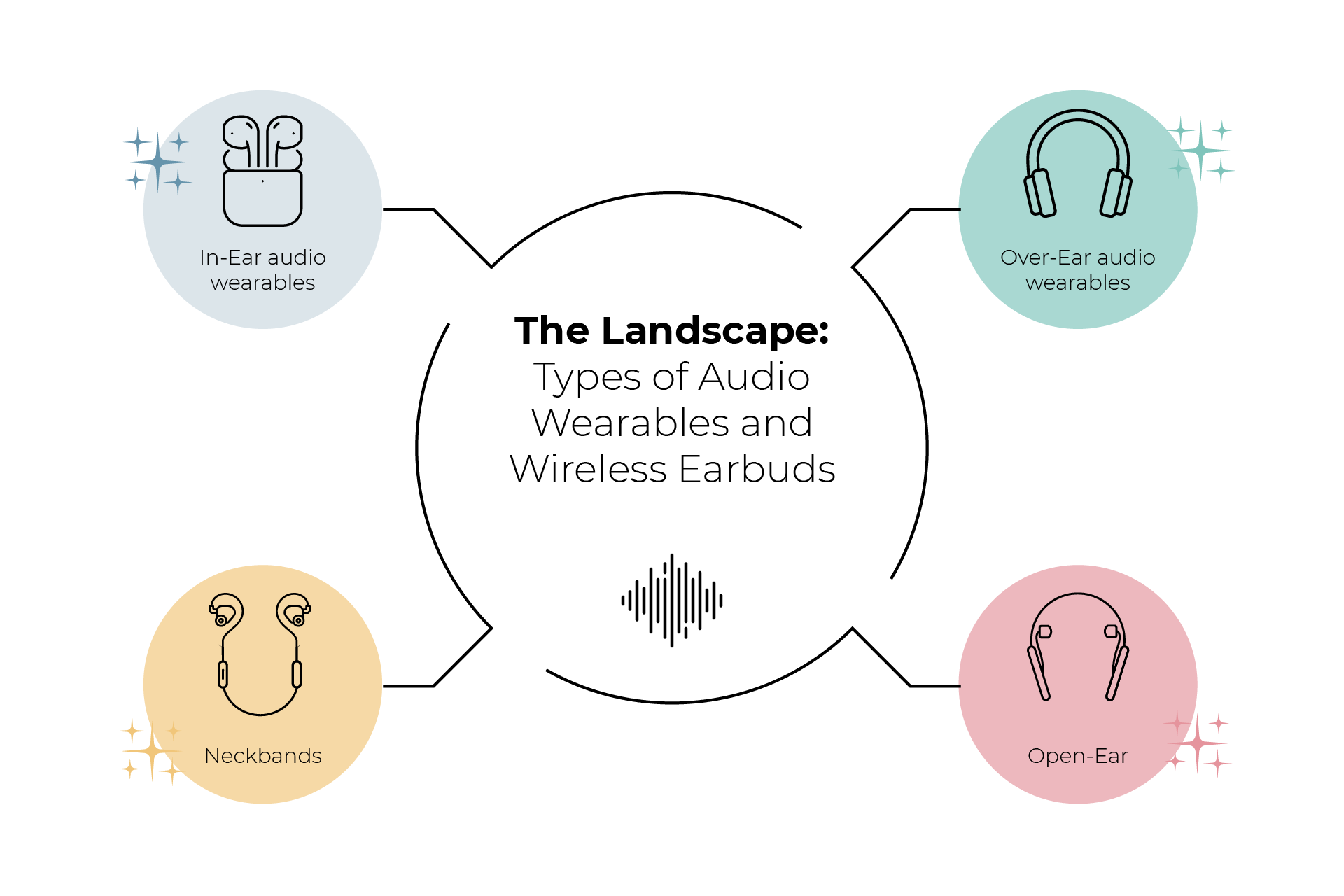
Audio wearables come in various forms, such as:
- In-Ear audio wearables, also known as earbuds or in-ear monitors (IEMs). These are small and provide good noise isolation.
- Over-Ear audio wearables, also known as headphones. These devices have speakers and are comfortable for long periods.
- Neckbands are a mix offering stability for athletes and longer battery life than earbuds.
- Open-Ear or bone conduction audio wearables sit outside the ear, making them ideal for maintaining awareness of your surroundings during outdoor runs.
Audio Quality: More Than Being Loud
- The Misconception, in Cheap Audio:
Cheap earbuds often make the bass sound louder to make it seem like they have a powerful sound. This usually means that the vocals and finer details are not clear because the strong bass overpowers them.
Audio wearables that are cheap usually have low-quality speakers that struggle to produce low-end sounds like bass. To compensate, manufacturers use digital signal processing to amplify the bass that creates a powerful feeling but leads to bloating.
When the bass is over-emphasized without precision, it physically interferes with the vibrations needed for high frequencies. This masks the clarity of vocals and intricate instruments, making the audio sound muddy. - The Premium Focus: Balance and Fidelity
Expensive audio wearables focus on balance, detail, and low total harmonic distortion (THD). High-end hardware allows you to distinguish between a violin and a cello in an orchestral piece.
Expensive drivers are designed to move with precision. It means that even at high volumes the hardware does not add unwanted noise or artifacts to the original recording.
Premium audio wearables can reproduce sounds simultaneously because their drivers can stop and start vibrating almost instantly. This is why you can distinguish the timbre of a cello versus a violin in a dense orchestral track.
Bluetooth Codecs, aptX Adaptive & Decoding
Wireless audio must be compressed to travel through the air. Bluetooth codecs are the languages used to compress and transmit audio data wirelessly from a source like a smartphone to your audio wearable device. Budget earbuds rely on codecs like low complexity subband coding (SBC) that has higher latency and lower data rates. Premium devices support codecs like advanced audio coding (AAC), aptX, and LDAC. These allow for resolution of audio transmission to preserve the nuances of the original recording, though the benefits still depend on device support and a stable Bluetooth connection.

Represented is the max transfer rate (kbps) of each respective Bluetooth codec (greater is better). Each waveform depicts a transfer rate of 100kbps.
SBC is the baseline standard for all Bluetooth audio devices. While it is universally compatible, it offers lower data rates and higher latency, often resulting in reduced sound quality.
AAC is primarily utilized by Apple devices, making it especially relevant for iPhone users. It is more efficient than SBC, though it has a transfer-rate cap of 250kbps. It provides better sound quality at similar bitrates.
The aptX family, developed by Qualcomm, is designed to offer CD-quality by reducing latency and increasing the amount of data transmitted, with standard aptX supporting 48kHz/16-bit LPCM audio data at 352kbps.
Higher-tier options include aptX HD and aptX Adaptive, with aptX HD supporting 48kHz/24-bit LPCM audio data at 576kbps.
LDAC, developed by Sony, is considered a high-resolution codec because it can transmit more data, allowing it to preserve the nuances of high-quality audio files, reaching up to 990kbps at 24-bit/96kHz for lossless-like playback.
LC3 is a newer codec that supports sample rates up to 48kHz and a 345kbps bit rate.
The Magic of DSP
Digital Signal Processing (DSP) is the brain of the earbud. Cheap earbuds use fixed tuning, which is one setting that fits all. Expensive ones use DSP algorithms that adjust the equalization (EQ) in real time based on the fit in your ear or the ambient noise levels, ensuring a refined listening experience regardless of the environment, while customizable sound settings in an app enhance the user experience and support smart features for more personalized listening experiences.
Active Noise Cancellation (ANC)
ANC headphones have two microphones that read and analyze the sounds around you and emit signals to cancel noise when sound waves collide. Budget ANCs usually only target low-frequency hums, like an airplane engine. ANC performance varies significantly by model, and EarFun Air Pro models are often noted in the budget tier for strong active noise cancelling. Premium earbuds use processors and multiple feedforward and feedback microphones to cancel out unpredictable sounds like human speech, which also helps preserve call clarity and voice pickup in noisy places.
Drivers: The Engine of Sound
The driver is the component that vibrates to create waves. Magnets create a field, and electrical signals pass through a conductor, which reacts electromagnetically with the magnet. This creates movement that makes a diaphragm vibrate, creating waves.
Various types of drivers are constructed differently. They usually feature magnets, conductors, and diaphragms. While marketing often emphasizes driver size, actual audio quality depends on materials (such as graphene, beryllium, or silk) and acoustic tuning. A single-driver design like the Technics AZ100’s 10mm driver can prioritize clarity, while the Noble FoKus Rex5 uses five drivers in each earbud. Premium brands invest heavily in engineering to ensure the driver moves precisely without unwanted resonances.
Amplitude, Amplification, and Hearing Safety
Amplitude controls loudness, but poor amplification in cheap devices causes clipping or distortion at high volumes. Premium devices maintain clean output even at peak levels.
Safety Note: Consistent exposure to sound above 85 dB can cause permanent hearing damage. Most premium devices now include safe listening features in their apps to monitor your exposure levels.
Power Efficiency and Connectivity
Premium audio wearables use optimized chipsets that manage power efficiently, allowing for smaller batteries with longer life. Battery life can also be extended by the charging case. Many true wireless earbuds deliver at least 6 hours, while good battery life with ANC on is over 10 hours. The OnePlus Buds 4, for example, provide 7 hours with ANC on. They also offer multiple-point connectivity, enabling seamless switching between a laptop and a smartphone, without the need to re-pair, and some cases add conveniences like wireless charging.
Use Cases: Choosing Your Gear
Here are some use cases to consider when choosing your wearable gear:
- Commuting or travel: prioritize ANC and battery life, and consider over-ear headphones.
- Gym or running: prioritize IPX rating, which is waterproofing and fit, and consider neckbands or wing-tip buds.
- Critical listening: prioritize wired connections or LDAC codecs. Consider open-back headphones or IEMs.
References and Further Reading
- For information on audio quality and drivers visit SoundGuys at soundguys.com.
- For information on Bluetooth codecs, visit the Bluetooth SIG Official Site and Qualcomm aptX Whitepapers.
- For information on noise cancellation technology visit Bose and Sony Research Labs for documentation on ANC algorithms.
- For information on hearing safety, visit the World Health Organization at their Make Listening Safe initiative.
Know More@ https://www.einfochips.com/services/device-engineering/embedded-systems-and-software-development/
Frequently Asked Questions- Decoding Audio Wearables Pricing
- Are open-ear headphones safer to use for outdoor running than ANC earbuds with Transparency mode?
Yes. Open ear and bone conduction models are designed to sit outside your ear canal and make sure you are fully aware of traffic, sirens and your surroundings without any attenuation. Premium ANC earbuds may feature “Transparency” or “Ambient” modes, but their operation depends on outside microphones to gather and re-broadcast the outside sounds. True open-ear designs are inherently safer for outdoor workouts, since electronic processing can be interfered with by wind noise interference or delayed directional cues. - If I buy earbuds with high-resolution support like LDAC or aptX Adaptive, will my phone sound better?
Not really. Both ends need to support high bitrate Bluetooth codecs. You must have a smartphone and your audio wearable that supports the codec (ie. LDAC or aptX). Furthermore, Apple devices natively rely on AAC and do not support LDAC or aptX natively. If your hardware connection falls back to the universal SBC codec or if the earbuds feature sub-par driver tuning, high-resolution codec branding won’t compensate for underlying hardware limitations. - Does playing music at high volumes damage my ears? Does it cause the audio to clip?
Yes. Cheap earbuds with weak amps run out of power at loud volumes, clipping the peaks of the sound wave, and creating harsh, distorted audio. Long term exposure to sound levels above 85 dB can also result in permanent hearing loss. Premium wearables are better at internally amplifying the signal to avoid harmonic clipping and often include app-based safe listening monitors to make sure your exposure stays within safe daily limits.