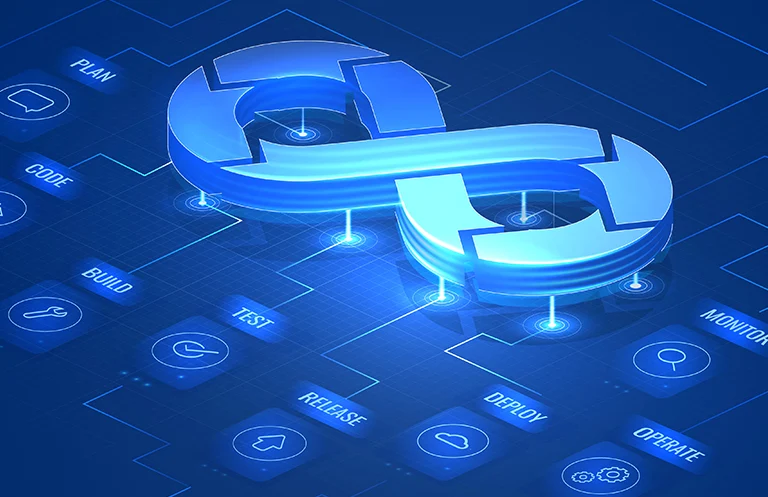

eInfochips Off-road Vehicle and Heavy Machinery Services
Executive Summary The off-road vehicle and heavy machinery industry are

Executive Summary The off-road vehicle and heavy machinery industry are

In the energy sector, the OpenADR (Open Automated Demand Response)

Back in 2011, Industry 4.0 emerged from the seamless integration

Remember when robotic cleaners just bumped into things? Those days

What is real-time video stitching? Real-time video stitching is a process

Executive Summary The client is a multinational conglomerate and global

Executive Summary The client, an American multinational corporation and technology

Introduction: A program called SWIG makes it easier to integrate

ESP32 has strong performance and built-in connection features that make

The Radio Equipment Directive (RED) 2014/53/EU sets essential requirements for

Executive Summary The client is an American audio technology company

Executive Summary eInfochips offers comprehensive IoT services that cover the

In an increasingly interconnected world, with various threats cropping up every day in the cyberspace, digital environments have never needed as much protection as today. Platform Security Architecture (PSA) is a way to improve security for the digital environment. This blog talks about what PSA is, its elements, benefits, and guidelines for implementation.

In the last three decades, we have seen countless innovations

Introduction to Battery Passport What is a Battery Passport? A

To begin, it is important to understand the concept of

The ESP32 microcontroller has revolutionized the Internet of Things (IoT)

Executive Summary The client is a UK-based water utility company

In the fast-paced world of mobile app development, speed is

Digital transformation is an important but difficult undertaking for organizations looking to remain competitive. It entails not just implementing new technologies, but also rethinking operations, encouraging collaboration, and overcoming challenges such as legacy systems, skill shortages, and security issues. Financial restrictions, regulatory compliance, and changing customer requirements all complicate the process. Success necessitates strategic planning, cultural shifts, and investments in talent and modern technology. Addressing these difficulties allows firms to realize the full potential of digital transformation and survive in a changing market.

The 12 Factor Design principles offer a set of best

CXO’s Handbook – Key Technology Trends Transforming Industrial Enterprises Discover

In the modern logistics and supply chain landscape, efficiency, and

Description In today’s interconnected world, Product Lifecycle Management (PLM) faces

In the modern web development landscape, combining front-end and back-end technologies to create a seamless, full-stack application is essential. React.js, a powerful library for building user interfaces, and Node.js, a robust server-side runtime environment, are often paired together to create dynamic and responsive web applications. In this blog, we’ll explore how to integrate React.js with Node.js, culminating in a simple example project.

In today’s rapidly evolving industrial landscape, the convergence of advanced computing capabilities and operational technologies is paving the way for unprecedented efficiencies and innovations. At the forefront of this transformation is edge intelligence, a paradigm shift that’s redefining how industries process data, make decisions, and optimize operations.

Bluetooth’s evolution culminates in version 5.2, featuring LE Audio for multi-device broadcasting, improved sound quality, and lower power consumption. Auracast™ standardizes audio broadcasts, while new applications emerge in entertainment and accessibility. This blog explores these advancements and their potential to revolutionize wireless audio connectivity for years to come.

In the world of Internet of Things (IoT), Bluetooth Low

Internet of Things (IoT) encompasses an imbricate nexus where quotidian instruments, cunningly wrought with arcane sensors and imbued with the intangible essence of software. This interconnectivity enables these objects to collect and share data, facilitating real-time monitoring, management, and improvement of various systems and processes. By leveraging IoT technology, businesses and individuals can achieve greater efficiency, automation, and enhanced decision-making capabilities, transforming the way we interact with the world around us.

As more people start using electric cars (EVs) and more places have charging stations for these cars, it’s important to keep the software in these charging stations updated. This software, called firmware, is like the brains of the charging station. Updating it regularly helps the charging station work better, be more reliable, and stay compatible with new technologies. In this article, we’ll explore the process of implementing firmware update requests in Charge Station Management Systems (CSMS) using OCPP 1.6, a standard protocol for managing electric vehicle (EV) charging infrastructure.

In the ever-evolving landscape of modern software development, achieving portability, scalability, and high availability are paramount. This blog explores how the integration of Docker and Kubernetes (K8S) can seamlessly enhance these crucial aspects, ensuring a robust and efficient infrastructure for your applications.

Designing microservices architecture with the principles of the 12 Factor App is a widely adopted approach to building scalable, maintainable, and resilient systems. The 12 Factor App methodology provides a set of best practices for developing software-as-a-service (SaaS) applications, emphasizing factors like declarative formats, isolation, and portability.

When any signal is travelling from one medium to another medium, some characteristics are changed or unwanted signals are added. This unwanted signal is known as noise and characteristics which is changed to the signal is known as distortion. Noise is harder to remove than distortion. Different types of noise and distortion are explained.

Executive Summary The client is a global leader in providing

Executive Summary The client is a global leader in smart

The Internet of Things and digital twins have a mutually beneficial relationship. IoT devices provide the real-time data that powers digital twins, while digital twins realize IoT data’s potential through monitoring, optimization, prediction, and decision support for physical assets. Together, they enable smarter asset management.

IoT gateways connect devices to the cloud, securing data flow between them. Being a single point of failure, they are prime cyberattack targets. Protecting gateways is vital since they link local networks to larger infrastructure. Recommended safeguards include strong authentication, encryption, firmware checks, network segmentation, and updates.

IoT devices have become an essential part of our daily routine, enabling smart-home solutions, industrial automation, healthcare applications, and much more. However, this widespread adoption also brings forth significant security challenges. Firmware plays a critical role in ensuring proper functionality and security. In this blog, we will delve into the importance of firmware security in IoT devices and explore best practices to protect these devices from potential cyber threats.

Extended Reality (XR), comprising Virtual Reality (VR) and Augmented Reality (AR), transforms healthcare by enhancing patient engagement, surgical planning, and medical education. The post-pandemic surge in virtual healthcare adoption amplifies the demand for XR technologies. eInfochips, a leader in AR, VR, and Mixed Reality services, breaks physical boundaries through design, AI, and XR expertise, contributing to a potential $19.6B AR/VR healthcare market by 2030.

The article stresses the critical need to secure IoT data to prevent potential risks for users and manufacturers. It underscores the importance of identification, authentication, and encryption to safeguard against threats such as invasion timing and industrial espionage. The article concludes by emphasizing the vital role of robust security measures in IoT devices for overall protection and encourages businesses to prioritize cybersecurity.

Cybersecurity defends information systems against theft and unauthorized access. It extends protection to all internet-related elements, including networks, data transmission, applications, and connected devices. The article highlights the fusion of IoT and big data, emphasizing IoT security and the application of big data analytics.

In today’s connected world, Secure Boot plays a pivotal role in fortifying IoT devices. It ensures the integrity and trustworthiness of boot-time software by validating digital signatures, guarding against malicious attacks. This essential security measure is implemented in device firmware, such as BIOS or UEFI, confirming the legitimacy of boot loaded software components. Notably, Secure Boot reduces the susceptibility to rootkits and firmware-level threats, fostering a secure foundation for IoT systems.

The article delves into the domain of IoT, exploring its profound significance and how it influences our lives. It delineates various IoT devices’ advantages and highlights security concerns in these connected systems. Providing solutions to minimize IoT device vulnerabilities, the article presents essential techniques to reduce attack surfaces and fortify security. By adopting robust strategies, users can significantly mitigate threats, safeguard their devices, and pave the way for a more secure IoT landscape.

Executive Summary eInfochips Conxero provides integrated, streamlined, and ready-to-deploy platforms

As technology advances, staying informed about emerging trends and challenges will be essential to adapt PKI solutions to future security requirements. By embracing PKI for IoT security, organizations can confidently navigate the ever-evolving IoT landscape, enabling the full potential of connected devices while safeguarding critical systems and data.

In the last blog post titled ‘Functional Building Blocks of an IoT Platform,’ we discussed both functional and non-functional requirements of an IoT solution. We covered edge requirements and cloud requirements separately. Additionally, we explored the three options available for choosing or building an IoT Platform and provided a recommendation. “Option-3: Build Customized IoT Platform using PaaS Services”.

BLE only transmits data in one direction. Let’s take a

Attacks on Bluetooth-enabled devices are malicious acts that exploit security vulnerabilities in technology to gain unauthorized access to devices, steal critical information, or disrupt device operations.

The objective of this blog series is to empower readers with the knowledge, strategies, and practical tips needed to successfully develop, deploy, and manage robust, reliable, and scalable IoT solutions. From understanding key concepts and best practices to exploring emerging technologies and overcoming common challenges, this series aims to equip readers with the expertise required to drive innovation and harness the full potential of IoT in various industries. Let us start with the first blog of the series

Case Study – Discover how eInfochips enabled a Japanese audio manufacturer to create their next-gen AV conferencing device, delivering a complete solution powered by AI/ML….

Case Study – Discover how eInfochips revolutionized home interior design for its client with Mixed Reality solutions. Visualize and personalize items in your space effortlessly…

This article explores the role of AI powered IoT security and its industry impact. It covers AI’s applications in threat detection, access control, authentication, network security, vulnerability detection, and predictive maintenance. Additionally, it addresses limitations of AI in IoT security, including data requirements, false positives/negatives, AI system vulnerabilities, and implementation costs.

In today’s fast-paced business landscape, digital transformation has become an omnipresent reality cutting across industries. Enterprises are increasingly realizing the immense potential of leveraging data, but simply capturing and storing data is not enough to fully unlock its value. The real power lies in seamlessly integrating data into every aspect from development to delivering value to your customer, creating a dynamic Intelligent Ecosystem. Forward-thinking executives are focusing on prioritizing digital technologies that power digital transformation trends to empower enterprises with the competitiveness needed in this evolving business landscape.

Case Study – Explore how eInfochips developed software that added the Distributed Core Multicast (DCM) routing protocol to the large connected OR IP system…

Executive Summary The client is a US-based technology company that

Case Study – A leading global supplier of equipment & components used in oil & gas drilling, production operations, oil field services, and supply chain integration services…

Cloud computing is essential for the effectiveness of the Internet of Things (IoT) as it provides a robust infrastructure for streamlined data processing, storage, and access. Microsoft has introduced Azure IoT as a cloud platform, which is part of its Azure cloud computing portfolio. This platform has been specifically designed for IoT scenarios to help organizations collect, store, and analyze data from IoT devices.

Executive Summary The client is the world’s leading provider of

One of the many benefits of electric vehicles includes low noise pollution, no fuel costs, and a cleaner environment. However, like any technology, electric vehicles also have their drawbacks, one of which is the potential to overload the grid, which is the network that provides electricity to consumers. To address this issue, the Open Automated Demand Response is coming into play.

The Internet of things (IoT) is a technology that empowers devices to communicate and share data. The primary goal of IoT technology is to improve business processes, consumer products and open with sensors, gateways, devices, and platforms. It has brought a momentous change in the way how businesses operate, and its impact is only going to grow significantly in the coming years as a part of the industrial revolution.

Wireless technology has come a long way in the last couple of decades. Back in the 80s & 90s pagers were the classic example of wireless tech for day-to-day communications. While pagers could support extremely limited amount of data sharing for communication through wireless RF (radio frequency) channel, everybody realized that there can also be two-way voice-based or mobility-based applications of wireless technology. Who would’ve imagined 20 years ago that anyone with authorized access, from any remote location, could monitor, take actions, or instruct devices to perform certain tasks at home or any place they want through completely wireless technologies.

Technological innovation is taking over the medical space and this innovation is taking place through the integration of automation to achieve improved cybersecurity.

Connectivity is a critical part of the IoT (Internet of Things) to function effectively or even to exist. IoT-enabled devices have become a part of our lives and routines and going far beyond. These devices can interact and communicate over the internet and be monitored and controlled remotely.

IoT security is the defense of internet-connected devices, such as sensors, cameras, and controllers from cyberattacks. These products are frequently connected to the Internet of Things (IoT), which is a network of physical items implanted with electronics, software, and sensors that enable them to gather and share data.

Several companies have begun to implement IoT technologies and weave

Transportation and logistics companies can smoothly enhance efficiency, instantaneously support

Azure-based connected health platform development including cloud IoT, AI enablement and mobile applications

Internet of Things (IoT) was thought to be a thing of the future, destined to make our lives easier and take over most of our manual tasks. However, the growth of IoT has been staggering over the past few years. It has affected our day-to-day lives and made things quicker for us. One-third of global spending around IoT is accounted for by discrete manufacturing, process manufacturing, and transportation as the three most active commercial sectors. IoT is also transforming fleet management.

With exponential growth in the number of IoT devices in

Executive Summary As businesses pivot to a digital-first economy, Cloud
Connected technologies, advances in chip design, and AI at the edge are helping the healthcare industry in innovative ways. AI-enabled and 5G-driven Internet of Medical Things Devices (IoMT) backed by Qualcomm’s small-form-factor platforms – QCS8250 and QRB5165 – can do wonders for developing future-looking healthcare applications as these platforms support multiple camera streams, 5G, WiFi6, Bluetooth 5.1, and AI at the edge with heterogeneous low-power compute.

What is Botnet? The word “Botnet” is jargon used in

Sources of Volatile Organic Compounds (VOCs) Some common sources of

Hackers can create catastrophic situations if they get access to

Executive Summary The client is a US based leading company

This is the fourth blog in a series of ‘Digital
AI-enabled Internet of Autonomous Things (IoAT) devices including autonomous machines, vehicles, robots, and drones can think for themselves using capabilities like machine learning, computer vision, and self-governing navigation – thanks to hardware innovations. Let’s see how power-packed robotics-specific Qualcomm® QRB5165, eInfochips Edge Labs, and Aikri portfolio can be game-changers for developing these Autonomous Things (AuT) devices for a wide array of applications across industries – from manufacturing and logistics to retail and healthcare.

Case Study – eInfochips developed Web and Mobile app for virtual space booking, providing a 3D immersive experience to visualize…

Brochure – eInfochips, with its strong partnership with Microsoft Azure on IoT solutions and services, has launched EIC PROPELTM to enable customers to de-risk…

Today, traditional businesses are getting prepared for disruption from digital natives. According to IDC, global spending on digital transformation will be $2 trillion by 2022. As digital and physical worlds are merging at an alarming and accelerated pace, businesses need to start thinking about how to maximize the opportunities by leveraging new age digital technologies.

Understanding and addressing the challenges Reasons for low technology adoption

Brochure – With 25 years’ experience of enabling 500+ products across mission-critical and consumer-grade applications, eInfochips, an Arrow company, is well poised to make products that are…

Effective water management, conservation, and equitable access to water are key to sustainable development across the globe. Governments and regulatory authorities worldwide have defined action plans for achieving UN’s collective sustainable development goal 6 (SDG6) – ensuring water and sanitation for all. It covers systems for smart metering, equipment monitoring for distribution, purification, heating, and cooling. Digital technologies like IoT, AI/ML, Cloud, and mobility are seen as key enablers in designing and monitoring the systems for achieving this goal.

Every connected device works on a defined protocol such as

Why is RPM needed? The pandemic has restricted people’s movement,

In the last few years, the embedded systems we use

The Internet of Things or IoT is a buzzword that

Case Study – Microsoft’s Azure Sphere integrated security solution offering that enables seamless integration with Azure cloud for data analysis and actionable insights…

Case Study – Modernizing the legacy architecture by migrating to a highly scalable, fault-tolerant microservices architecture on AWS leveraging container technologies for enabling faster delivery…

The rise in Digital Transformation technologies have spurred Digital Twin model development – simulating fusion of transformational technologies such as IoT, Cloud, AI and XR. Many industry verticals including industrial, aerospace, and automotive have been implementing Digital Twin to improve and optimise their operations. By looking at exceptional benefits it offers to transform patient care, Healthcare industry has also seen great potential in it.

Imagine on a fine day, you enter in your car

According to the latest market research report of MarketsandMarkets the industrial

IoT has changed the way we perceive and operate the

Brochure – Every device and application developed today is designed to interact with other applications and devices…

Blueprint: Internet of Things is fueling the next industrial revolution of intelligent connectivity. IoT has become an integral part of all businesses, which are looking to embrace digital transformation….

Internet of Things is fueling the next industrial revolution of intelligent connectivity. IoT has become an integral part of all businesses, which are looking to embrace digital transformation. IoT is quickly emerging as a leading source of data the real-time insights for critical asset management, healthcare management, system performance tracking, and many more. However, most businesses are still struggling to utilize the power IoT to its fullest. As billions of devices are getting connected to the internet with every new IoT applications, generating massive streams of data, CIOs and decision makers must start thinking about maximizing their ROI by implementing various IoT solutions.

As per Market & Market reports, the global Internet of

Manufacturing industry has always been asset-centric. This is true for

For two years in a row, Gartner has pinpointed the

Why do we need smart cities? The purpose of transforming

Over 15 million users of T-Mobile were shocked and threatened

In every warehouse, supply chain management is key for planning

Business among all industry domains are adopting IoT solutions. According

We all know that we are living in the era of digital transformation. To cope with how people communicate with the products and how products communicate with other products, businesses need to up their digital game. A digital enablement plan becomes necessary for a business to jump on the digital transformation wave and achieve business growth.

If a device is connected to the Internet, chances are

Case study – OT-IT integration and cloud analytics to improve route visibility, equipment efficiencies, and minimizing fuel theft of a shipping fleet operator…

In today’s economy, most software businesses are looking to provide

Edge is delivering three essential capabilities – local data processing,
Fortune Business Insight predicts that the global Internet of Things

Introduction Today, traditional businesses are getting prepared for disruption from

What is connected logistics? Connected Logistics technology is a system

With intense competition and awareness, healthcare providers are focusing on

IoT has turned our world into a cluster of billions

The automotive industry is rapidly evolving, and IoT (Internet of

The way technology is used has always remained different for the food and beverage industry. While most of the industry sectors have started adopting the Internet of Things and other emerging technologies, the Food & Beverage sector has remained unaffected or has at least been slower in adopting the latest technologies. Let’s find out how the F&B sector can make the most out of the Internet of Things.

There is no doubt the fleet management industry can benefit from the adopting digital technologies. Why, then, do we not see a very high level of adoption? Concerns around ROI, security, technology acceptance within the organization and the complexity of the technology involved are the biggest barriers.

The term ‘IoT’ represents a technology where connected devices are

Heavy equipment is mainly used extensively in industries such as

White Paper – Quality assurance (QA) can play a vital role in overcoming digital transformation challenges…

About a couple of centuries ago, the Industrial Revolution changed

IT-OT convergence can deliver a number of benefits, including improved customer experience and better operational efficiency. In order to achieve this convergence, a number of challenges need to be overcome. Most of these challenges arise from the siloed functioning of traditional IT and OT departments in most industries. Organizations that are able to bridge the gap between the two will have a major competitive advantage.

Today, we live amidst devices that run on smart software

“Out of 1000 business decision makers, 98% agree that digital,

As edge devices gain greater computing power and machine learning becomes more mature, it becomes possible to infuse intelligence into edge devices. This article explores the impact that AI and ML will have on edge computing.

As businesses are adopting IoT, it is time for the embedded market to upgrade and make more IoT-friendly embedded systems. This blog will discuss how real-time operating system is capable of changing embedded systems in order to accommodate the changes in the IoT landscape.

1. What is digital transformation? Digital transformation can be described

Digital transformation is on the rise as businesses are competing

The telecommunication industry is at the forefront of the digital

With the internet and wireless technology reaching to billions now,

With the advent of the internet of things or IoT,

While the earlier decade was all about data communication and

With the increasing applications and systems moving to the cloud, the amount of load and data generated on the cloud is also increasing, making it difficult to perform analytics and extract important insights. To deal with this challenge, enterprises are leveraging edge analytics. Read on to find how edge analytics accelerates cloud analytics.

Today, the most complex problem for organizations is to pursue

Today, oil and gas industry is rapidly adopting innovative and smart technologies like cloud and the internet of things. Deployment of these connected technologies results in greater safety of workers as well as resources, real-time monitoring of equipment, better field communication, reduced downtime, and automation of mining operations. Learn more about how implementing IoT and connected cloud technologies can transform the oil and gas industry.

IoT and connected devices use different communication and messaging protocols at different layers. While developing an IoT device, the selection of the protocol largely depends on the type, layer and function to be performed by the device. MQTT, XMPP, DDS, AMQP, and CoAP are a few of the widely used communication protocols for the IoT application layer. Let us understand each of them in detail.

Providing an enhanced in-store experience with personalized recommendations, offers, and product support — as per age, gender, location, and behavior of customers is the next big thing in retail. Artificial intelligence is the most sought-after technology among retailers to achieve this objective. Here are five ways to deploy artificial intelligence solutions in retail for enhancing in-store customer experience.

This paper explores a few of the important third-party systems that can be integrated with video management software used in different industries to improve business operations and ROI…

Gartner says that by 2020, more than half of major

Many industries are going through a revolution with advancements in IoT;connected devices and healthcare is one of them. IoT opened up a door for remote medical care which facilitates the care delivery outside the traditional setup. In this article, we will touch upon how IoT-enabled medical devices are changing remote care and how it works along with its components.

Companies today, are increasingly moving their IoT systems to cloud to enhance the scalability and user-experience of the devices. Migration of IoT systems to cloud not only includes infrastructure migration, but also involves migration of operations to the cloud — termed as CloudOps. Let us understand in detail about CloudOps in IoT.

Predictive analytics and fault diagnostics of high-value engineering systems…

With the exponential increase in the IoT and connected devices, it is difficult to ensure scalability, security, and robustness of these devices. Cloud computing platforms like AWS help enterprises accelerate the development to deployment cycles of IoT devices, enhancing the robustness and scalability of the entire IoT solution. Keep reading to find out how.

Migrated a smart agri-IoT platform to AWS utilizing Cloud native design….

This paper explores how to work towards comprehensive security in Internet of Things applications….

Due to large-scale IoT systems and connected devices, enterprises face difficulty in developing, deploying, integrating and scaling the applications. Microservices and containerization enable efficient and faster development by breaking down IoT functionalities into small, modular and independent units that work in isolation without affecting the overall performance of the IoT ecosystem. Read on to find out how.

Internet of Things (IoT) generate a huge amount of data or big data. Managing the flow and storage of this data is a tedious task for enterprises. Cloud computing with its different models and implementation platforms help companies to manage and analyze this data, enhancing the overall efficiency and working of IoT system. DLM, AEP, and Digital Twins are some of the solutions better leveraged through cloud platforms like Amazon Web Services (AWS) and Microsoft Azure. Read on to learn more.

Continuous testing and monitoring of an AWS infrastructure for an IoT Smart City Solution…

End-to-end development of an IoT home security solution on a Microservices-based architecture with DevOps implementation…
In 1965, Gordon Moore, a co-founder of Intel, observed that

In today’s time, leveraging IoT solutions for smart cities and connected technology helps promote economic development, improve infrastructure & environment, enhance transportation systems and optimize costs of managing public assets. Read on to learn about the various components of Smart City and their impact in the IoT era.
Over the recent years, there has been a radical shift in the overall IoT ecosystem—the hardware and software integrations, the system deployments as well as usage. This calls for utilizing custom chip design and development approach. Let us understand the importance of utilizing custom ASICs in the IoT era.

Connected devices are becoming essential components for enterprises as they

Today, retail stores are constantly focusing on leveraging the emerging

In this era of high-speed computing and communication, the manufacturing

End-to-end IoT test automation of a home security system, containing 80+ devices and peripherals using DevOps tools…

In IoT ecosystem, gateway security is of prime importance since it is the key piece of data collection in the connected system. But how to ensure security of IoT gateways? Read this blog to find different ways to secure IoT gateways.

The Internet of Things may have a significant economic potential,

Find out how IOT and Mobility address common concerns of

IoT gateways may be the unsung heroes of the Internet
Eragon for Edge Computing and Processing: The heart of next-gen

IoT Gateways are becoming an essential part in various smart grids solutions, across Industrial, Residential, and Transmission & Distribution projects. Gateways help in addressing energy conservation at both the consumer and transmission level. Here, we will discuss some of the unique features of IoT gateways like clustering, interoperability, security, and others

Connected devices or IoT seem to have become the de

The future growth of IoT depends on how securely we

In today’s IoT era, enterprises across industries are facing the

IoT device lifecycle management is an emerging trend in IoT
The Internet of Things has become a mainstream technology strategy

IoT Gateway helps in managing and controlling the complex and disparate IoT environment…

Applications of IoT in Fleet Management Fleet companies operate with

7 reasons why IoT Device Lifecycle Management Platform is Essential for Connected Device Development

Universal Verification Methodology-Mixed Signal Verification Frame is a reusable verification solution…

Securely cloud-connect and remotely manage your devices With continued growth

DevOps philosophy emphasizes on collaboration between development and operations team to…
Bringing Internet of Things to Life with ARM Architecture [Infographic]

Harnessing the power of IoT for Energy Efficiency | Sensors & Data Harvesting

DevOps in IT versus DevOps in Internet-of-Things

IoT in Aviation with System Wide Information Management

The Future of Healthcare: IoT, Telemedicine, Robots & Artificial Intelligence

Livin’ on the “Edge” – On-board Analytics in Industrial IoT

IoT “Xcelerator†– High performance edge and gateway computing for IoT products

Industrial Internet of Things (IoT) : Embracing a Revolution with IIoT!

Go Wireless, Go Cloud for Charging your Electronic Devices

Reduce Electricity Bills with Smart Meters on Cloud

Universal Gateway – Solution to enable IoT in Building Automation

This post was first featured in Snapdragon Blog authored by Danielle Jackson.

Connected Devices for Changing Medical Devices Landscape

Wireless Interconnect Technologies for Retail Store Digitization

Why Enterprises Have to Hack Big Data before spending huge on Internet of Things

The Internet of Things is the network of physical objects that contain embedded technology to communicate…

Wearable Devices need not be handicapped by OS fragmentation
Schedule a 30-minute consultation with our Automotive Solution Experts
Schedule a 30-minute consultation with our Battery Management Solutions Expert
Schedule a 30-minute consultation with our Industrial & Energy Solutions Experts
Schedule a 30-minute consultation with our experts