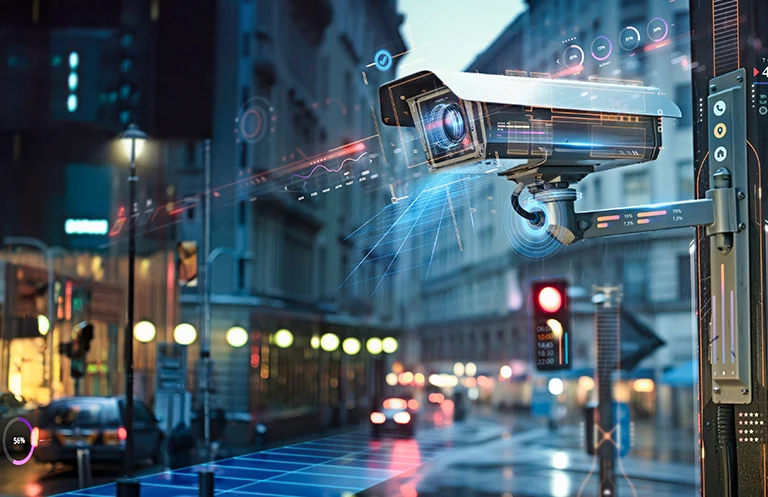

In 2026, cameras are rapidly evolving from passive recording devices into intelligent front-end perception systems. In industries like security surveillance, automotive, smart spaces, medical devices, and industrial automation, cameras are no longer optional or secondary add ons; but they are becoming the core of product differentiation.
High-performance camera systems are now impacting everything from Advanced Driver-assistance Systems (ADAS) safety and robotics navigation to smart retail automation, medical diagnostics, and AI for business security. The shift is changing the way products are built, how they are sold, and what makes them better than others in the market.
In this blog, we discuss how high-performance cameras are transforming industries, what design elements are important in building breakthrough camera systems, and why perception has become a competitive battlefield.
The 2026 Market Momentum: Imaging & Embedded Vision Are Challenging
The global demand for advanced imaging is accelerating. CMOS (Complementary Metal-Oxide Semiconductor) image sensor revenues stand around $23bn and are expected to exceed $30bn by 2030, with some projections reaching $45–50bn*, fueled by:
- Edge AI vision workloads
- Embedded vision platforms
- Autonomous machines
- Security and surveillance modernization
- Automotive ADAS and EV camera systems
Automotive platforms now average eight cameras per vehicle, trending toward 12+ as autonomy requirements scale. Security, retail, and industrial automation are adopting multi-camera vision systems at record speed. The adoption of advanced camera systems such as the Nikon Z system and the broader Z system is also driving innovation, with upcoming releases and an expanding lens lineup that is compact, affordable, and feature-rich, especially for wildlife and action photography. APS-C sensors are often considered a sweet spot for many users, offering a capable, lighter, and more affordable alternative for professional results, particularly in run-and-gun photography. For outdoor and wildlife photographers, durability and weather sealing—such as a robust magnesium alloy frame—are critical features. The Panasonic S5II stands out as a strong hybrid camera for both video and photography, while the Nikon Z8 is widely regarded as the best overall camera in 2026, excelling in image quality, autofocus, and versatility.
Types of Camera Systems
Camera systems come in a variety of forms, each tailored to different photography and videography needs. The most common types include mirrorless cameras, DSLRs, point-and-shoot models, and action cameras. Mirrorless cameras have surged in popularity thanks to their compact design, fast and accurate autofocus performance, and advanced video features that appeal to both photographers and content creators. Their lightweight bodies and electronic viewfinders make them a favorite for travel and street photography, while their high-quality sensors deliver impressive image quality.
DSLR cameras remain a staple for many professionals and enthusiasts who prioritize robust build quality, optical viewfinders, and a vast selection of lenses. These systems often excel in delivering superior image quality and manual control, making them ideal for genres like landscape and wildlife photography where critical focus and dynamic range are essential.
Point-and-shoot cameras offer a compact and user-friendly solution for casual photographers. Their all-in-one design makes them easy to carry and operate, providing good image quality and basic video features without the complexity of interchangeable lenses. Action cameras, on the other hand, are engineered for durability and versatility, capturing high-quality video footage in challenging environments perfect for sports, adventure, and on-the-go shooting.
When selecting the best camera system for your needs, consider factors such as image quality, autofocus performance, video features, and portability. Each system offers a unique blend of features, so understanding your photography style and requirements will help you choose the right camera to elevate your creative work.
Why Camera Performance and Image Quality Are an Engineering Challenge and Not a Sensor Choice
For years, differentiation revolved around sensor specs. But two products built on the same sensor can perform differently in the field results because their performance depends on:
- Optics engineering & stray-light control
- ISP tuning & HDR pipeline optimization (including color science, which shapes how colors are rendered and perceived in the final image)
- Thermal & mechanical stability
- AI/ML integration at the edge
- Firmware maturity & temporal synchronization
- Environmental and real-world validation
Lenses play a significant role in determining image quality; a superior lens on a mid-tier body yields better results than a mediocre lens on a flagship body.
The image sensor is a light-sensitive chip (typically CMOS or CCD) that converts light into electrical signals to form a digital image.
Thanks to 2026 innovations—BSI CMOS advancements, global shutter improvements, HDR fusion, and RGB-IR/RGBW sensor variants—imaging quality has emerged as a clear, measurable, and market-visible differentiator across every industry leveraging AI or edge vision. In body image stabilization has become essential for shooting stability, especially for video and low-light conditions, while higher resolution sensors (45MP+) are optimal for portraits and studio work, offering wide dynamic range and excellent color science.
The Shift: From Imaging Devices to Intelligent Perception Systems
Modern cameras no longer just capture. They interpret, understand, and act.
Next-generation intelligent cameras include:
- Multi-camera configurations
- Low-latency Image Signal Processor pipelines
- Synchronized multi-sensor acquisition
- On-device edge AI inference
- Real-time video analytics and CV models
- Advanced subject tracking with AI-driven eye/face detection (eye AF) for accurate tracking of humans, animals, and vehicles
These features make it possible for reliable operations in places with high movement, low light, vibration, glare, or change. Fast autofocus and sophisticated eye-tracking systems are especially prioritized for sports, events, and wildlife photography, where tracking moving subjects and performing in low-light conditions are critical. This is important for robotics, smart cities, electric vehicles, and industrial production lines.
Multi-camera architectures deliver the following:
- A larger field of view
- Correct depth estimates
- Strong object detection and tracking
- Additional functionality for essential operations
This is no longer about putting cameras together; instead, it’s about perception engineering.
The Seven Building Blocks of a High-Performance Camera System: Focusing on Dynamic Range

1. Optical Design
Lens selection, aperture, distortion control, flare management, and stray-light handling define the core signal quality your AI relies on. The lens consists of a series of glass elements that collect and focus incoming light onto the image sensor. The aperture is an adjustable opening inside the lens that controls the amount of light entering the camera, measured in f-stops.
2. Sensor Selection & Tuning
Dynamic range, quantum efficiency, pixel size, shutter type, HDR modes, and filter patterns aligned with the application’s visual challenges. Consideration of base ISO—the optimal sensitivity setting for highest image quality and dynamic range—is crucial, especially for landscape and studio applications. Rolling shutter effects must also be evaluated, as advanced sensors can minimize or eliminate rolling shutter artifacts for improved performance in high-speed and action photography. Full-frame cameras, with their larger sensors, offer the best low-light performance, wider dynamic range, and superior depth-of-field control, making them ideal for professional and enthusiast photographers. Shutter speeds are also critical, as they influence both creative effects and practical scenarios such as motion capture and image stabilization.
3. ISP & Real-Time Pipeline Architecture
Noise reduction, tone mapping, color accuracy, demosaicing quality, HDR fusion, and low-latency processing using SoCs (System on a Chip)/FPGAs (Field‑Programmable Gate Array) to achieve deterministic, real-time imaging. Frame rate is a key parameter, enabling high-speed capture and smooth video output for demanding applications.
4. Compute & AI/ML Integration
Choosing between edge AI, host compute, or hybrid architectures with optimized pre/post-processing pipelines greatly impacts accuracy and latency.
5. Connectivity & Synchronization
The right interfaces (MIPI, FPD-Link, GMSL, USB, Ethernet) and precise time-sync (PTP, trigger) ensure reliable multi-camera fusion for robotics, SLAM, ADAS, and industrial vision.
6. Mechanical & Thermal Design
A rigid, thermally optimized enclosure ensures stable focus, reduced noise, and consistent imaging across operating temperatures and vibration levels. The placement and functionality of the shutter button are important for user experience and ease of access. The shutter itself is a mechanical or electronic curtain that determines the duration of time light that hits the sensor. Weight and balance can significantly affect usability; some photographers prefer the heft of larger DSLRs for added stability when using large lenses.
7. Firmware, Drivers & Field Validation
Calibration, tuning, boot sequencing, factory provisioning, and real-world scenario testing define production-grade reliability. Dual memory card slots are essential for professional work, providing an instant backup of every shot to ensure data security. In the discussion of viewfinders, note that electronic viewfinders (EVF) on mirrorless cameras provide exposure previews, while optical viewfinders (OVF) on DSLRs do not exhibit lag.
Single vs Multi-Camera Architectures: Making the Right Call
Single-Camera Systems
Best for:
- Fixed-angle industrial inspection
- Barcode scanning
- Controlled lighting environments
- Low-latency edge AI
Single-camera systems are ideal for straightforward tasks, but using two cameras can provide advantages for applications like depth estimation or capturing different perspectives, especially in fields such as landscape or sports photography where sensor resolution and autofocus performance may differ between models. For most photographers, it makes more sense to choose a camera system that fits their style, budget, and typical use case, rather than always opting for the most advanced or flagship models. Other cameras may be better suited for specific applications; for example, a fast burst rate of 20–30+ fps is essential for sports and wildlife photography.
Mirrorless camera systems can often use older DSLR lenses via adapters, providing flexibility during transitions, and allowing users to leverage existing lens collections.
Multi-Camera Systems
Power capabilities like:
- Depth estimation & stereo vision
- Obstacle detection and tracking
- 360° coverage for robotics or smart retail
- Autonomous navigation
- Traffic monitoring and analytics
The trade-offs include computing load, bandwidth, cost, and precise calibration needs.
Inside the Pipeline: ISP + FPGA/SoC = Intelligent Real-Time Vision
Modern vision systems use programmable ISP pipelines on FPGAs and SoCs to deliver:
- Multi-gigapixel/sec throughput
- Deterministic, low-latency performance
- Multi-sensor HDR fusion
- AI/ML model integration
- Geometric distortion correction
The introduction of phase detection autofocus, as seen in cameras like the Panasonic S5II, marks a major technological advancement by providing faster and more reliable focusing compared to previous contrast-detect systems. Higher resolution sensors not only improve image quality for professional applications such as landscape and wildlife photography, but also enable advanced analytics, including AI-driven facial recognition, motion detection, and license plate recognition (LPR).
Why it matters: Stable upstream image statistics result in higher AI accuracy, lower false alarms, and certifiable performance, especially in regulated sectors like automotive and medical devices.
Field-Proven Patterns Across Industries
Industrial AI & Machine Vision
Using RGB/IR/multispectral imaging for AI-driven visual inspection increases the accuracy of finding defects from 60% to 90% or more, significantly reducing the need for human review.
Robotics & Autonomous Retail
Multi-camera arrays work in unison to capture feeds on edge platforms like NVIDIA Jetson, TI TDA, and NXP. These platforms enable SLAM, object tracking, and autonomous decision-making.
Cross-Industry Lessons
Teams that integrate cameras as core components of the system rather than as separate modules avoid common field issues such as motion blur, thermal drift, low-light collapse, and glare-related failures. Professionals have reported using certain camera models, such as the Sony A7IV, for over a year, emphasizing their reliability and consistent performance in demanding environments. For landscape photography, cameras with high resolution and dynamic range are especially beneficial, capturing wide, detailed scenes with maximum image quality. Medium format cameras are ideal for studio, landscape, or high-end editorial work where extreme resolution (up to 100MP) and color depth are crucial.
Camera Accessories and Support
The right camera accessories and support systems can elevate your photography experience and ensure you get the most out of your investment. Dual card slots, for example, offer a huge benefit by providing redundancy and ample storage space, which is especially valuable during important shoots or when capturing high-resolution images and video footage. Tilt screens, such as those found on the Fuji X-T5, enable waist-level and portrait shooting, improving ergonomics and allowing for more creative angles. For security cameras, professional installation is often recommended, particularly for larger properties where optimal placement and reliable connectivity are critical for comprehensive coverage and security.
Battery life is another key consideration, as longer-lasting batteries and the availability of spares can make a significant difference during extended shooting sessions or when monitoring remote locations. The photography industry is constantly introducing modern features in flagship cameras, such as improved autofocus systems, higher video quality, and innovative stacked sensor designs, all of which contribute to better performance and user experience.
Staying informed about the latest advancements and ensuring your next camera is compatible with essential accessories like weather-sealed lenses, external flashes, or wireless connectivity modules can help you capture the best images and videos in any situation. For security camera systems, Wi-Fi is crucial for wireless connectivity, enabling remote monitoring and flexible installation without cables. Wireless security cameras connect over Wi-Fi, providing more flexible installation and placement options, but typically record motion-based events rather than continuous footage. Wired security cameras connect directly to a security recorder (NVR or DVR) using Ethernet or coaxial cables, allowing for continuous 24/7 recording without relying on Wi-Fi. Wired security cameras do not require an internet connection to function, as they store footage locally, while wireless cameras typically need internet access for remote viewing and notifications. Motion alerts are an important feature for real-time security updates and remote monitoring via mobile devices, allowing users to access live feeds on smartphones or PCs. Whether you’re a professional photographer, a security specialist, or an enthusiast, investing in the right combination of camera and accessories is key to achieving outstanding results and keeping pace with the rapidly evolving world of imaging technology.
A Practical Roadmap to Build Differentiated Camera Systems
- Start with application KPIs, not sensor specs.
- Co-design sensor, optics, and lighting early.
- Choose compute systems with deterministic ISP behavior.
- Architect multi-camera systems with strict sync budgets, and plan cabling and connectivity options such as Ethernet, coaxial cables, or wireless routers to ensure reliable data transmission between the camera and the recorder.
- Engineer thermal and mechanical robustness for real-world use, and consider professional installation for larger properties to guarantee optimal placement and connectivity, especially for security camera systems.
- Tune the end-to-end pipeline ISP + AI using representative datasets. For storage, use hard drives or cloud services to archive recorded footage, and leverage H.265 compression for efficient high-definition storage of 4K or high-resolution video.
- Continuous instrumentation and iterative improvement based on real-world field telemetry, and follow up with Mark II or updated models as they become available to take advantage of technological improvements and feature enhancements.
How Industry Leaders Are Solving These Challenges
Forward-thinking businesses are teaming up with specialized engineering service providers who can look at the whole picture instead of just one part of the engineering process.
This approach ensures:
- Faster time-to-market
- Reduced R&D cost
- Access to IPs, accelerators, and ready algorithms
- Domain-specific best practices
- Scalable and resilient product architecture, enabling high-performance solutions without the need for expensive cameras.
Where eInfochips Fits In
As organizations compete on edge AI vision, computer vision engineering, and camera-based product differentiation, eInfochips (an Arrow Electronics – Fortune 133 company) supports global OEMs with expertise across:
- Camera & product development (360°/4K/IP cameras, NVRs, access control, driver monitoring)
- Hardware/Firmware (custom SoCs/SOMs, sensor/optics selection, connectivity, mechanical/thermal design; a professional camera should have dual control wheels for independent adjustment of aperture and shutter speed)
- Software & multimedia (image tuning, stitching, AV pipelines, cyber security)
- AI/ML video analytics (edge/cloud CV, LPR/ANPR, traffic & parking analytics)
- IPs & accelerators (Reusable Camera Framework, 22+ CV algorithms)
- Testing & certification (ONVIF, EMI/EMC, FCC/UL, EDVT, reliability)
- Partnerships (Qualcomm, NVIDIA, NXP, TI, AWS, Azure, Sony, OmniVision, onsemi)
Conclusion
In 2026, intelligence is the new product differentiator; the shape of a product doesn’t matter. What matters is how smart it is with perception being the first step to intelligence.
Cameras have become the most important tools for making things easier, safer, and personal and for making decisions in real time.
Companies that make smart cameras well will lead the way in product development for the next ten years. We at eInfochips would be happy to share examples and concepts if you want to speed up your camera roadmap, improve AI vision capabilities, or build next-generation perception systems.
If this article helped you understand the current state of camera systems or if you have questions about choosing the best camera for your needs, please let us know in the comments or reach out for recommendations.
Frequently Asked Questions
1. What makes camera systems a key differentiator in modern products?
Camera systems have evolved beyond simple image capture into intelligent perception engines. They combine advanced optics, sensors, ISP pipelines, and edge AI to interpret visual data in real time. This enables applications like ADAS safety, industrial inspection, and smart retail automation. Products that integrate high-performance camera systems can deliver better accuracy, automation, and decision-making. As a result, differentiation is no longer about hardware alone but about how effectively a system perceives and responds to real-world environments.
2. How do multi-camera systems improve AI and computer vision performance?
Multi-camera systems enhance perception by providing wider field of view, depth estimation, and redundancy. By synchronizing data from multiple sensors, these systems improve object detection, tracking, and spatial awareness. This is critical in applications such as robotics, autonomous vehicles, and smart surveillance. However, they require precise calibration, higher bandwidth, and optimized compute pipelines. When engineered correctly, multi-camera setups significantly boost AI accuracy and reliability compared to single-camera solutions.
3. Why isn’t image sensor selection alone enough to ensure camera performance?
While the image sensor is important, overall performance depends on the entire imaging pipeline. Factors such as lens quality, ISP tuning, thermal stability, AI processing, and firmware optimization play a major role in real-world results. Two systems using the same sensor can perform very differently depending on these elements. True differentiation comes from end-to-end system engineering, including calibration and validation in real-world conditions, rather than relying solely on sensor specifications.
4. What should companies consider when building high-performance camera systems?
Organizations should start by defining application-specific KPIs instead of focusing only on specs. Key considerations include co-designing optics and sensors, selecting the right compute architecture, and ensuring synchronization for multi-camera setups. Robust mechanical and thermal design is essential for consistent performance. Additionally, teams should invest in ISP tuning, AI model optimization, and field validation. Partnering with experienced engineering providers can accelerate development, reduce risks, and improve time-to-market for advanced vision-based products.