AI is in a transformation stage. The AI technology is moving from pilot programs and experimentation to enterprise-level value creation. According to Gartner, 40% of enterprise applications will include task-specific AI agents by 2026, reflecting the pace of enterprise AI adoption. Enterprises are actively prioritizing AI use cases that deliver measurable ROI through reduced operational effort, faster incident resolution, improved system uptime, and optimized infrastructure costs.
The global AI market is projected to reach $2,480 billion by 2034, growing at a compound annual growth rate (CAGR) of 26.6%, as per a report published by Fortune Business Insights. Three key trends are driving this shift beyond adoption curves. Agentic AI is moving towards systems that can perceive, decide, act, and learn without being prompted at each step, raising new requirements for governance, oversight, and integration at the system level. Physical AI is merging digital intelligence in manufacturing and robotics, making hardware-software co-design a prerequisite for product engineering. AI is being embedded in the complete product development lifecycle, shaping decisions from silicon selection to production sustenance.
Today, AI has transformed into an infrastructure discipline that requires the right data foundations, compute architecture, and operational framework before scalable deployment is possible. The silicon-to-software integration determines whether AI performs at the power, latency, and cost point that the production operations require.
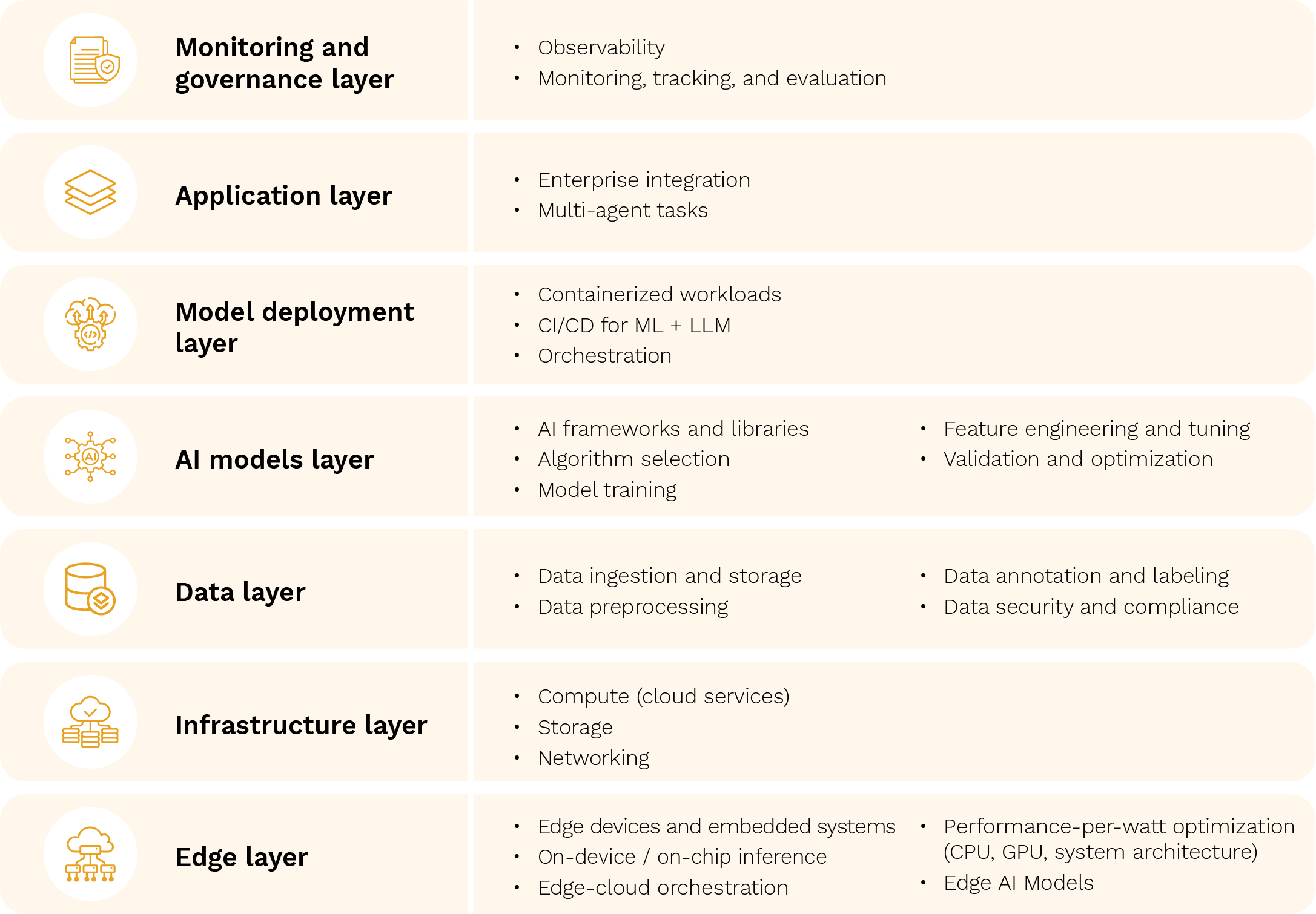
This AI transformation playbook is structured around the engineering realities that determine how successfully an AI program ships and scales. It covers six technology areas: generative AI, agentic AI, edge AI, MLOps, physical AI, and AI governance. The AI playbook also details the enterprise technology stack and challenges of enterprise AI adoption. It also includes an AI readiness assessment that helps enterprises assess their AI maturity and identify focus areas. With 750-plus products engineered and 100 million-plus deployments worldwide, eInfochips has an operational record of accomplishment to take an AI program from chip selection to production sustenance. The AI playbook also presents the NomAIzo™ stack which includes pre-built AI components, frameworks, and accelerators from eInfochips that compress engineering timelines and reduce delivery cost. This AI adoption playbook is a resource for business and technology leaders accountable for making AI decisions for their enterprises.

Schedule a 30-minute consultation with our Automotive Solution Experts
Schedule a 30-minute consultation with our Battery Management Solutions Expert
Schedule a 30-minute consultation with our Industrial & Energy Solutions Experts
Schedule a 30-minute consultation with our experts