

Case Study

Industrial IP Camera Security Enhancement Solution
Executive Summary The client is a global leader in providing
Executive Summary The client is a global leader in providing
Executive Summary The client is a global leader in smart
The Principle of Least Privilege (PoLP) is a critical cybersecurity concept that limits user and system access rights to the minimum necessary. On the Internet of Things (IoT) landscape and within organizations, implementing PoLP through role-based access control, network segmentation, and regular audits can significantly reduce security risks, mitigate potential damage, and enhance overall security posture.
Embrace the power of SOAR, a groundbreaking cybersecurity approach that integrates automation, orchestration, and response. Discover how SOAR works with existing security tools, utilizes AI and machine learning, and enhances incident response. Learn about SOAR’s key components, its relationship with SIEM, and the significant advantages it provides organizations in combating cyber threats and strengthening their security posture.
Security Information and Event Management (SIEM) is a vital tool for organizations to monitor and protect their IT infrastructure. SIEM collects, analyzes, and correlates data from various sources to detect threats, ensure compliance, and enable rapid incident response. With advanced features like AI and cloud monitoring, SIEM continues to evolve to meet the growing security challenges faced by modern enterprises.
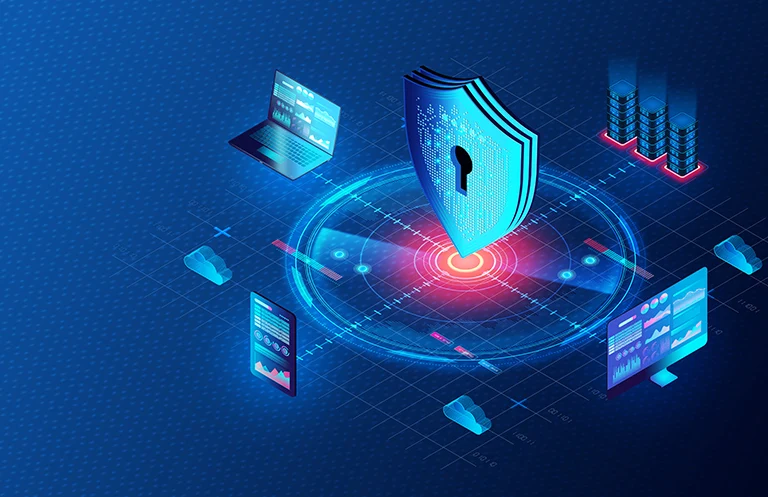
Cybersecurity protects internet-connected systems like data, software, and hardware from cyberattacks. It is essential for risk management, threat intelligence, identity protection, cloud security, and endpoint defence. Main threats include malware, ransomware, phishing, insider risks, DDoS attacks, advanced persistent threats, and man-in-the-middle attacks. Cybersecurity delivers many benefits but faces challenges in keeping pace with technological advancements.
The article emphasizes the critical role of Artificial Intelligence (AI) in enhancing API security. AI detects threats in real-time, predicts vulnerabilities, and responds adaptively, offering efficiency and proactive protection. Despite challenges like privacy and integration complexity, real-world applications in finance, healthcare, e-commerce, and government showcase AI’s effectiveness. eInfochips provides API security solutions, incorporating best practices and Secure SDLC methodology for comprehensive protection during product development.
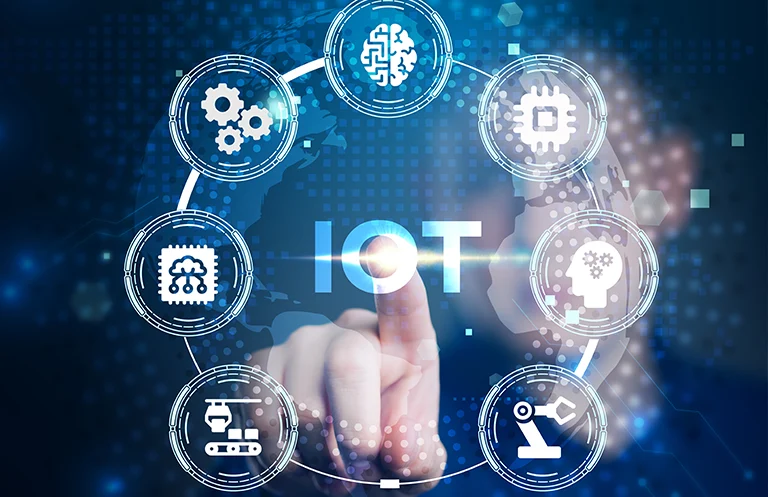
The article stresses the critical need to secure IoT data to prevent potential risks for users and manufacturers. It underscores the importance of identification, authentication, and encryption to safeguard against threats such as invasion timing and industrial espionage. The article concludes by emphasizing the vital role of robust security measures in IoT devices for overall protection and encourages businesses to prioritize cybersecurity.
Description This paper focuses on the significance of secure firmware
Individuals and businesses have undoubtedly reaped numerous undeniable benefits from the advancement and evolution of technology. However, it has come with a significant disadvantage: an increase in cybercrime, cyberattacks, and malware infections, facilitated by the ever-increasing attack surface.The expansion of the network perimeter poses a significant problem, particularly for high-level business operations that need to consistently monitor hundreds of layers of code and security events to guard against intrusions. This task surpasses human capabilities and therefore requires a more efficient solution.
Schedule a 30-minute consultation with our Automotive Solution Experts
Schedule a 30-minute consultation with our Battery Management Solutions Expert
Schedule a 30-minute consultation with our Industrial & Energy Solutions Experts
Schedule a 30-minute consultation with our experts