

Introduction
In automotive engineering, AI in automotive safety changes the problem definition: once Large Language Models (LLMs) and other non-deterministic Machine Learning (ML) systems enter the vehicle, traditional safety frameworks are no longer enough on their own, and the safe approach is to use AI to support functions around the safety case rather than let it make uncontrolled safety-critical decisions.
We are not talking about simple rule-based control logic or sensor fusion algorithms, but LLMs and other ML systems that do not follow deterministic rules. These systems exhibit behavior that emerges from billions of parameters trained on data that we may not fully understand or control.
For automotive engineers, safety professionals, and system architects integrating AI into vehicle systems, that creates an immediate engineering problem. From a functional safety standpoint, this is unknown territory. Not because AI is inherently dangerous, but because the framework we rely on ISO 26262, SOTIF, hazard analysis, and requirements traceability was built with a different kind of system in mind.
The question is practical: how do we ensure safety when the system itself is not deterministic? This article examines where existing standards fall short, which engineering practices still apply, how runtime monitoring, explainability, and data quality affect safe integration, what reference architectures can separate AI capability from safety-critical control, and how regulation is likely to evolve as AI becomes part of automotive products.
Where Things Start Getting Uncomfortable
ISO 26262 governs functional safety for road vehicles up to 3,500 kg, so its assumptions were designed around many passenger vehicles and classical embedded systems:
It contains eleven elements that define the standard’s scope before those assumptions are applied.
- Requirements can be fully specified and traced
- System behavior is deterministic given the same inputs
- Failure modes can be identified, analyzed, and mitigated upfront
LLMs break all the above-mentioned assumptions simultaneously. Output depends on training data that may be incomplete, biased, or non-representative of edge cases in automotive environments. The same input can produce different outputs across model versions or even within the same version under different runtime conditions. You cannot enumerate all the ways an LLM might fail.
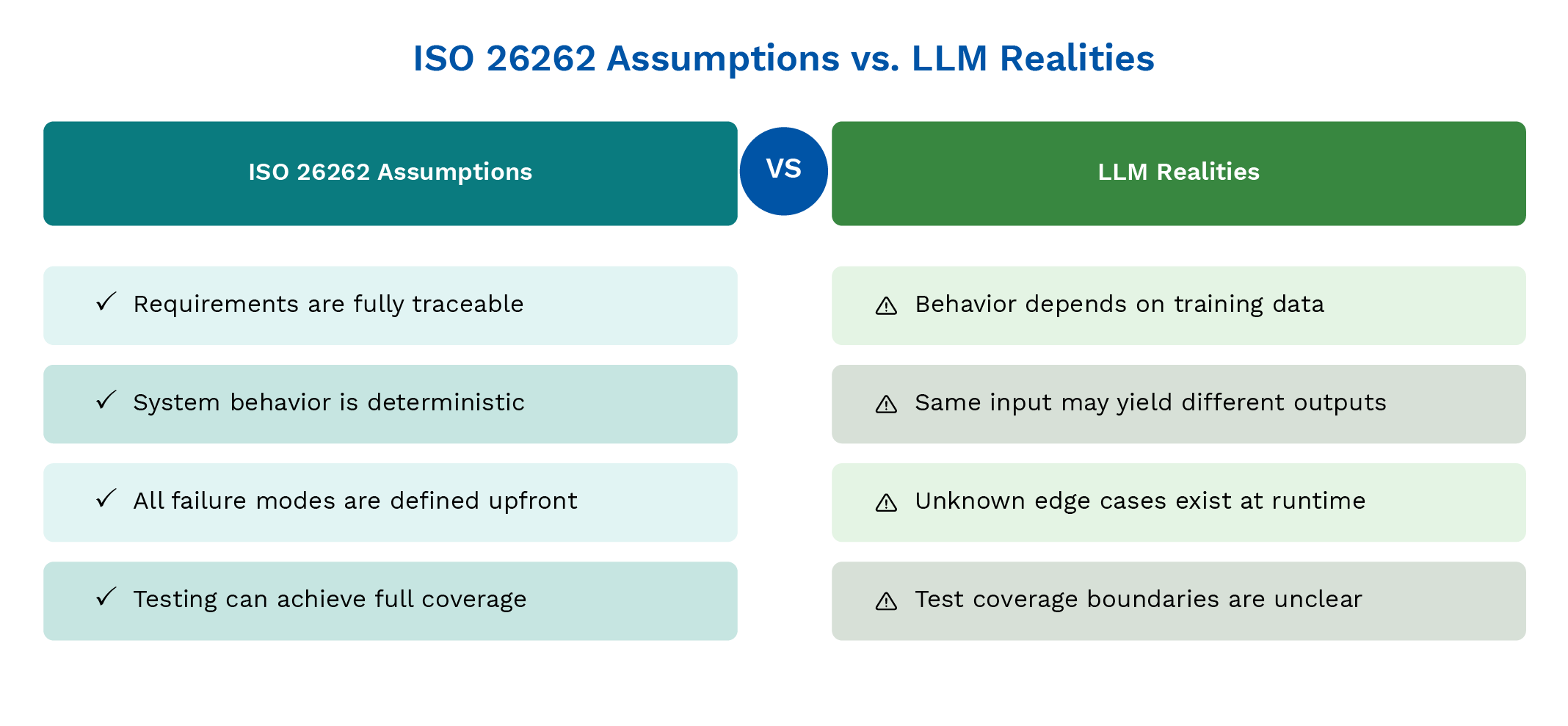 Figure 1: ISO 26262 Assumptions vs. LLM Realities
What Artificial Intelligence Looks Like in Real Engineering Work
These challenges surface at every phase of development, as the growing complexity of automotive development raises the burden on engineering teams at each step:
During Hazard Analysis and Risk Assessment (HARA), the usual approach of mapping hazardous events to specific failure modes begins to break down. How do you define a hazard for a model that provides incorrect guidance under ambiguous input? The hazard space is no longer as well defined as we are used to.
During validation, the question of how much testing is enough has no clear answer. Traditional coverage metrics do not translate. You can run millions of test cases and still not be confident that you have exercised the failure modes that matter most. ISO 26262 compliance can also slow development cycles, especially when automotive software can exceed 100 million lines of code.
During system design, there is an ongoing debate about whether the AI component should reside within the system architecture whether in perception, planning, or as a purely advisory component. Each placement carries different safety implications, and the automotive industry has not converged on a consistent answer yet.
A Few Things That Actually Help
One principle stands above everything else: do not let AI make the final call in safety-critical paths for vehicle safety. Use AI as a support layer for pattern recognition, anomaly detection, or generating recommendations while deterministic logic retains authority over actual control actions.
In practice, this means building three things deliberately, while using ADAS capabilities such as Automatic Emergency Braking and Lane Keeping Assist as support functions rather than final arbiters. AI can react to hazards faster than human reflexes.
- Runtime monitoring: Track output confidence scores, distribution shift indicators, and latency thresholds in real time. When the model output starts drifting outside expected ranges, the monitor catches it before it reaches the actuator.
- Shadow mode deployment: Run the AI model in parallel with the existing system before giving it any control authority. This lets you observe real-world behavior without safety risk and builds the operational evidence you need for your safety case.
- Operating design domain (ODD): Clearly define the conditions under which AI is allowed to operate, and ensure the system degrades gracefully outside that scope. Anyone who has written a safe state requirement recognizes the instinct: know where the system stops being reliable, define that boundary clearly, and make sure crossing it triggers a controlled response. Automated Emergency Braking can reduce front-to-rear crashes by nearly half, and systems like this help reduce accidents while improving vehicle reliability through advanced driver assistance systems.
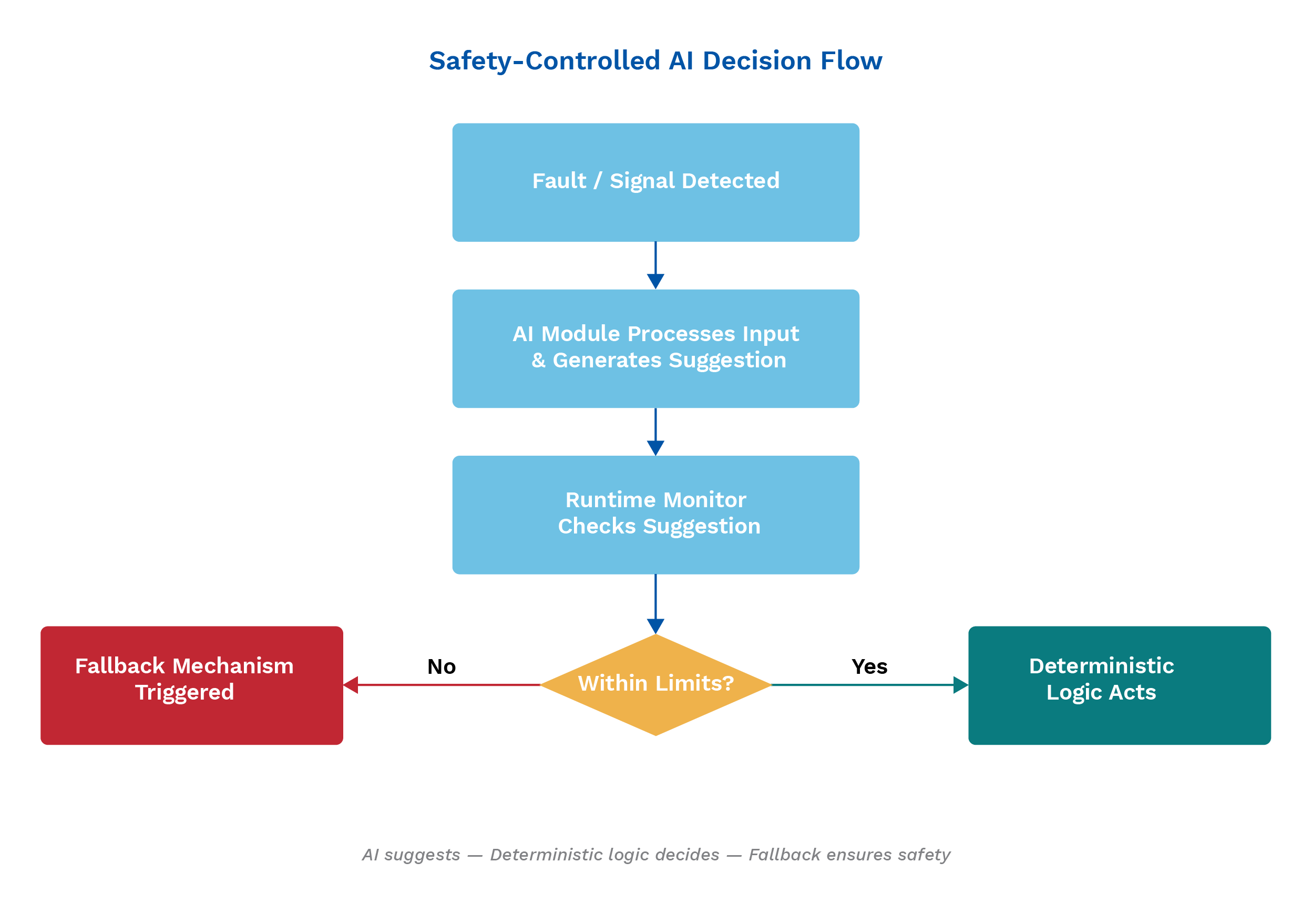
Figure 2: Safety-Controlled AI Decision Flow
Explainability: Still a Weak Spot
To put it simply, classical software leaves a clear trail. When something goes wrong, there is a path to fall back to: you dig the code, find the condition that caused it, and fix it. With an LLM, you generally cannot do that. The output is a product of millions of weight interactions, and the question ‘why did it say that?’ often does not have a satisfying answer.
The tools we have, including attention visualization, Local Interpretable Model-agnostic Explanations (LIME), SHAP-based feature attribution, help at the margins. They can tell you which input features influence the output, but they do not give you a causal explanation to be added to a safety analysis report. What is more practical today is building a comprehensive logging and monitoring infrastructure that captures model inputs, outputs, and confidence scores at runtime. It is not explainability in the traditional sense but when something unexpected happens in the field, it is the data that lets you investigate. For now, that is the closest thing we have that actually works at production scale.
Data Becomes a Vehicle Safety Concern
One shift that is easy to underestimate is that with AI systems, data quality is a safety concern, not just a quality concern, because it affects both model performance and maintenance-related safety decisions. Models trained on data that does not reflect real-world distributions are more likely to fail in safety-critical edge cases. AI also combines data from cameras, radar, and LiDAR to create a real-time model of the environment. As a result, dataset bias is not only a fairness concern but also a direct contributor to unsafe on-road behavior.
There is also the problem of distribution shifts. Models are trained once but deployed over vehicle lifetimes that can span a decade. As the real world gradually diverges from the training distribution, new road infrastructure, changed traffic patterns, and different driver behavior, model performance degrades in ways that are hard to detect until something goes wrong. AI predicts maintenance needs by analyzing data from sensors, and predictive maintenance improves safety by reducing unexpected mechanical failures and helping prevent accidents.
The engineering response is clear: dataset validation, formal data governance processes, and model versioning need to be treated with the same rigor as software version control. A few teams are already doing this well, while others are still catching up.
Reference Architecture
When you put all of this together, the architecture that makes the most sense looks like this: a pipeline in which AI processes input and generates a suggestion, a validation layer verifies it, a safety monitor evaluates it against operating limits, and only then is a final action taken. AI suggests. The system decides.
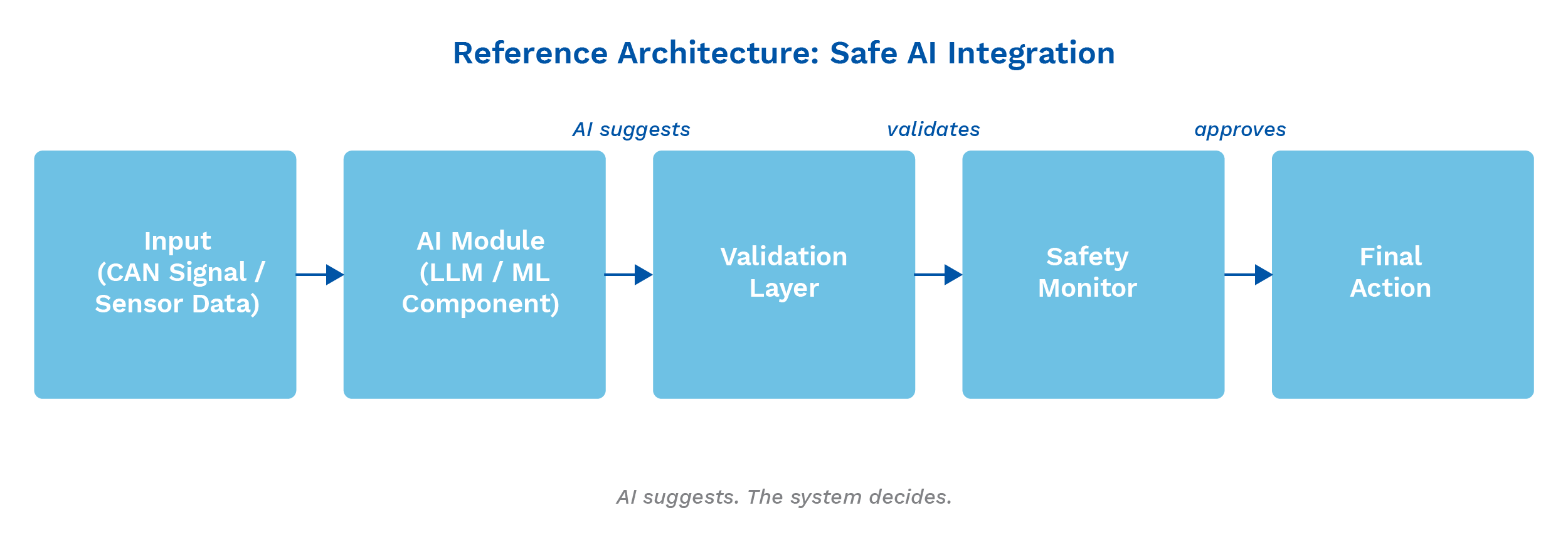 Figure 3: Reference Architecture — Safe AI Integration Pipeline
Looking Ahead: The Next Decade in the Automotive Industry
Regulatory bodies have already started adopting Both ISO 26262 and SOTIF (ISO 21448) are being revisited with AI in mind. If the pace of that work holds, future guidance on architecture patterns, monitoring requirements, and validation evidence will be crucial for safe deployment within the next three to five years. Not a guarantee, but the direction is clear. Human error is responsible for nearly 94% of accidents, which helps explain why these AI-based safety advances matter.
On the technical side, hybrid architecture, where AI and classical control logic share authority through well-defined interfaces will become the dominant pattern. AI can also monitor driver behavior for signs of fatigue or distraction to improve safety. Advances in formal verification methods for probabilistic systems may eventually allow us to establish stronger safety arguments than are achievable with current techniques. The harder question is whether AI will ever be the primary safety-relevant decision-maker rather than a support layer, remains open. The tools, standards, and operational evidence needed to support that kind of deployment are probably at least a decade away. AI also enables Vehicle-to-Everything communication to enhance road safety and is foundational for the development of fully autonomous vehicles. Given what is at stake, the cautious pace seems right.
Conclusion
AI is entering automotive systems whether the safety community is fully ready or not. The question is not whether to engage with it; it is how to do so without abandoning the safety discipline the industry has built over decades.
The fundamental engineering instincts still apply to define what the system should and should not do: build in monitoring and fallback, validate thoroughly, and do not let enthusiasm for new technology outpace your ability to understand and control it. Adapting those instincts to a non-deterministic, data-driven system that is what we need to work on.
At eInfochips, we work with automotive OEMs and Tier-1 suppliers on practical challenges of integrating AI into safety-critical systems—from architecture definition and HARA through validation strategy and ASPICE compliance. If you are navigating these questions in your own programs, we would be glad to compare notes.
Learn more about our Automotive Functional Safety practice → einfochips.com/automotive
Explore our ADAS and SOTIF validation services → einfochips.com/adas
Connect with our team on LinkedIn → linkedin.com/company/einfochips
Frequently Asked Questions
1. Can an LLM ever be ISO 26262 compliant?
Not in the traditional sense, at least not today. ISO 26262 assumes deterministic behavior and full requirement traceability, which LLMs do not provide. What is achievable is system architecture that uses LLMs in a controlled support role while maintaining overall ISO 26262 compliance at the system level. For the AI component specifically, SOTIF (ISO 21448) is usually the more appropriate framework it was designed for exactly this kind of functional insufficiency, where the system works as intended, but the intention itself is not enough.
2. Isn’t AI too unpredictable to use in safety-critical automotive applications?
Fair question! I have heard it more than a few times in design reviews and safety audits. The key is architectural control. AI operating as an advisory layer with deterministic logic retaining authority over safety-critical actions can be deployed safely. The risk arises from giving AI direct control over safety output without adequate monitoring and override mechanisms. Architecture matters more than the AI itself.
3. Do we need entirely new standards for AI in automotive?
Not from scratch. The frameworks we already have, such as ISO 26262, SOTIF, and ASPICE, are not the problem. They give us more than enough to start with. What we need are AI-specific extensions: guidance on scoping an operating design domain for AI components, what evidence is sufficient to validate AI behavior, and how to handle model updates post-deployment without re-opening the entire safety case. That standardization work is actively underway.
4. How do you validate something you can’t fully explain?
You shift from structural verification to behavioral validation. Instead of proving correctness through formal analysis, you build extensive test datasets covering the relevant operating envelope, monitor runtime behavior in deployment, and use statistical methods to build a safety case. It is a different kind of confidence, but it can be rigorous if approached systematically.
5. What’s the biggest mistake teams make when integrating AI into safety systems?
Treating it as purely a software integration problem. The safety implications of introducing a non-deterministic component need to be addressed at the system level, in the HARA, architecture, and validation strategy, before the first line of model code is written. Teams that skip this step tend to find the gaps late in the program, when they are expensive to fix.