
REST vs GraphQL comes down to how an API exposes and delivers data: REST uses multiple endpoints and standard HTTP methods, while GraphQL typically uses a single endpoint that lets clients request only the data they need. In the current rapidly evolving application world, APIs act as the backbone of communication between applications, and the architecture you choose directly affects scalability, software performance, developer productivity, and long-term maintainability.
For developers, software architects, and teams building SaaS platforms, mobile applications, or other connected systems, the choice is rarely theoretical. Both REST (Representational State Transfer) and GraphQL enable application-to-application communication, but they differ in data handling, request structure, and implementation trade-offs.
In this blog, we focus on the basics of REST and GraphQL, their key differences, where each works best in real-world scenarios, security concerns especially with GraphQL common mistakes, and how to choose the right approach or combine both in a hybrid solution.
Understanding the Basics
REST is a mostly used where APIs are structured around resources. Each resource is accessed via a unique URL, and standard HTTP methods are used:
- GET – Fetch data
- POST – Create
- PUT/PATCH – Update
- DELETE – Remove
Example of a Rest API:
GET /customers
GET /customers /123
GET /customers /123/orders
GraphQL is the query language used for APIs. GraphQL provides a single endpoint where clients can request the data they need, rather than reaching multiple endpoints. Here the client shapes the response which makes fetching the data flexible.
Example of a GraphQL query:
customers(id: “123”) {
status
phone
product {
id
price
}
}
}
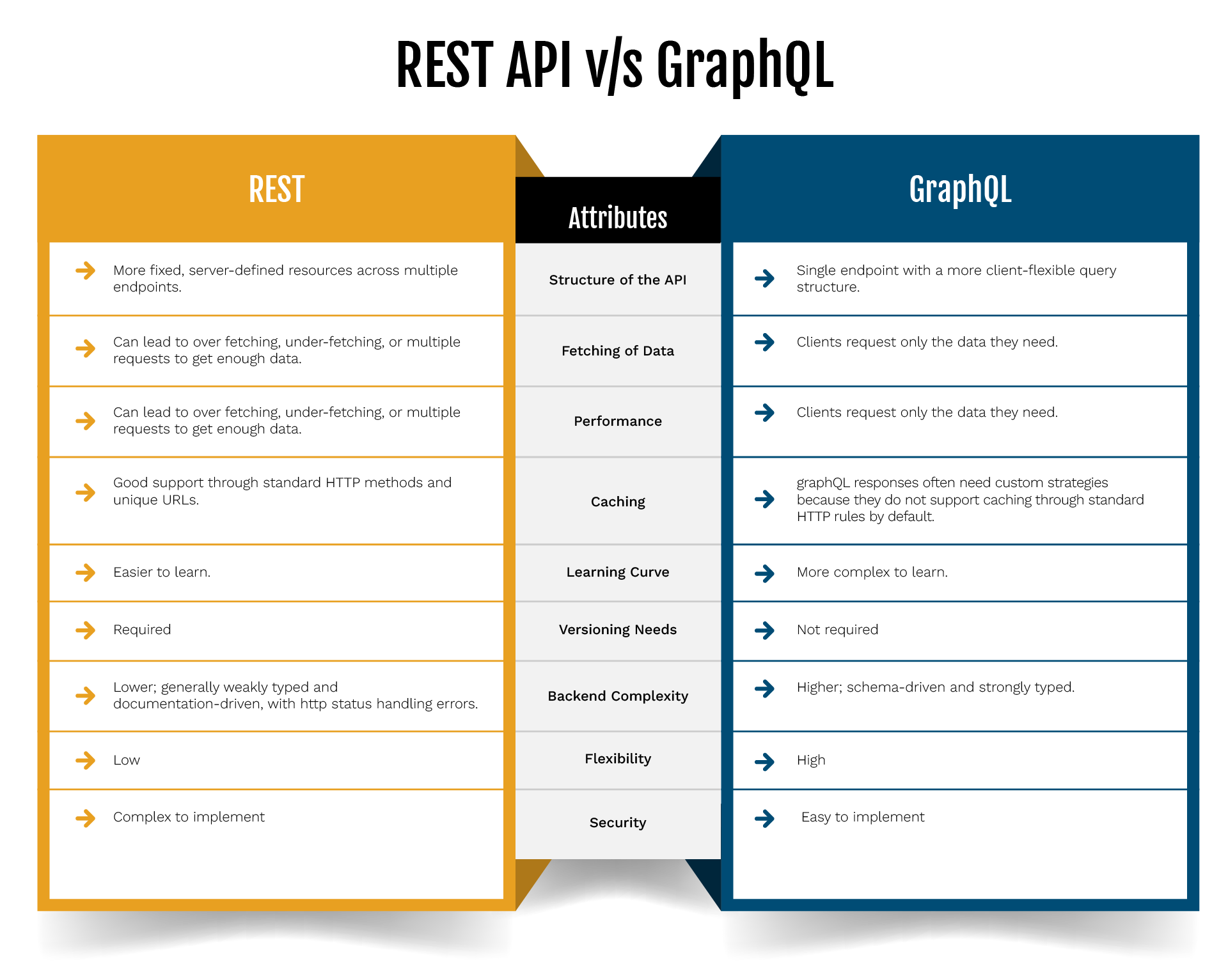
REST API v/s GraphQL
GraphQL Needs Guardrails for Scalable API
GraphQL has a drawback because clients have more flexibility to fetch the data which poses a challenge to security. Inadequately controlled query execution can trigger nested queries, too many database calls and a huge response to the client side, and poorly optimized queries can create performance bottlenecks. When this is done by attackers, these are known as query depth attacks and complexity attacks.
GraphQL’s flexible query makes rate limiting and request monitoring more cumbersome, therefore GraphQL needs more protections such as query-depth limiting, complexity scoring, resolver-level authorization, execution time limits and stricter query validation. In api development, GraphQL also needs monitoring, load balancing and caching policies because standard HTTP caching does not apply cleanly to graphql responses, and load balancing is critical for preventing performance bottlenecks. GraphQL also requires more focussed governance and query protection.
Choosing the Correct Approach and Use Cases in Real-world Scenarios
Choosing between the two approaches becomes easier when the type of product being built is considered rather than focussing on the technical features alone.
Scenarios Where REST Usually Works Better:
- Internal Admin Panels because most such portals require CRUD heavy functionality. REST helps with simplicity and easier maintenance.
- Public APIs since the endpoints are exposed, it is easy for the developers to adapt and use.
- Microservices Communication as REST works very smoothly between backend services due to predictability of endpoints and ease of caching the endpoints.
- Enterprise Systems where data structure changes less frequently because in such scenarios, the long-term maintenance is cleaner.
Scenarios Where GraphQL Usually Works Better:
- Data-Rich Dashboards as it will significantly reduce the number of API calls and makes the frontend increasingly flexible.
- Mobile Applications since GraphQL proves to be useful in reducing payload size and unnecessary requests.
- Products that evolve rapidly because of the capability of GraphQL to allow the evolution of the API without continuously redesigning the endpoint even when frontend requirements keep changing rapidly.
- Multi-client Applications as GraphQL significantly simplifies the frontend development when web and/or mobile platforms may need different data structures.
When Can REST and GraphQL Coexist
In practical scenarios, REST and GraphQL are not competing technologies. Rather they solve distinct problems at distinct instances.
The approach that is followed the most is the architecture approach where REST is used for the backend microservices and GraphQL in the frontend.
Here, the backend services remain simple and easily scalable while the frontend teams get flexibility in querying the data. Additionally, many services can be collated into one single frontend response.
Let us study an example of an e-commerce platform that mainly uses REST for inventory, payments, shipping etc, and exposes the GraphQL gateway to the frontend applications to enable the web and mobile clients to fetch the data with high efficiency.
A hybrid approach is usually the most pragmatic solution as it can strike a balance between making the backend simple and the frontend flexible.
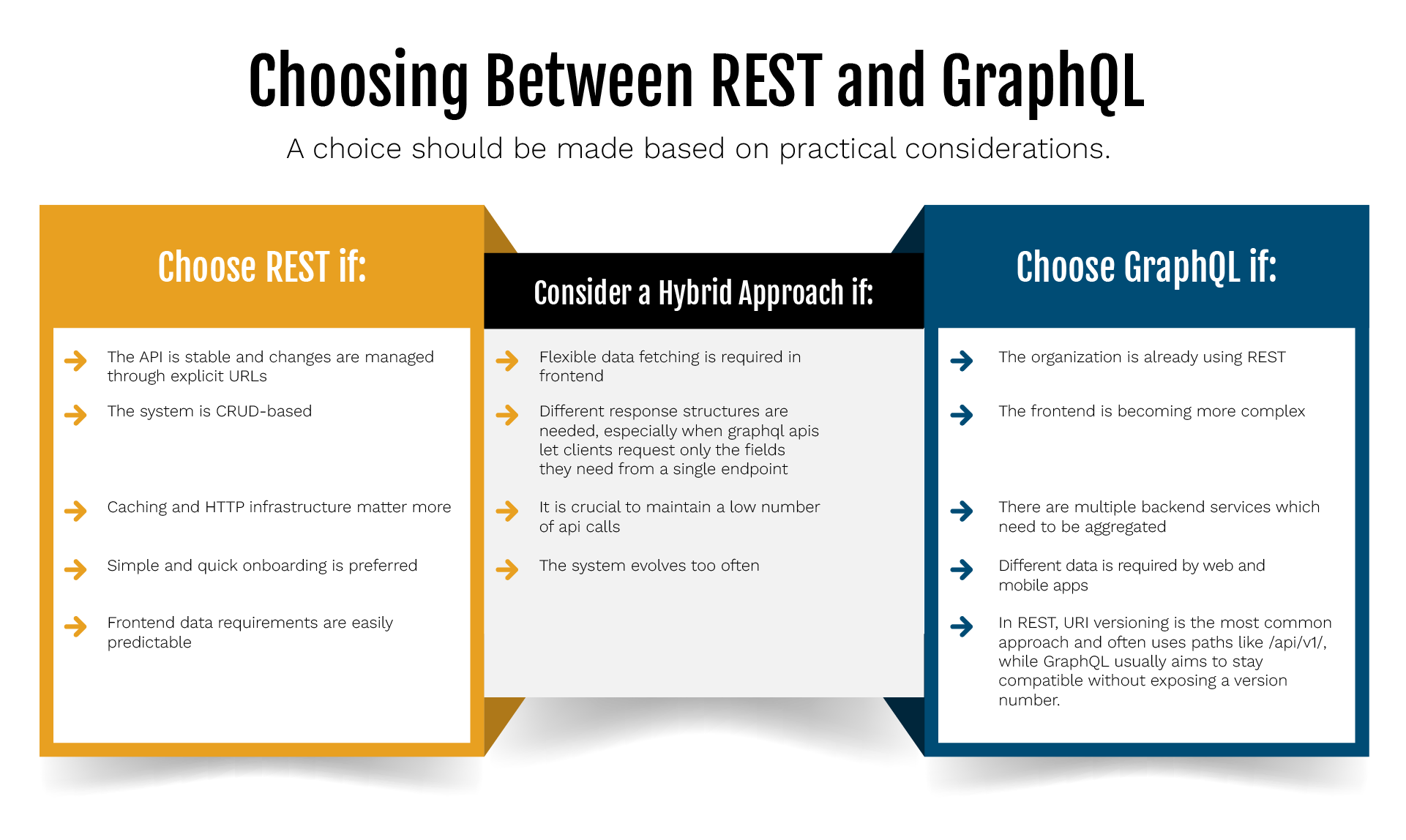
Choosing Between REST and GraphQL
Common Mistakes in API Versioning
The most common mistake committed while choosing an API architecture is the developer considering popularity over the fitment to product requirements.
Common REST Mistakes
- Creating Too Many Specialized Endpoints: Over time, REST APIs can become more difficult to maintain if every frontend requirement results in a new endpoint.
- Poor Versioning Strategy: Without proper version planning, maintaining multiple REST API versions can become expensive and confusing; REST often uses URL-based versioning, and breaking changes are the point where you should increment the major version number, while non-breaking updates like adding endpoints or parameters usually do not require that.
- Unnecessarily Large Response Payloads: Sometimes the responses keep growing while the frontend usage stays limited, which leads to over fetching and can still fail to return enough data without extra requests, making the REST APIs inefficient over time.
Common GraphQL Mistakes
- Thinking of GraphQL as a Shortcut to Performance: Although GraphQL improves flexibility at the frontend, a poor resolver design would still result in major backend performance issues, and graphql responses can also be harder to cache with standard HTTP methods, so teams often need custom strategies.
- Not Paying Attention to Complexity in Queries: Allowing very complex and highly nested queries, often sent as POST requests, would overload the systems and strain the server.
- Poor Designing of Schema: A poorly designed graphql schema would eventually become difficult to maintain, understand, and evolve over time.
- Skipping Proper Authorization at the Resolver Level: Field-level flexibility also requires more careful access control implementation.
The success of either approach depends far more on implementation quality than on the technology choice itself.
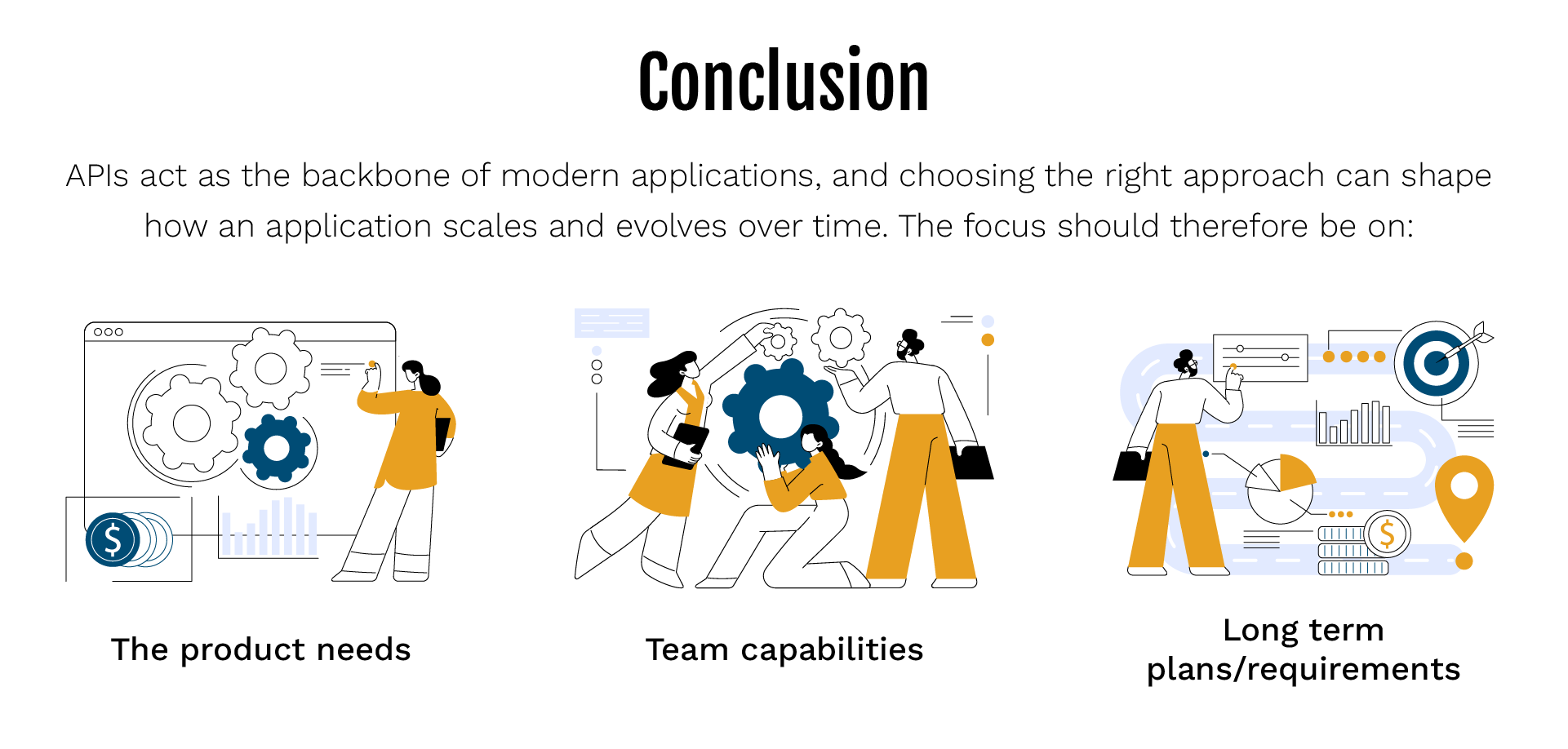
Conclusion
Know More: Mobility Services
Frequently Asked Questions
1. Which API architecture is better for beginners?
REST follows usual HTTP concepts like GET, POST, PUT, and DELETE; it is considered more beginner-friendly. Due to its resource-based structure, REST is also easier to understand and implement. A significant amount of learning is required to use GraphQL. Concepts like schemas, resolvers, types, and query composition are essential to GraphQL, which makes it a little more advanced.
2. Does GraphQL increase backend load?
If proper optimisation is done, then GraphQL surely increases backend load. GraphQL reduces unnecessary data transfer to clients, but poorly designed resolvers and highly nested queries can trigger excessive database calls, increasing backend load.