

There was a time when working on a motorcycle meant oily hands, a set of tools, and a tuned ear for mechanical feedback. That world still exists but alongside it now rides a very different machine. Modern high-end motorcycles are no longer just mechanical systems; they are sophisticated, embedded platforms where software and hardware operate in constant coordination.
With the introduction of Advanced Rider Assistance Systems (ARAS), modern motorcycles have evolved into full-fledged Cyber‑Physical Systems (CPS). Radar sensors monitor the environment, sensor‑fusion Electronic Control Units (ECU) interpret real-time data, and decisions are exchanged across internal networks such as Controller Area Network (CAN). With features like Over‑the‑Air (OTA) updates, Bluetooth connectivity, and smartphone integration, motorcycles are now connected and are no longer limited to physical boundaries. Every response and reaction is controlled by software logic rather than just mechanical response.
This system undeniably improves safety and performance, but it also changes the risk landscape. As any security professional knows, if it has a brain, it can be hacked. When a system can sense its surroundings, process inputs, and translate them into physical actions, it also becomes susceptible to manipulation.
The Advanced Rider Assistance Systems (ARAS) Architecture & Cyberattack Surfaces
To understand where cyberattacks can happen, it helps to first see how a smart motorcycle is put together. An ARAS setup isn’t a single component; it’s a group of sensors, control units, and networks working together in real time.
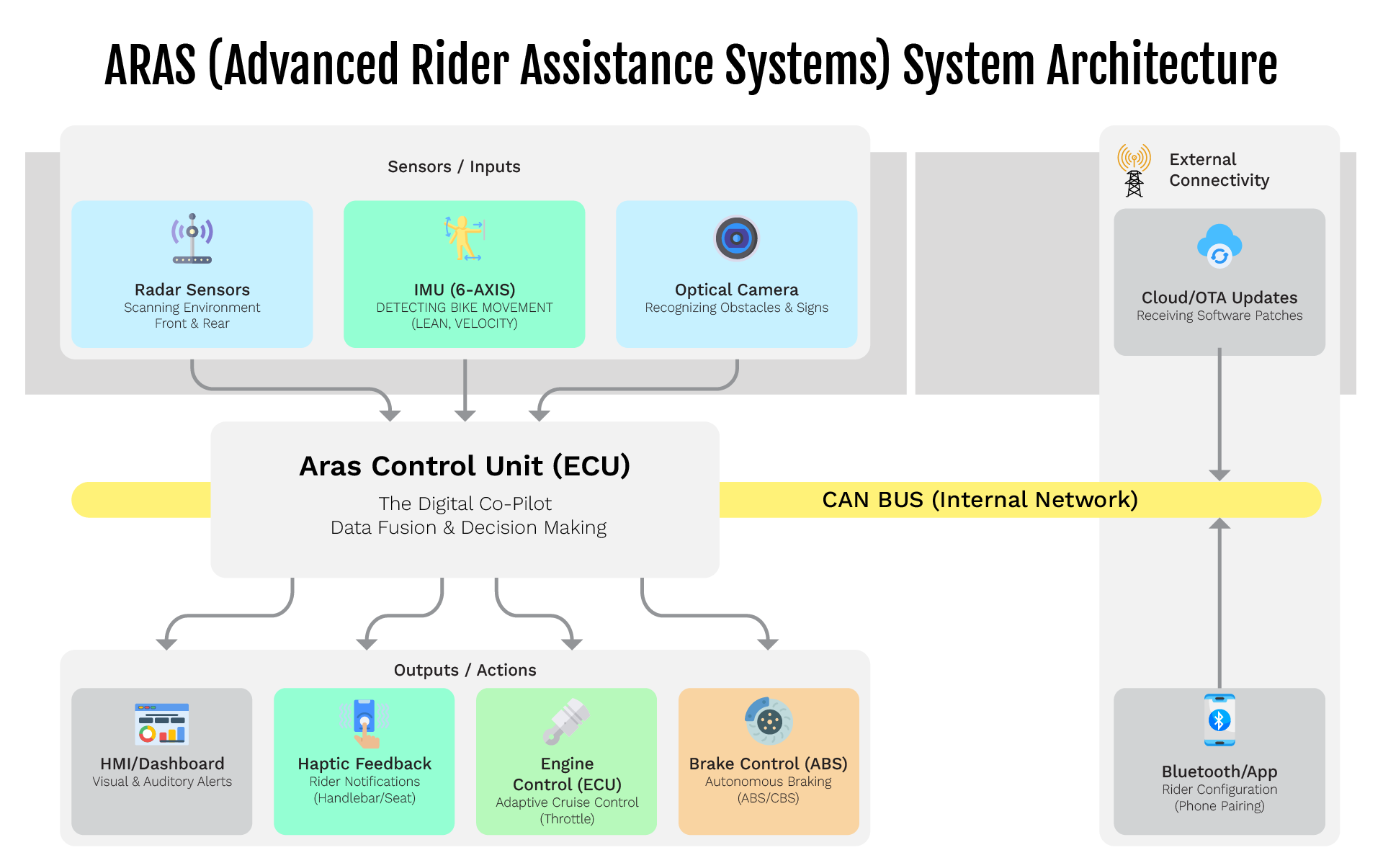
Figure 1: Basic Conceptual ARAS architecture
The architecture is built to perform four major functions:
- Sensing the environment
- Processing the data
- Taking control actions
- Communicating with the rider
| System Layer | Component | Function |
| Sensors (Input Layer) | Front & Rear Radar | Detect surrounding vehicles, estimate relative distance and speed |
| IMU (Inertial Measurement Unit) | Measures vehicle dynamics like lean angle, acceleration | |
| Wheel Speed Sensors | Monitor wheel rotation, speed | |
| Optical Cameras | Capture visual information like lane markings, traffic signs | |
| Processing Layer | Control Unit (ECU) | Combines data from multiple sensors and uses it to evaluate potential risks |
| Control Layer | Brake Control (ABS) | Controls emergency braking actions |
| Engine Control | Manages adaptive cruise control functions | |
| Rider Interface (HMI) | Dashboard | Displays errors, warnings |
| Audible & Haptic Feedback | Vibration or sound-based warnings for the rider | |
| Communication Layer | CAN Bus | Handles communication between sensors, ECUs, and rider interface |
| External Connectivity | Wireless Interface, Over-the-air (OTA) Updates, Mobile Applications | Supports smartphone connectivity (Bluetooth/Wi-Fi), software updates, diagnostics. |
Table 1: ARAS architectural components
ARAS relies on connected electronic systems and external interfaces that improve functionality and connectivity. The interconnected nature of these systems increases the cyberattack surface, creating more potential points of entry. Without proper security controls, these connections can be exploited to gain access to the main system core. The main attack surfaces include:
- Wireless Interfaces (Bluetooth / Wi‑Fi)
Wireless interface is used in infotainment systems and for smartphone pairing. Hackers can use the flaws in the system’s wireless security and gain access to the motorcycle’s core system. - Over‑the‑Air (OTA) Updates
Manufacturers use cellular or wireless connections to send firmware updates, new features, and security fixes directly to the motorcycle. Insecure authentication mechanisms can expose systems to unauthorized firmware updates and rollback attacks. - Physical Diagnostic Ports
Service ports such as On-Board-Diagnostics – II(OBD‑II) or manufacturer-specific diagnostic connectors give direct access to the motorcycle’s ECU and internal network during maintenance. If these ports are not secured properly, the motorcycle’s internal network is at risk of being compromised. - Mobile Applications (Companion Apps)
Many modern motorcycles come with a companion smartphone application that helps with navigation, generating ride analytics, and a few remote functions like viewing vehicle location, checking ignition or battery status, and enabling/disabling ARAS alerts. If the application and its backend services are not secured properly, they can be exploited by an attacker to access and misuse vehicle data and remote functions without proper authorization. - Cellular Telematics Unit (TCU)
The telematics unit connects motorcycles with external networks for cloud connectivity and OTA updates. As this component is directly connected to the internet, it introduces additional risk. If this is not properly secured, the attacker might use it to interfere with software updates or gain access to vehicle status/data. - V2X (Vehicle‑to‑Everything) Communication
This is an emerging technology, that allows motorcycles to exchange information with nearby vehicles and traffic systems. While this feature improves coordination, it also increases the need for securing external communications.
Threat landscape in ARAS and radar sensors
Once an attacker gains access to the system, which can be through wireless interfaces, mobile applications, telematics units, or physical ports, the next step is targeting the components responsible for sensing, decision-making, and vehicle control. In ARAS-enabled motorcycles, software inputs can directly influence motorcycle behavior like braking or rider warning. So, even small changes in system behavior can have serious consequences.
From an engineering perspective, below are some cybersecurity threats that must be considered:
- Radar Spoofing
Functions like adaptive cruise control (ACC) and forward collision warning rely heavily on the radar sensors to detect surrounding objects and use this data to calculate their distance and speed. During radar spoofing attacks, an attacker intentionally transmits manipulated radio frequency (RF) signals to mimic real radar reflections.
Potential Impact: The ARAS may interpret this false signal as a genuine hazard and react to it by triggering collision warnings, unnecessary braking responses, or sudden rider alerts depending on system behavior. This can startle the rider and potentially cause loss of motorcycle control. - ECU firmware tampering
In ARAS-enabled motorcycles, the ECUs execute many functions that are responsible for vehicle operations and safety. These ECUs process sensor inputs, execute decision logic based on those inputs, and coordinate assistance features. If an attacker gains access, they may replace legitimate manufacturer firmware with modified code, thereby altering the ECU’s intended behavior.
Potential Impact: Changes in the motorcycle firmware can affect safety-critical functionalities from across the vehicle. The targeted ECU may respond incorrectly to any given input and generate unreliable outputs. It may also fail when rider support is required. Examples include:- Rider warnings disabled
- Unexpected braking behavior
- Incorrect cruise control responses
- ABS intervention when not requireBecause ECUs directly influence vehicle control systems, firmware integrity becomes an important requirement for both safety and cybersecurity.
- CAN Bus Injection Attack
The CAN bus is responsible for the internal communication of the motorcycle, enabling data exchange between sensors, ECUs, braking systems, rider interfaces, and ARAS modules. Safety-related functions depend on this communication to operate in real time. The main feature of traditional CAN communication is to send information quickly and reliably, assuming there is a safe environment inside the vehicle. Due to this, it does not have any built-in ways to verify the validity of the transmitted message source.
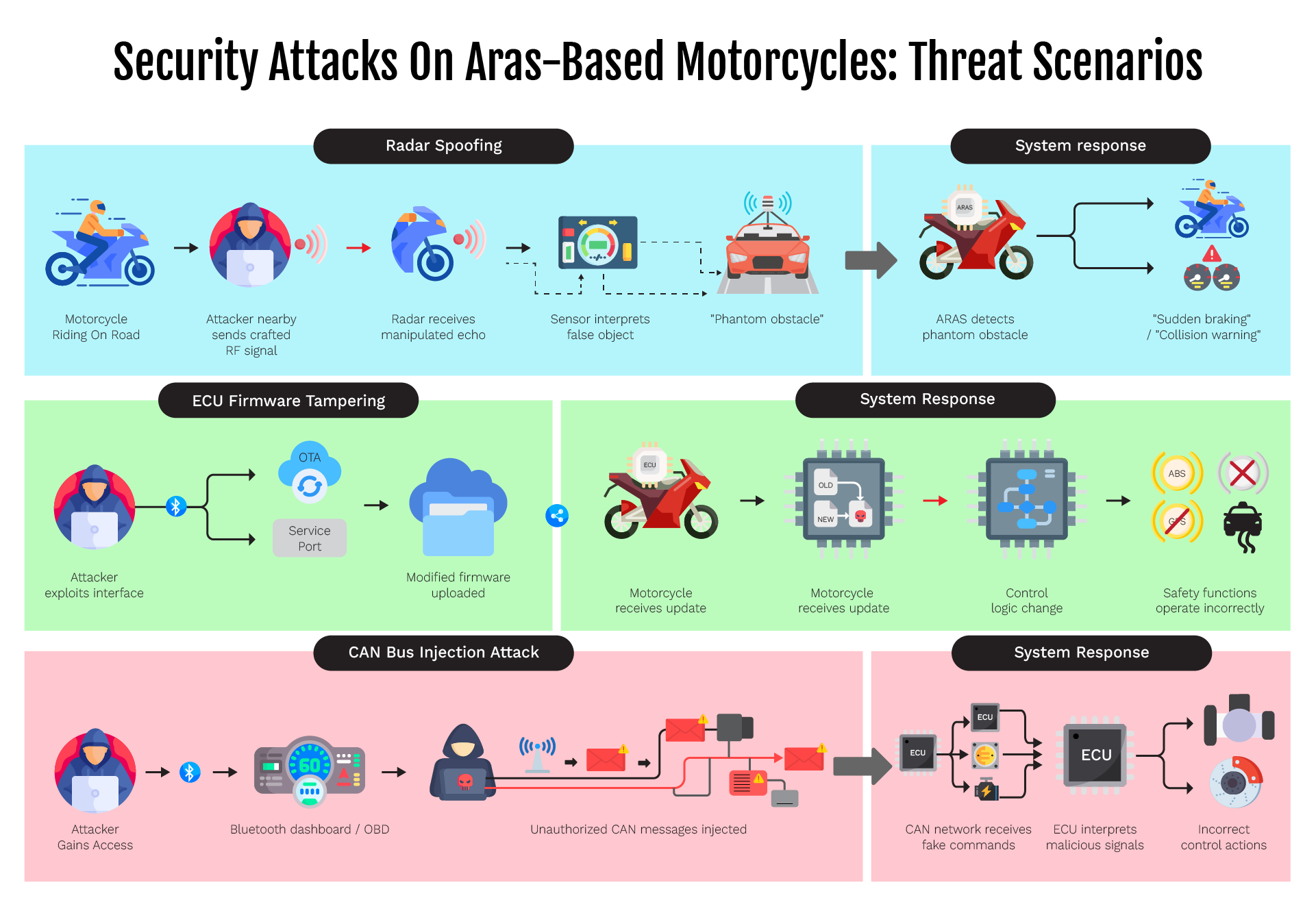
Figure 2: Illustration of ARAS Threat Scenarios: RADAR Spoofing, ECU firmware tampering, CAN bus injection attack
Potential Impact: If these malicious or invalid CAN messages are accepted by safety-critical ECUs inside the motorcycle, it may not behave as expected. For example, in such scenarios the system might:
- Generate false collision warnings
- Trigger unintended braking requests
- Feed false input data to the sensors
- Have abnormal ARAS response
- Sensor Manipulation
ARAS functions rely on the sensor input to gain understanding of the surrounding environment. Instead of targeting the entire ECU firmware, attackers can tamper with the sensors themselves like, by jamming the radar sensor with signal interference or by targeting the camera sensor with laser. As sensor input accuracy directly influences the decision making in ARAS, manipulating the sensor inputs can affect how the system interprets the inputs received about surrounding conditions.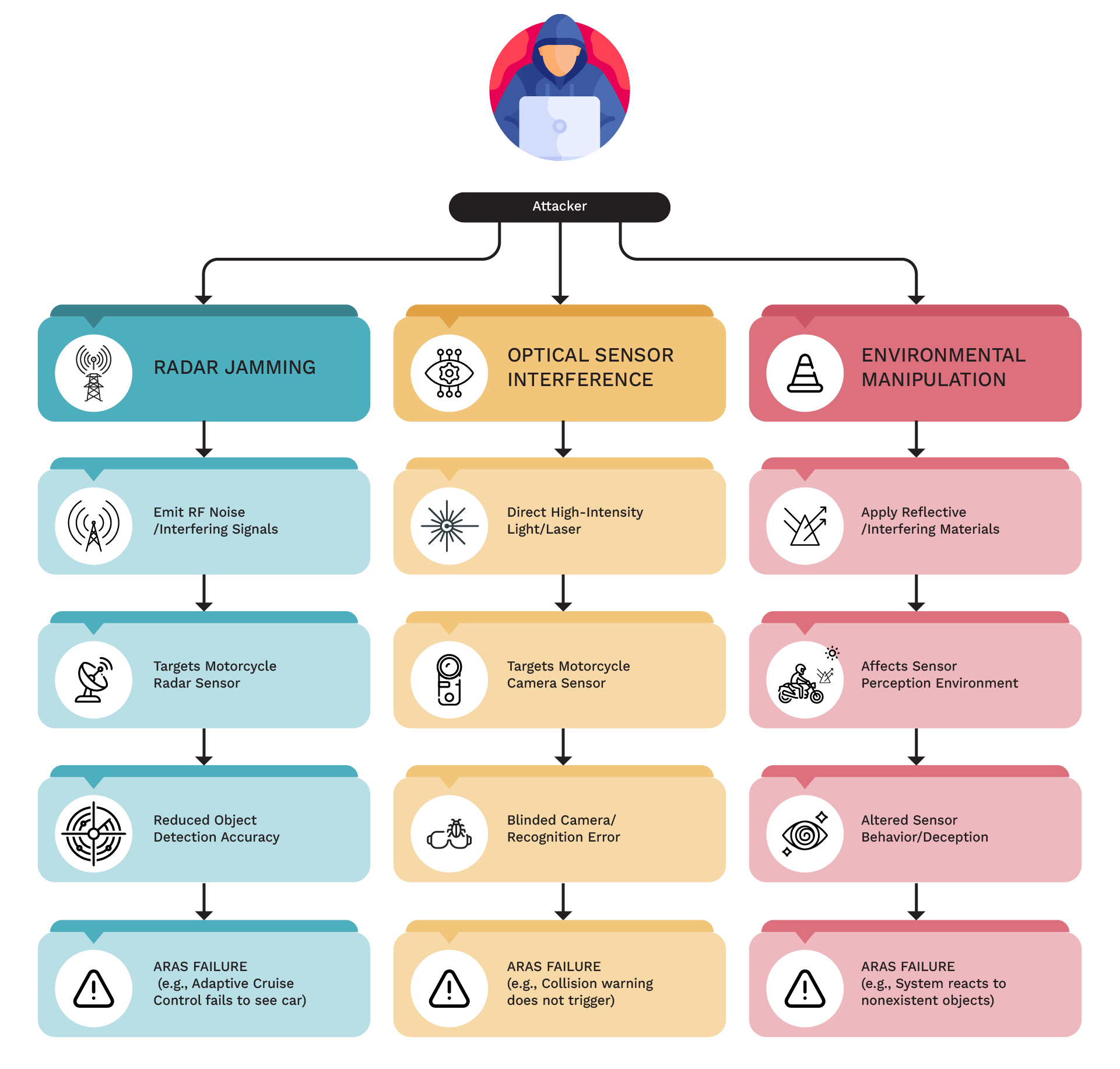
Figure 3: Illustration of Sensor Manipulation scenariosPotential Impact: When sensor inputs are unreliable, ARAS decisions also become unreliable. As explored in Figure 4, the system could interpret invalid information as a valid event or in worst cases, even fail to detect an actual hazard. For rider assistance systems, both false positives and missed detections are safety concerns.
Mapping Threats to ISO 21434 (TARA)
The automotive manufacturers and engineers use the ISO/SAE 21434 standard to manage cybersecurity risks throughout a vehicle’s lifecycle. One of its core activities is Threat Analysis and Risk Assessment (TARA). This process is used by engineers in:
- Identifying critical assets
- Evaluating potential threats
- Defining cybersecurity goals.
Here is an example of how the attacks against motorcycle ARAS that are discussed in the section above can be mapped directly to this framework:
| Asset | Threat Scenario | Potential Impact | Example Security Goal |
| Radar Sensor | Spoofing/ Signal Injection | False object detection, unintended warning, unnecessary braking | Implement signal validation and data plausibility checks |
| Optical/ Physical Sensors | Sensor manipulation/ interference | System blinded or jammed, missed hazard detection, invalid sensor data generated | Ensure sensor redundancy and cross-reference data from multiple sources. |
| ECU Firmware | Unauthorized firmware modification | Unexpected behavior, altered/unsafe system safety logic | Enforce secure Boot, signing of all software updates and firmware validation. |
| CAN/ CAN-FD Network | Message injection, spoofing | Invalid/fake commands executed by the ECUs. | Require message authentication (like SecOC) for verifying sender identity. |
Table 2: Example TARA mappings of the threat scenarios
Securing the Ride: Threat Mitigation Techniques for Adaptive Cruise Control
Manufacturers are already addressing many of these vulnerabilities. Instead of depending on a single layer of protection, they usually use a defense-in-depth strategy (i.e. layered approach), where hardware, software, network, and live monitoring systems are deployed together to reduce the impact on the system’s security.
The following are some commonly used protection mechanisms:
- Network Segmentation (Air-gapping):
Critical systems like braking, throttle control, and rider assistance are separated from less secure components like Bluetooth or media systems. Using this separation, engineers reduce the risk of an attacker moving from a compromised interface into core vehicle modules. - Hardware Security Module (HSM):
Hardware Security Modules (HSMs) are used to store the cryptographic keys securely. These are hardware components that isolate the keys from the main ECU. This makes it harder for an attacker to extract the keys even if they gain access to the ECU. HSMs are typically used for encryption, message authentication, and secure boots. - Secure Boot:
Secure Boot ensures that ECUs execute only trusted software during startup. Every time the motorcycle starts, the system verifies the integrity and authenticity of the loaded firmware. If the firmware has been modified, corrupted, or fails in the verification process, the system stops the boot process. - Secure Onboard Communication (SecOC):
As CAN networks trust all messages, Secure Onboard Communication (SecOC) adds authentication mechanisms to each of these messages. The receiving systems validate whether a message originated from an authorized source and has a correct security tag. If the command fails, the message is rejected immediately. - Secure Over-the-Air (OTA) Updates:
As modern motorcycles support over-the-air updates, protecting the update process becomes an important part. Therefore, OTA frameworks use end-to-end encryption and authentication mechanisms to ensure that the updated packages are only accepted from the trusted, verified sources. - Intrusion Detection Systems (IDS):
Intrusion Detection Systems are used to continuously monitor motorcycle’s internal data activity. This is done to look for any kind of abnormal behavior like unexpected message frequencies or unusual message patterns. If some suspicious activity is detected, the system triggers alerts or initiates predefined safety responses.
It is not possible to address all the threats by using a single control. For protecting motorcycle security, engineers have to build a continuous chain of protection (layered) by combining multiple sensors, internal networks, control units, and external updates.
Cybersecurity Standards for Motorcycle Safety
The automotive industry uses defined standards to manage cybersecurity risks across the vehicle’s lifecycle. One of the key frameworks is ISO/SAE 21434 that helps identify threats, assess risks, secure communication paths, and monitor systems from development to production phase.
But most of these guidelines/standards were originally developed for cars. It may seem reasonable to apply the same framework directly to motorcycles, but the motorcycles operate very differently. Unlike cars, motorcycles offer limited physical protection and heavily depend on riders for balance and control. Because of this, the same issue can have very different consequences.
For example: In a TARA scenario, suppose the attacker triggers unintended brakes. In a car, the passengers have physical protection like a seatbelt, airbags, and vehicle chassis. So, even if the result might be a collision or sudden stop, the driver and passengers have some level of protection. For the motorcycle, the exact same scenario has different impacts. Sudden braking can directly affect the rider’s balance and control that may result in riders being thrown off the bike and into surrounding traffic.
Some of the existing standards and regulations are slowly extending their scope to motorcycles as well.
- UN Regulations 155 requires manufacturers to implement a Cyber Security Management System (CSMS) and get vehicle type approval. This regulation now covers Category L vehicles (motorcycles, scooters, mopeds), with implementation timelines in the coming years.
- Even though the ISO 26262 standard primarily focuses on functional safety and remains closely connected to ISO/SAE 21434. Part 12 from ISO 26262 is specifically for two-wheel systems, considering the motorcycle’s unique physical factors like balance, lean angle, and rider control.
Even with these frameworks in place, there are still gaps. Motorcycles have unique challenges that are not fully addressed yet. This creates a need to:
- Define clearer guidance for applying standards like ISO 21434 to motorcycles (two-wheelers)
- Develop security requirements specifically for ARAS in motorcycles
- Ensure that basic security practices are followed by all the connected bikes
Conclusion
Motorcycles are shifting from being purely mechanical machines to connected software systems. ARAS’ features are already improving rider awareness and safety, and their use will only grow in the coming years. However, as we add more sensors and code to our bikes, the risk of potential attack also increases.
Threats like radar spoofing, firmware tampering, or network-level attacks are not just theoretical problems; they can have a major impact on real-world riding. To manage such risks, a structured and layered approach is required that combines secure communication, trusted software, and continuous monitoring. Cybersecurity also needs to be considered throughout the motorcycle lifecycle, from early system design to deployment and maintenance.
Standards such as ISO/SAE 21434, UN R155, and ISO 26262 are helping guide this transition. But their application to motorcycles is still evolving. Ultimately, the goal is not only to make motorcycles smarter or feature-rich, but also to ensure they remain predictable, reliable, and safe for the rider in real-world conditions.
Frequently Asked Questions
1. What is ARAS in motorcycles, and why is it important?
Advanced Rider Assistance Systems (ARAS) are technologies that help riders improve safety and awareness by using sensors, cameras, radar, and control units. Features such as Adaptive Cruise Control (ACC), Forward Collision Warning, and Blind Spot Detection assist riders in detecting hazards and responding more effectively to changing road conditions.
2. How is ARAS different from ADAS in cars?
ARAS (Advanced Rider Assistance Systems) applies similar concepts to ADAS (Advanced Driver Assistance Systems) but is designed specifically for motorcycles. Unlike cars, motorcycles rely heavily on rider balance, lean angle, and direct rider control. As a result, ARAS systems must account for unique riding dynamics and safety considerations.
3. Can a cyberattack affect motorcycle safety?
Yes. In ARAS-enabled motorcycles, software systems can influence safety-related functions such as rider warnings, braking assistance, and cruise control. If attackers successfully manipulate sensor data, firmware, or in-vehicle communications, it could lead to incorrect system responses, false warnings, or unexpected vehicle behavior that may impact rider safety.
4. What are Over-the-Air (OTA) updates, and are they safe?
OTA updates allow manufacturers to deliver new features, bug fixes, and security patches remotely without requiring a workshop visit. When protected with encryption, authentication, and firmware validation mechanisms, OTA updates can significantly improve both security and maintainability throughout a motorcycle’s lifecycle.
5. How do manufacturers protect connected motorcycles from cyber threats?
Manufacturers use multiple layers of security, including Secure Boot, Hardware Security Modules (HSMs), Secure Onboard Communication (SecOC), encrypted OTA updates, network segmentation, and Intrusion Detection Systems (IDS). This defense-in-depth approach helps protect critical motorcycle systems from unauthorized access and manipulation.
6. Do automotive cybersecurity standards apply to motorcycles?
Yes, standards such as ISO/SAE 21434, UN Regulation R155, and ISO 26262 are increasingly being applied to motorcycles. UN R155 is already expanding its scope to include Category L vehicles (motorcycles, scooters, and mopeds), with compliance becoming mandatory in the coming years in many markets. However, motorcycles have unique characteristics, such as rider balance and limited physical protection, which require cybersecurity and safety requirements to be adapted specifically for two-wheel vehicles and ARAS applications.
7. Can riders do anything to improve motorcycle cybersecurity?
Yes. Riders can keep firmware and mobile applications updated, use strong account credentials, avoid connecting to untrusted devices, and only install software from authorized sources. Good cyber hygiene complements the security measures implemented by manufacturers.