
Most of the frontend applications are large and complex. Managing a single and monolithic frontend application with a large number of people in the team is very painful. Monolithic applications, especially monolithic frontend applications or a frontend monolith, often become difficult to scale and maintain as the codebase grows and more features are added. To solve this, a technology called micro-frontend is used. Using micro-frontend architecture, we can solve the problem by dividing the web-application into a smaller and independent deployable module. This modular approach and modular architecture enable teams to design scalable, flexible, and maintainable applications by breaking them into independent, reusable components.
In layperson terms, a monolithic application means having a single code base with one repository having all the features of the application.
Micro-frontend architecture is particularly beneficial for large scale applications, as it allows multiple teams to work independently on different modules without interfering with each other. This approach also supports incremental upgrade of legacy systems, enabling organizations to gradually add new features and modernize their applications with reduced risk and improved maintainability.
To make a developer’s life easier and practical, there is a framework called Piral.IO. It is a flexible ecosystem/platform built specifically for this problem. Micro frontends represent a modern solution in frontend development and web development, making it easier to build scalable web apps such as an online store, where different parts of the store can be developed and managed independently.
Micro-frontend Architecture: An Overview

Micro-frontend architecture is built with the idea of microservices to the frontend. Instead of developing and delivering one huge codebase (monolithic application), here the UI is divided into micro-applications; each Pilet (app) is responsible for a dedicated feature. These Pilets (app) can be developed independently, tested individually, and deployed without impacting the other part of the system in a unified way. A collection of these micro-applications forms a micro frontend application, where each module contributes to the overall system.
- A design pattern has a web application that is divided into smaller, independent micro-apps.
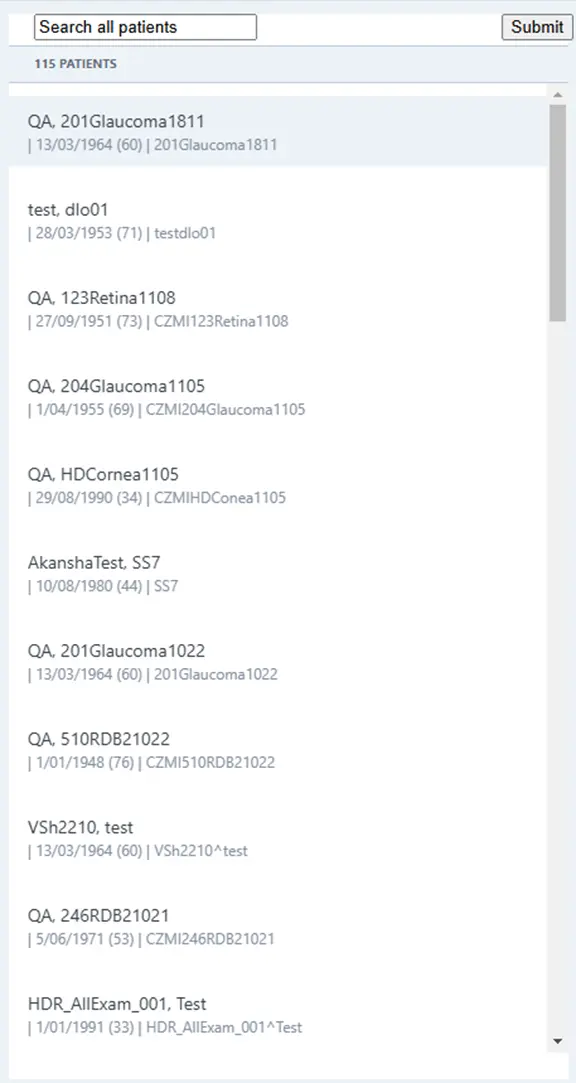
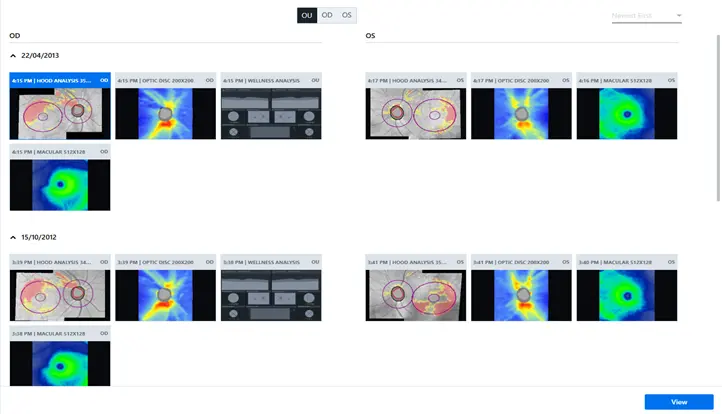
- Each micro-app focuses on specific features, e.g., a list of patients, exam viewer.
- It can be developed, tested, and deployed independently.
- Different techniques like Mono-repo, Lerna, Piral.IO, make micro-frontend the best option. Each one is explored below.
- While each has its strengths, Piral.io provides an all-in-one solution for modular frontends.
- A micro frontend project can be set up using either multiple repositories for each micro-app or a mono-repo strategy to manage all micro frontends together.
- Each application/feature can have a different repository.
Micro frontends enable the development of multiple applications that can share components and be managed by different development teams, allowing for greater scalability and autonomy. Modularization in micro frontend architecture also promotes code reuse through shared libraries and utility functions, making it easier to maintain consistency across the system. The independence and modularity of micro frontends streamline the development process, allowing teams to work in parallel and deliver features faster.
Why Organizations Adopt Micro frontends?
To solve the problem of managing the large web-applications, organizations have started to adopt this micro-frontend approach, and they get the following advantages:
- Scalability: It is possible to build larger apps by composing multiple smaller apps.
- Independent and Faster development: Different teams can work on their own modules without any dependence on each other. This approach enables teams to work autonomously, which accelerates development cycles and allows for faster iteration and deployment.
- Modularization: It is possible to reuse and deploy micro-apps in a different context. Modular architecture also makes it easier to add new features incrementally, improving integration and scalability.
- Technology Agnostic: Different micro-apps can use different tech stacks, e.g., React, Angular, Vue.
- Better Maintenance: Individual micro-apps can be updated and deployed without affecting the entire app.
Micro frontend architecture also improves developer experience by reducing complexity and increasing flexibility for development teams.
Micro frontends and Module Federation in the React Ecosystem
Micro-frontends can be developed using any of the open-source languages like React.JS, Angular or Vue.JS. In this blog post we will explore how to achieve the micro-frontend using React.JS. The approach can be similar to other libraries as well. React micro frontends are considered a best practice for building modular user interfaces in React, enabling scalable and maintainable architectures.
Let us see the key technologies using React to achieve micro-frontend. We only explore the high-level of information to understand each technology. To gain a deeper understanding of each technology, refer to the respective support page.
Key technologies for Micro-frontend in React:
- Module Federation (Webpack 5): Enables sharing code and dependencies between two micro-frontends. It allows remote app configuration, exposing and consuming remote components, and sharing dependencies like React to optimize bundle size and ensure consistent versions across host and remote applications.
- Single SPA: A framework for building micro-frontends that can work together in Single Page App
- React Router: Used to manage routing between different micro-apps
- Nx Monorepo: Helps in managing multiple React projects in a mono-repo setup3
- Piral.IO: The Piral ecosystem offers the framework for building micro-frontend solutions
Piral: https://docs.piral.io/guidelines/tutorials/01-introduction - State Management Libraries: Libraries such as Redux or Zustand are essential for synchronizing and sharing state across micro frontends, ensuring smooth communication and data consistency.
- Shared State Management Libraries: These libraries facilitate seamless state synchronization and communication between different micro-frontends, supporting consistent data sharing across components.
When structuring your main application, you might define the main component using a variable like const app and export it using export default. This pattern helps organize your code and makes components reusable across different parts of the application.
React micro frontends enable building modular user interfaces by integrating remote components from a remote app. You can import header and import footer components from remote modules, allowing for code reuse and independent updates. These remote components can be dynamically loaded and loaded asynchronously at runtime using techniques like React.lazy(), which leverages dynamic loading to reduce initial load times and improve performance.
Handling business logic in wrapper components that manage remote components is crucial for orchestrating interactions and managing shared state. Shared dependencies and code reuse further optimize the architecture.
The strong community support in the React ecosystem provides essential libraries and tools, making it easier to develop, integrate, and maintain micro frontends.
These technologies and best practices help you build web apps efficiently using a modular, scalable, and maintainable approach.
Mono-repo
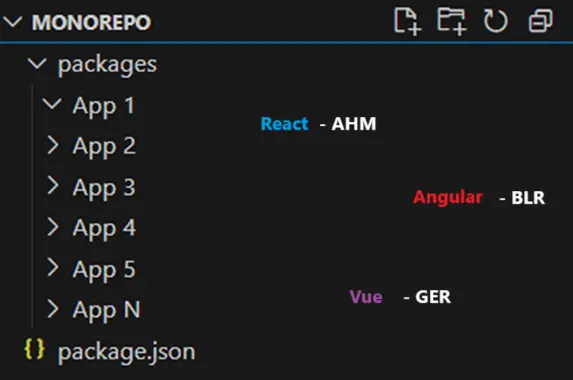
Mono-repo is a strategy that stores all code for multiple projects in a single repository. Mono-repo can be achieved via NPM workspaces.
As shown in the image below, each Pilet (app) can be combined into a single package and bundled individually.
Lerna
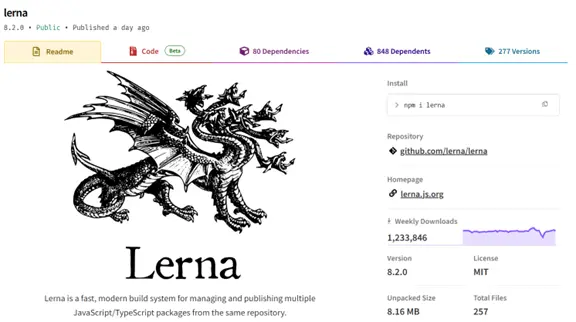
Lerna helps to debug and compile all the projects (Pilets/apps) of mono-repo. Tools like NPM Workspaces, Nx, or Lerna simplify debugging, dependency management, and collaboration.
FAQs
- How can we run the various applications in a single project?
- How can we compile/debug different technologies webapp to a single project?
- How can we communicate between two micro-web applications in a single project?
App Shell: The Backbone of Micro-frontend Applications
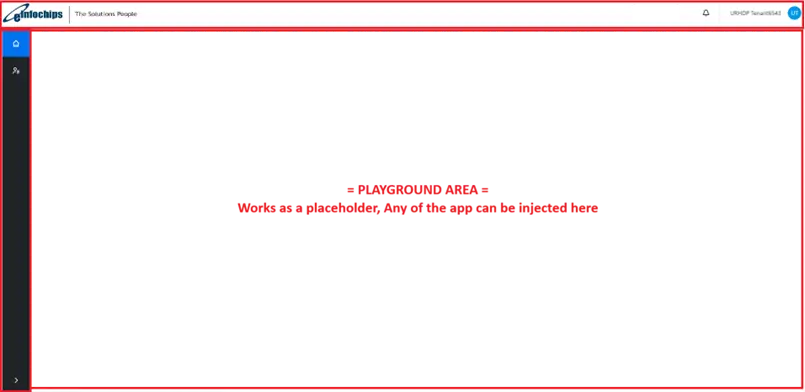
In micro-frontend architecture, the app shell acts as the foundation that brings together multiple micro frontends into a single, cohesive web application. Think of the app shell as the host application or main container that defines the overall layout, navigation, and shared UI components—such as headers, footers, and sidebars—while dynamically loading remote modules and micro frontend applications as needed.
Piral.IO Framework
- Architecture diagram
Piral: https://docs.piral.io/guidelines/tutorials/01-introduction
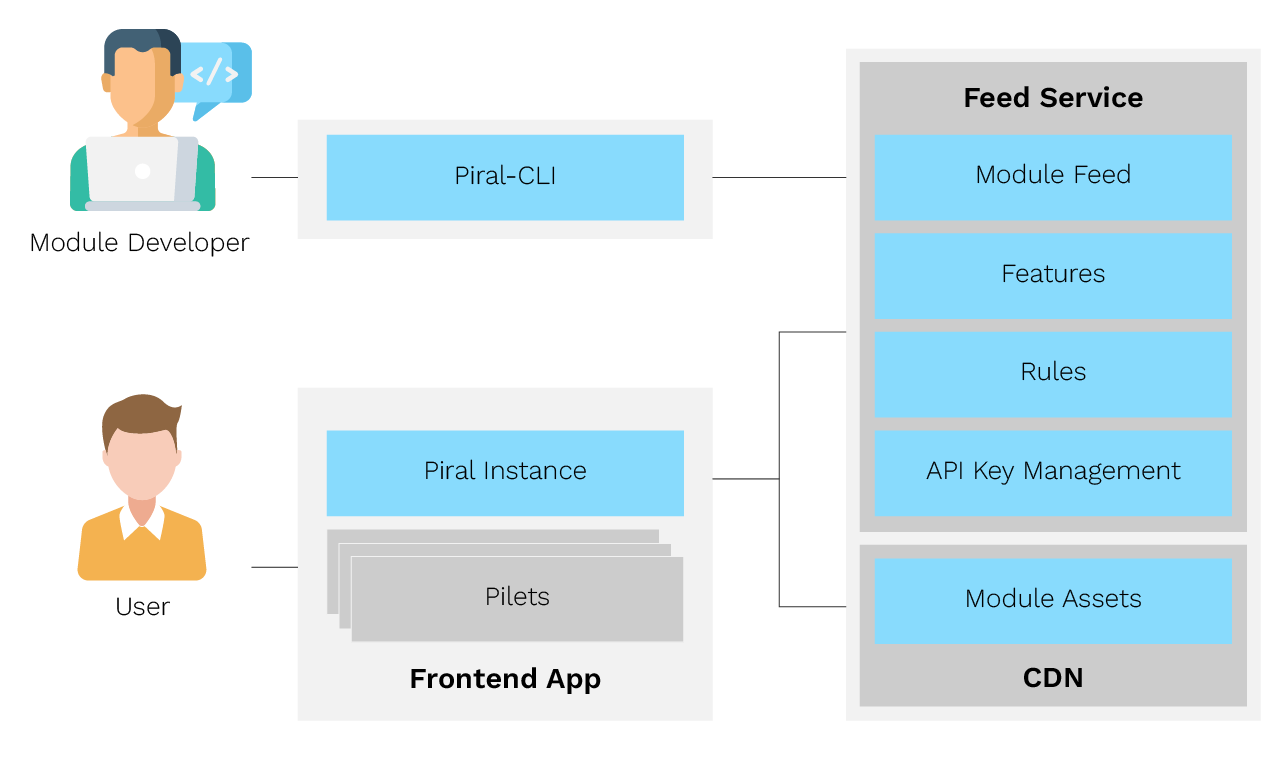
Piral.io provides a structured, extensible way to build micro-frontends. It uses two main building blocks: the Piral Instance (App-Shell) and the Pilets (Micro-Apps).
1. The Piral Instance (App-Shell)
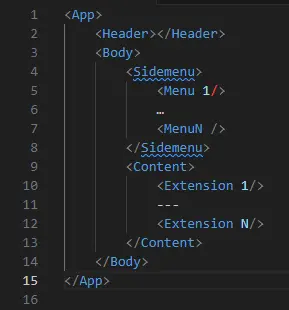
It defines the layout, navigation, and shared components. It also manages how micro-apps (Pilets) are loaded and where they appear.
2. Pilets (Micro-Apps)
- Each Pilet delivers independent functionality with its own UI, logic, and dependencies. They integrate into the app-shell dynamically.
- Each Pilet consumes the header, sidebar, footer, content area, etc. from the application shell.
Example Team and Technology Setup
| Team | App | Technology |
| Bengaluru Team | Pilet 1 (Webapp) | Angular |
| Ahmedabad Team | Pilet 2 (Webapp) | React |
| German Team | Application-Shell | It could be Angular/React/Vue |
Consider that the team is seated in Ahmedabad location and is developing Pilet 1 in Angular 18
On the other hand, consider that the team is seated in Bengaluru and is developing Pilet 2 in React 18
Together: App-Shell + Pilet 1 + Pilet 2 = Unified Application
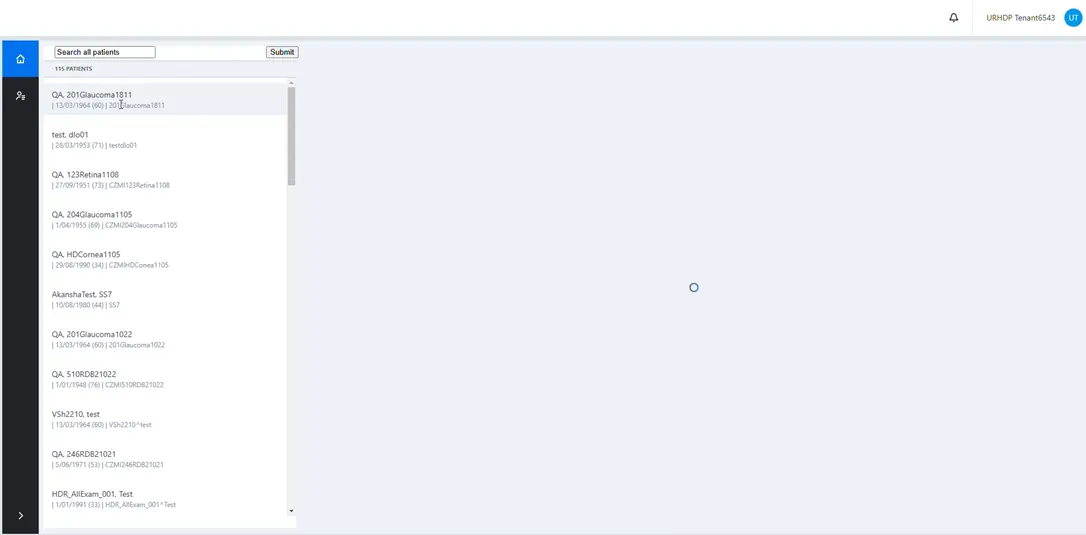
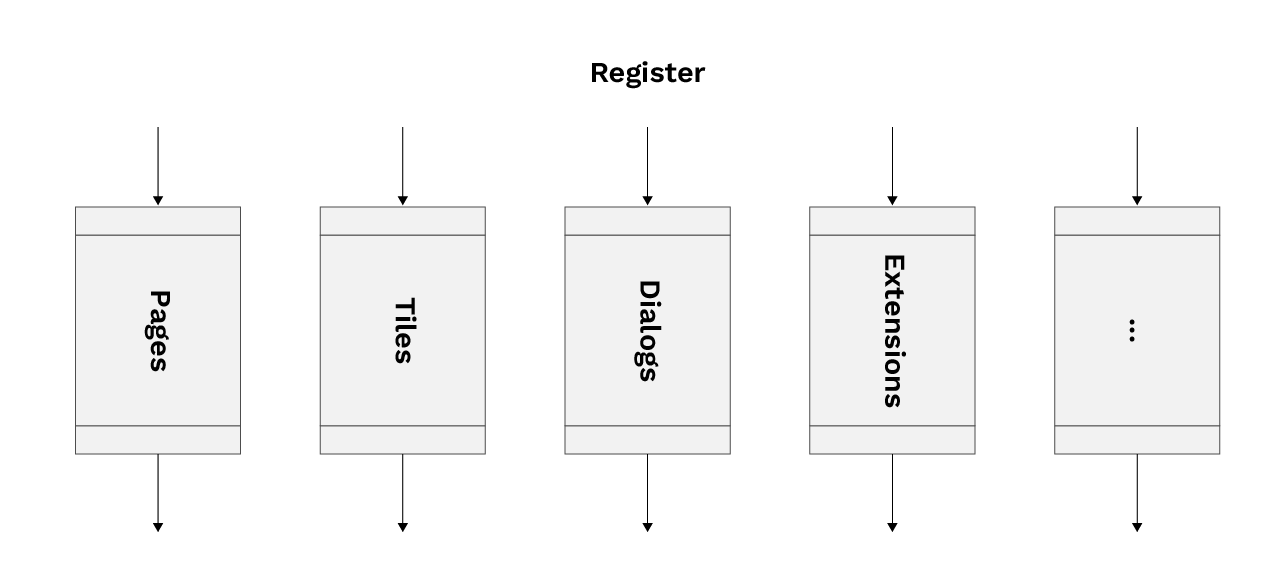
Using Piral functions in Pilet
There is great support from Piral.io, which provides a variety of functions which help build micro-applications very easily.
Pilets can communicate via Piral APIs for events, services, and shared states.
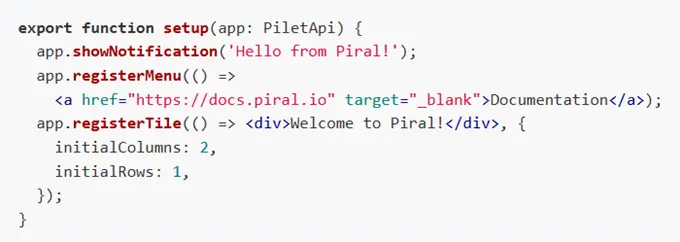
Communication between Pilets
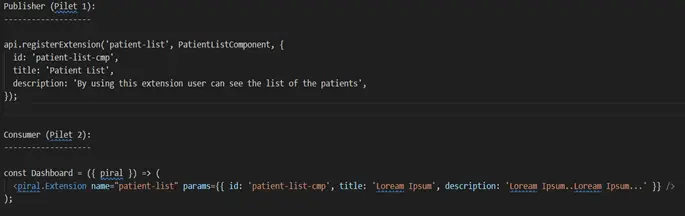
The Piral.io Advantage
✅ Seamless integration of modular UI components
✅ Built-in communication layers
✅ Framework-agnostic Pilets
✅ Clean architecture between host and modules
✅ Easy debugging and local development
✅ Production-ready deployment model
Conclusion
Micro-frontends help teams scale and maintain frontend applications efficiently. Piral.io enables modular, framework-agnostic development while ensuring interoperability and simplicity across teams. This is ideal for multi-team projects and long-term scalability.