
A car audio system (a car stereo) includes all the tools that are required in a vehicle to play music. It involves a head unit (stereo), speakers, amplifiers, subwoofers, and the DSP (optional). Modern systems comprise Bluetooth, touchscreen displays, and smartphone integration for streaming. This blog explores how a car audio system is connected with a data bus interface, how the digital signal processing (DSP) enhances the audio, the important points to consider while wiring a car audio system, some common car audio problems and how to fix them.
An Overview of Car Audio Systems
A car audio arrangement is a sound system that is installed in a vehicle, containing components like speakers, amplifiers, and source units (head units/stereos) to provide in-car entertainment and data. Leading brands like Kenwood and Sony offer a wide range of car audio system options. It is equipped to play music and other audio. Car audio systems support different audio file formats like MP3, WMA, AAC, WAV, FLAC, etc.
The MP3 format is a commonly used audio format. For example, some systems like the Epicenter can create enhanced bass response for a richer listening experience. When audio files are chosen for cars, it is important to check the bit rate (a higher bit rate delivers better sound quality), sampling frequency (like 44.1kHz, 48kHz), and file system compatibility (like FAT32), based on the car models. Many systems are compatible with iPods via USB, making it easy to access music libraries. Ensuring a proper fit and making the most of available space is crucial for optimal installation, especially in modern vehicles. Some systems use a single DIN chassis for a compact and versatile installation, suitable for various dash openings.
Today’s car audio systems are ready for advanced features and are designed for ease of install and use. Some systems allow you to add features or components, and compact designs help maximize space. Users will love the immersive world of sound these systems create, and artist information can be displayed on modern head units. Understanding your requirements and trusting reputable brands and stores is key to a satisfying experience.
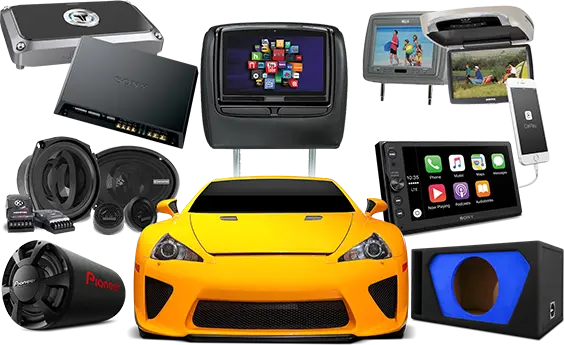
Fig. 1. Audio system into car [1]
Audio Flows in a Car
The unique audio flow system in a car includes the main mechanisms that work together to make the products a cohesive unit.
- The Head Unit (Stereo) is a source and initial signal processing tool. It receives the input from the radio tuner/stereo/CD player/digital media device (via Bluetooth). Then it sends low-level audio signals (electric signals) to the amplifier. Users can control basic functions such as power, volume, and playback directly from the interface with ease. The interface also allows users to select different audio sources or settings, making it user-friendly and adaptable. Some head units, like a DVD receiver, are versatile and ready for multimedia integration, providing entertainment for passengers during long journeys. Choosing the right brands for your head unit ensures quality and reliability.
Sometimes the head units also include video functionality. There are large LCD screens, and they are used as controls for the climate control system, the diagnostic system, the navigation system, and other vehicle specific systems including the audio system [3]. DVD receivers can provide video entertainment for passengers, making long trips more enjoyable.
- Digital Signal Processing (DSP) is used for signal optimization and customization. It is optional and if it is included, then the signal goes through it after leaving the head unit. It helps with managing the acoustic challenges in a car. It enhances the signal by adjusting equalization, time alignment, and crossovers. DSP can also help reduce the impact of road noise for a clearer listening experience.
- Amplifiers are used for signal amplification. It boosts a low-level signal from the head unit/DSP to drive the speakers. There are several types of amplifiers that are used like mono for subwoofers and multi-channels for powering multiple speakers. Amplifiers are categorized based on mono channel, 2 – channels, 3 – channels, 4 – channels, and multi-channel amplifiers. Installation of amplifiers may require specific wiring kits, and some systems are ready for additional features, allowing users to add new components with ease. Some brands offer versatile amplifiers that make it simple to add features or expand your system.
- Mono amplifiers are single-channel amplifiers and are used for powering subwoofers due to their high-power capability. The Epicenter is a product that can be added to enhance bass response in your car audio system.
- 2 – channel amplifiers can power two speakers (left and right channels) and are popular for enhancing the quality of front and rear speakers.
- 3 – channel amplifiers consist of two stereo and a mono channel for powering a subwoofer. It is less popular and best suited for a small setup like two doors of a trunk.
- 4 – channel amplifiers consist of four speakers – a set of front speakers and a set of rear speakers. They can be bridged to power two speakers and a subwoofer, providing more control and flexibility to a complete car audio system.
- Multi-channel amplifiers have more than four channels. These are 5- channels, 6- channels and 8 – channels models allowing for power multiple speakers, subwoofers, and even center channels for advanced setups.
- Crossovers are used for frequency filtering. A crossover divides the audio signals into different frequencies and sends them to other resources, like sending low frequencies to a subwoofer, and the high frequency to the tweeter.
- Speakers generate sound waves. The amplified and filtered audio signals go to the speaker, which converts electrical signals into sound waves. Speakers create sound by converting electrical signals into vibrations, which produce the audio you hear. Different speakers in cars manage different sound ranges.
Car Audio Systems with a Data Bus Interface
Modern vehicles often use advanced data bus interfaces to integrate car audio systems seamlessly. These systems are ready to add new features or components through the data bus, making upgrades and enhancements straightforward. Installation of such systems may require specific adapters or modules to ensure compatibility. The versatile nature of data bus interfaces allows for flexible integration of various audio components, supporting a wide range of user needs. Some features require digital commands to function properly, ensuring that the audio system delivers noise-free audio. Lastly, with the volume control and signal processing of an amplifier, manufacturers can use different calibration within an amplifier [2].
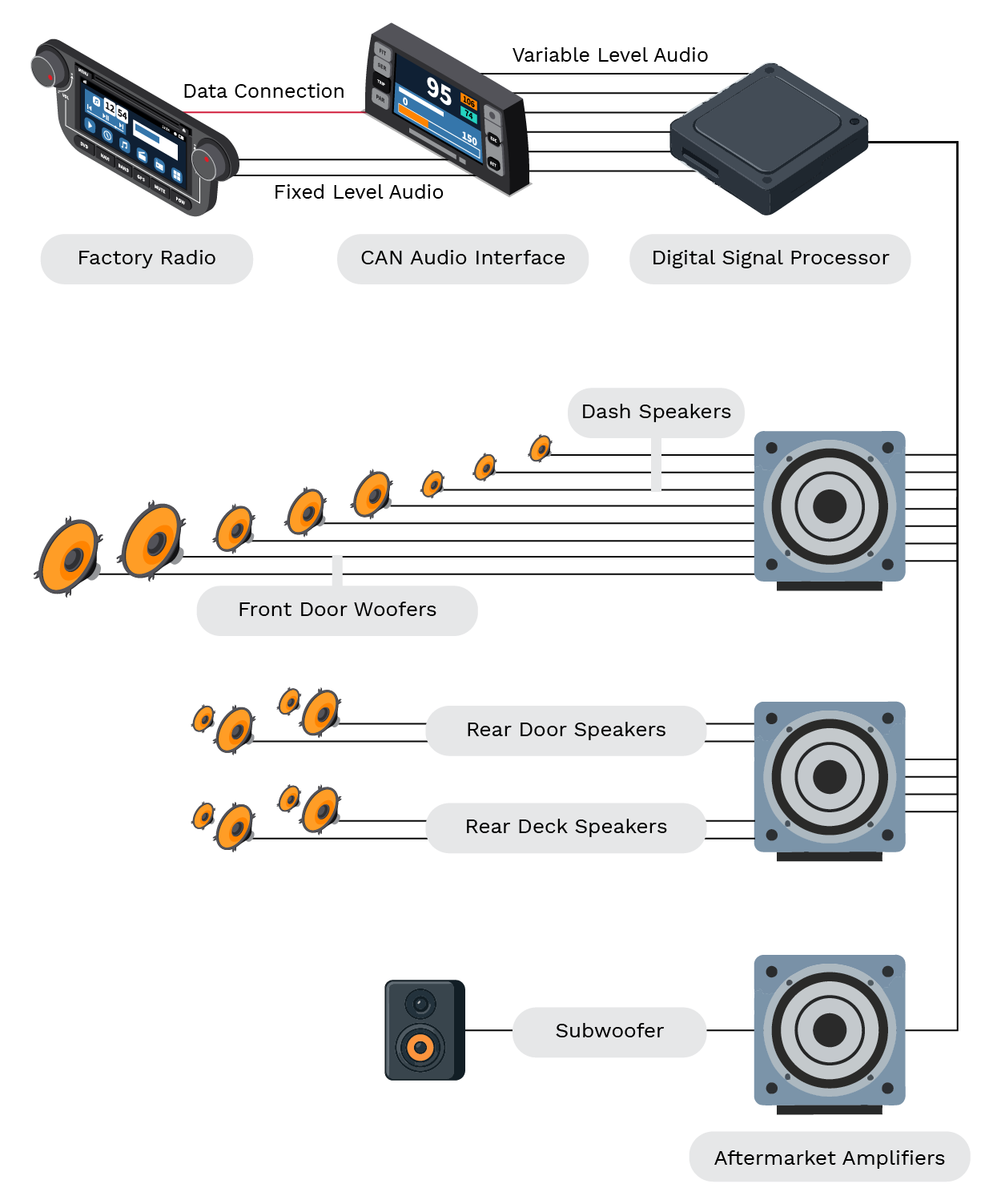
Fig. 6. An amplifier with data bus flow [2]
A mid or high-level audio system, the CAN bus is used to send digital commands from the source unit to the amplifier. Varied commands to change volume, make fader changes, load different presets depending on the vehicle conditions (like whether the roof is up or down), are sent by the CAN bus.
Smartphone Integration in Car Audio Systems
Smartphone integration has become a defining feature of modern car audio systems, transforming the way users interact with their vehicles and enjoy their favorite music on the road. With the widespread adoption of Android Auto and Apple CarPlay, drivers now have seamless access to a wide range of features that enhance both convenience and entertainment during every journey.
Android Auto and Apple CarPlay are designed to connect your smartphone directly to your car audio system, allowing you to control music, navigation, calls, and messages through the car’s display or voice commands. This integration means you can easily access your favorite music apps, playlists, and streaming services, ensuring that your audio experience is always tailored to your preferences. Whether you want to listen to the latest hits, catch up on podcasts, or revisit classic tracks, these platforms make it easy to find and play your music without distraction.
Beyond music playback, smartphone integration brings a host of additional features to car audio systems. Users can take advantage of real-time navigation with live traffic updates, send and receive messages hands-free, and even use voice assistants like Google Assistant or Siri to control various functions. This not only enhances the driving experience by keeping your focus on the road but also adds a layer of safety and convenience that traditional systems can’t match.
The ability to access and control so many aspects of your digital life through your car audio system has redefined what drivers expect from in-car entertainment. As more vehicles come equipped with Android Auto and Apple CarPlay compatibility, smartphone integration is quickly becoming a must-have feature for anyone looking to optimize their driving experience and enjoy high-quality audio on every trip.
The Impact of Digital Signal Processing (DSP) on Sound Quality in a Car
Car interiors pose distinctive challenges for achieving an ideal sound, with uneven speaker
Car interiors pose distinctive challenges for achieving an ideal sound, with uneven speaker location and reflective surfaces impacting the listening experience.
The need therefore is to choose the correct DSP for the car audio system which optimizes sound quality and meets audio system specifications. It is also important to check the signal processing capabilities of the DSP, such as audio quality, processing power, latency, and tuning features which one can adjust [4]. Some DSP systems are ready for immediate use and require minimal setup, making them accessible for users who want quick installation.
The DSP improves sound quality through time alignment by delaying the sound from the closer speakers, advanced equalization with multiple frequency bands, crossover management by ensuring that each speaker receives the optimal frequency range, speaker level calibration, noise reduction, and distortion elimination. So, the DSP needs to be tuned for an optimal sound. Advanced DSPs can create a custom sound environment tailored to the listener’s preferences. Some DSP features require specific hardware or software to function.
Start by setting the time alignment such that the listener listens to sound simultaneously and smoothly. EQ (Equalization) is used to set the tune of audio frequencies, optimizing the sound quality as per the listeners’ preferences. DSP can also help compensate for road noise by boosting certain frequencies, ensuring clearer audio while driving. Then crossover filters are used to correct frequencies that are then sent to the correct speakers, which improves the sound stage and audio clarity. The DSP continuously evaluates the audio setup, making subtle changes to achieve the best sound quality in car environments. For example, a user can select different DSP presets for various listening environments, such as “driver focus” or “concert hall,” to match their preferences. The ease of adjusting DSP settings through user-friendly interfaces allows users to quickly fine-tune their system for the best experience.
Advanced DSP includes digital audio processing algorithms which eliminate distortion and enhance audio clarity. It also makes wireless control with a car audio system through the digital device’s application.
Wiring a Car Audio System
Car audio wiring plays a significant role in the performance, consistency, and safety of the car’s system. Proper electric wiring ensures that the audio mechanisms function optimally, delivering high-quality sound. Planning the install process is crucial to ensure all components fit properly, and the wiring is routed efficiently.
Fig. 3. Diagram for wiring of car audio system [5]
Important points to consider while wiring a car audio system as [6]:
- Plan the wiring layout before starting the wiring of the car audio system. Draw a diagram of how all the components are installed and connected to avoid mistakes while connecting. Careful planning helps ensure each component will fit and simplifies the install process.
- Use high quality wires, connectors, and components to reduce signal loss, and provide a longer-lasting performance. Compact wiring kits can save space and make installation easier, especially in tight areas.
- Use the correct wire gauge for ground, power, and speaker connection which can be matched with the current demand for audio components. Some wiring kits are ready to use and require minimal preparation, making the install process faster.
- Solder connection and ground components as per need and ideally close to the component. When you add new components, you may require additional wiring or connectors to ensure proper integration.
- Arrange the power wires and signal cables in the opposite directions in the vehicles. Label each wire during installation for identification and its purpose. The ease of using labeled wiring kits that are designed to fit specific vehicle models can greatly simplify the process.
- Assess the whole audio system after wiring but before completing the assembly.
Common Car Audio Problems and Troubleshooting [6]
- Poor audio sound quality
- Check the speakers’ wire connections
- Ensure that power is reaching the components properly
- Check for faulty components
- System malfunctions and there is sudden power loss
- Check the car audio fuse
- Check for loose or bad wire connections
- Ensure proper grounding for the audio systems
- Bluetooth connection problems
- Clear old connections and reset the head unit
- Check the volume settings on both devices and pair
- Audio problems with the CD player
- Clean the CD player’s lens and CD
- Check if the CD is scratched
- Issue with audio system volume and sound levels
- Adjust volume settings and speaker balance
- Check power supply and wiring connections
- Software glitches
- Reset the system and check the owner’s manual to perform a reset on the head unit
- Update the software
Conclusion
Today’s car audio systems offer advanced features designed specifically for modern vehicles, providing seamless integration and enhanced technology. Car audio systems have grown from basic audio setups (including head unit, speakers, amplifiers) to high-fidelity setups (including a subwoofer, DSP, tweeters/crossovers, etc.) which significantly enhance the driving experience. You will love the immersive world of sound these systems provide, transforming every drive into a unique audio journey.+
Trust reputable brands and your local store for expert advice, quality products, and professional installation to ensure the best results for your car audio needs. Many systems are ready for future upgrades and integration, keeping your setup current as technology evolves. Know More: Automotive Infotainment System
References:
-
https://www.tintworld.com/services/automotive-services/audio-electronics/car-audio-video/
-
“Upgrading car audio system with data bus interface”- https://www.bestcaraudio.com/upgrading-car-audio-systems-with-data-bus-interfaces/
-
“Guide to understanding in – car audio technology” –https://www.supercheapauto.com.au/blog/technology/understanding-audio-tech.html#:~:text=They%20convert%20the%20electrical%20signal,%E2%80%9Cfull%2Drange%E2%80%9D%20speakers.
-
“Car Audio DSP Technology: Enhancing Sound Quality” –https://audiointensity.com/blogs/dsp/car-audio-dsp-technology-enhancing-sound-quality?srsltid=AfmBOoptZ0Xt_t1r4lFJ1yTB6nCF69KWEQ6tO2iZUrOoHkwBk84gh8iF
-
“Wiring to a car audio system” – https://wesbellwireandcable.com/blog/5-things-to-consider-when-wiring-a-car-audio-system/
-
“Common Car audio problems and how to fix it”-https://www.limitlesselectronics.com/common-car-audio-problems-and-how-to-fix-them-with-limitless-electronics/
-
“File format of music file used into car audio system” – https://www.sony-latin.com/en/electronics/support/accessories-car-marine-entertainment-accessories/articles/00008033