

An Overview
Quality is the key to the success of an enterprise. In the competitive business world today, businesses need to be in a position where their products and services are always able to meet customer expectations and adhere to legal requirements. In this regard, ISO 9001:2015, one of the most widely adopted international standards for Quality Management Systems (QMS), comes in handy, with over one million certificates issued to organizations in 189 countries.
Using ISO 9001:2015, companies can increase efficiency, and they can also continuously improve, and enhance their customer satisfaction. Big and small companies can gain tremendously in the long term by adopting this standard.
In this blog, we discuss step-by-step the basis, prerequisites, advantages, and implementation approaches of ISO 9001:2015.
ISO 9001 2015 gets easily aligned with other ISO management system standards like ISO 14001 and ISO 45001 because these ISO standards share similar principles and structure.
Core Principles of ISO 9001:2015
ISO 9001:2015 is based on the seven quality management principles according to ISO 9001:2015: customer focus, leadership, engagement of people, process approach, improvement, evidence-based decision making, and relationship management.
With Quality Management System (QMS), planning is important. This is Clause 6 of the ISO 9001:2015 is all about. A Quality Management System needs to have a plan in place. Companies have to analyze both their threats and opportunities through risk assessment. They need to consider the current circumstances and the future goals of the company from the perspective of interested parties and other stakeholders. This ensures that the Quality Management System achieves predetermined goals over time.
It is equally important to monitor the plan and check if everything is working in order. The top managers are responsible for setting goals that can be measured and timed. These goals should also match the company’s Quality Policy. This helps the company keep a track of both its performance and improvements.
Clause 7 of the ISO 9001:2015 defines the prerequisites of a Quality Management System. Here are some key things:
Customer Focus: Companies should prioritize their customers’ wants to earn their trust.
Leadership: Good leaders lead the teams in a cohesive manner towards the goal. Managers need to be committed to making the company better.
Employee Involvement: When employees from various levels in the company are involved in the process, the company works better.
Process Approach: A process-driven approach ensures smooth, consistent and efficient functioning.
Continual Improvement: Consistent and constant improvement across products, services, and process is a must. For example, a software company should update its app regularly to fix problems and add features based on user feedback.
Evidence-Based Decision Making: Decisions should be fact-based, using evidence and in line with the company’s long term and short-term goals.
Relationship Management: Establishing a harmonious relationship with the suppliers and stakeholders helps the company succeed and it creates value for everyone.
Following these principles ensures satisfied customers and builds trust. A Quality Management System helps companies create a culture of continuous improvement and achieve their goals.
ISO 9001:2015 Clauses and Certification Requirements
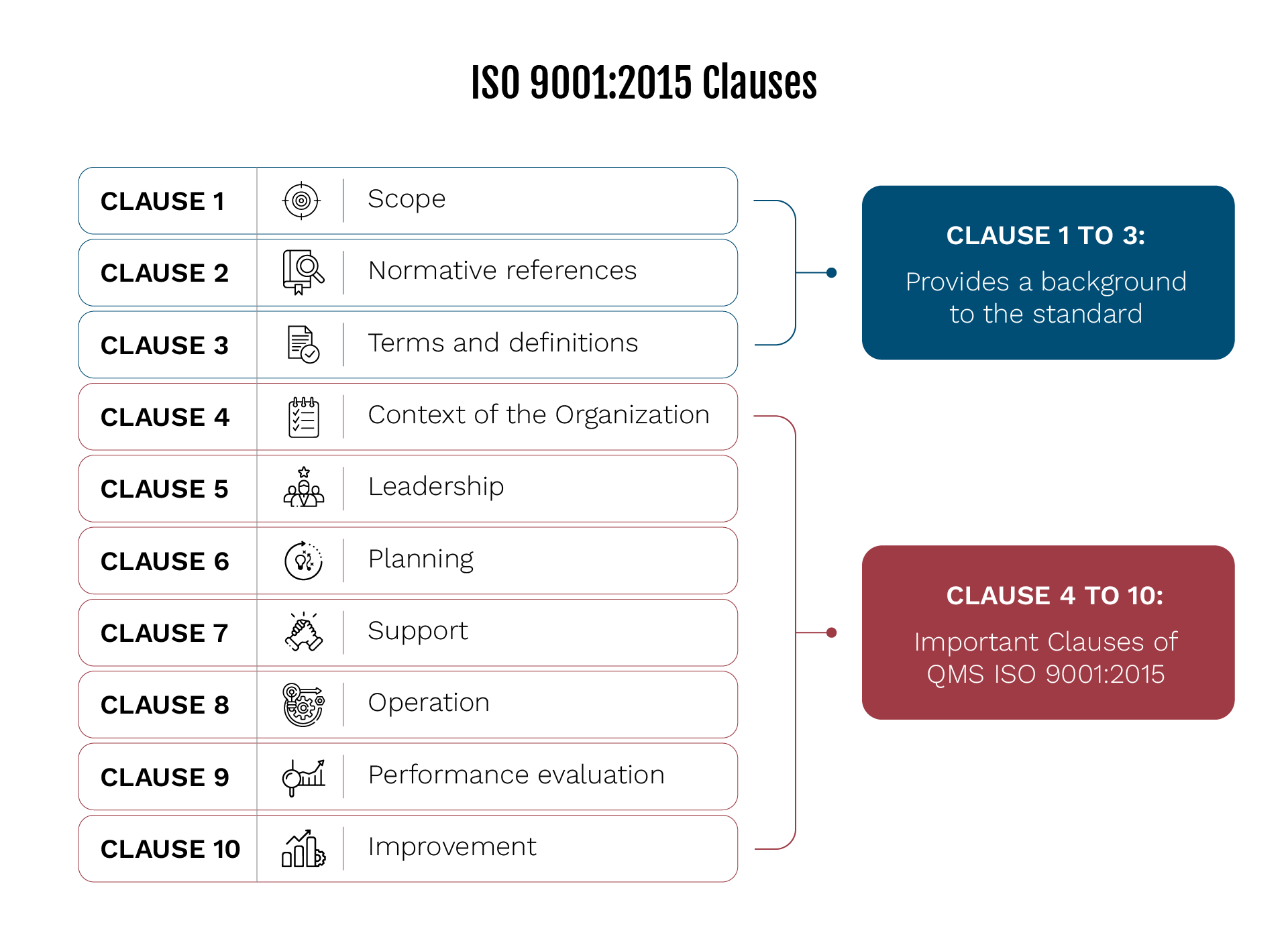
ISO 9001:2015 consists of ten clauses, of which the following requirement for mandatory certification is a part of the ten clauses of ISO 9001:2015:
Clause 4: Organizational Background
We at eInfochips are committed to delivering solutions in Silicon Engineering, Embedded Systems and Software Engineering. We want to make sure that the quality of our work is the best it can be. Our goal is to work with our customers as partners and do better than they expect us to. We constantly work on our Quality Management System at einfochips to achieve excellence, in Silicon Engineering, Embedded Systems and Software Engineering.
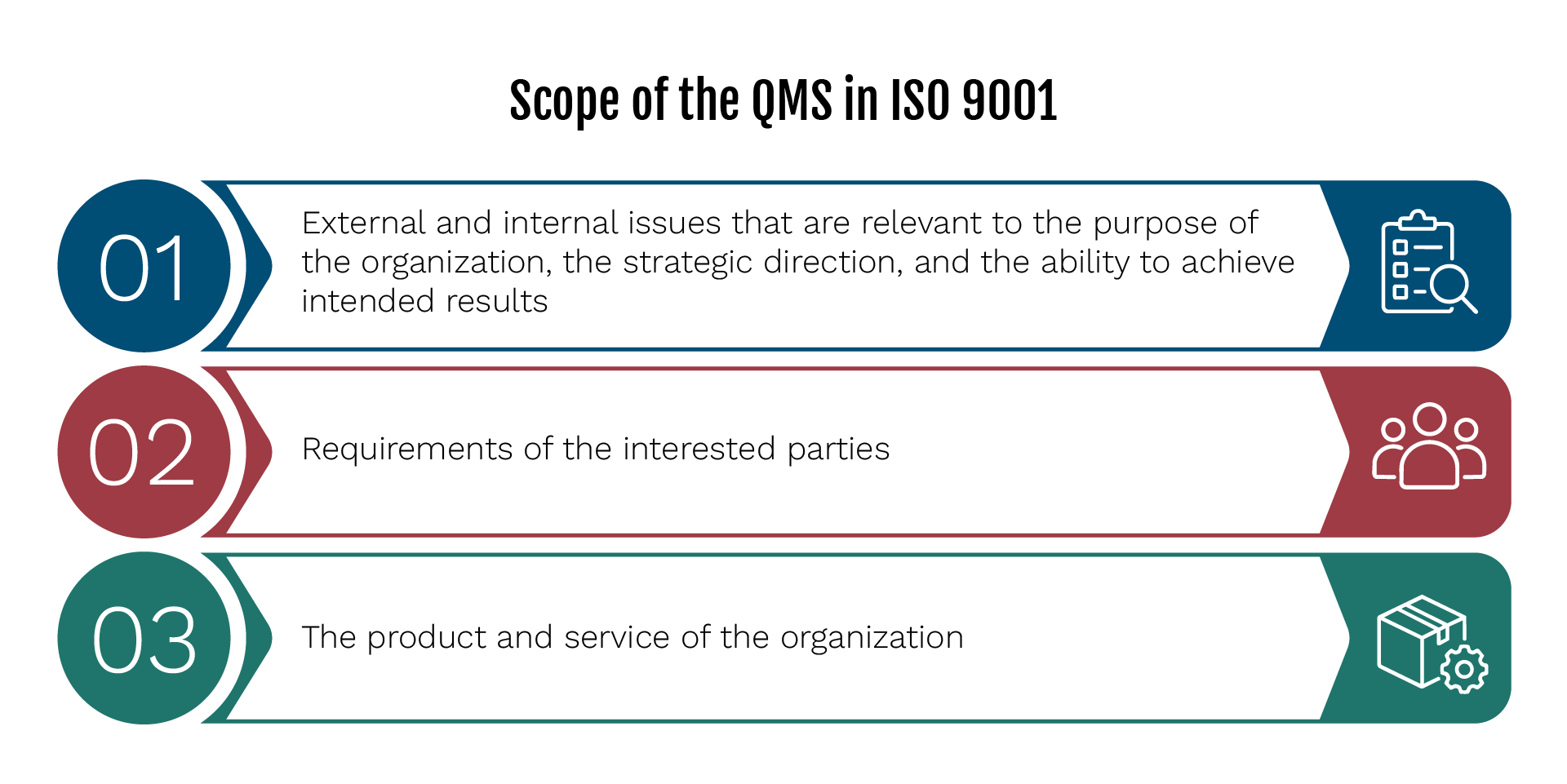
Considerations for determining the scope of the QMS in ISO 9001:
Clause 5: Leadership
QMS implementation is the strategic decision that shows commitment to the development and application of the QMS and continual improvement of its effectiveness.
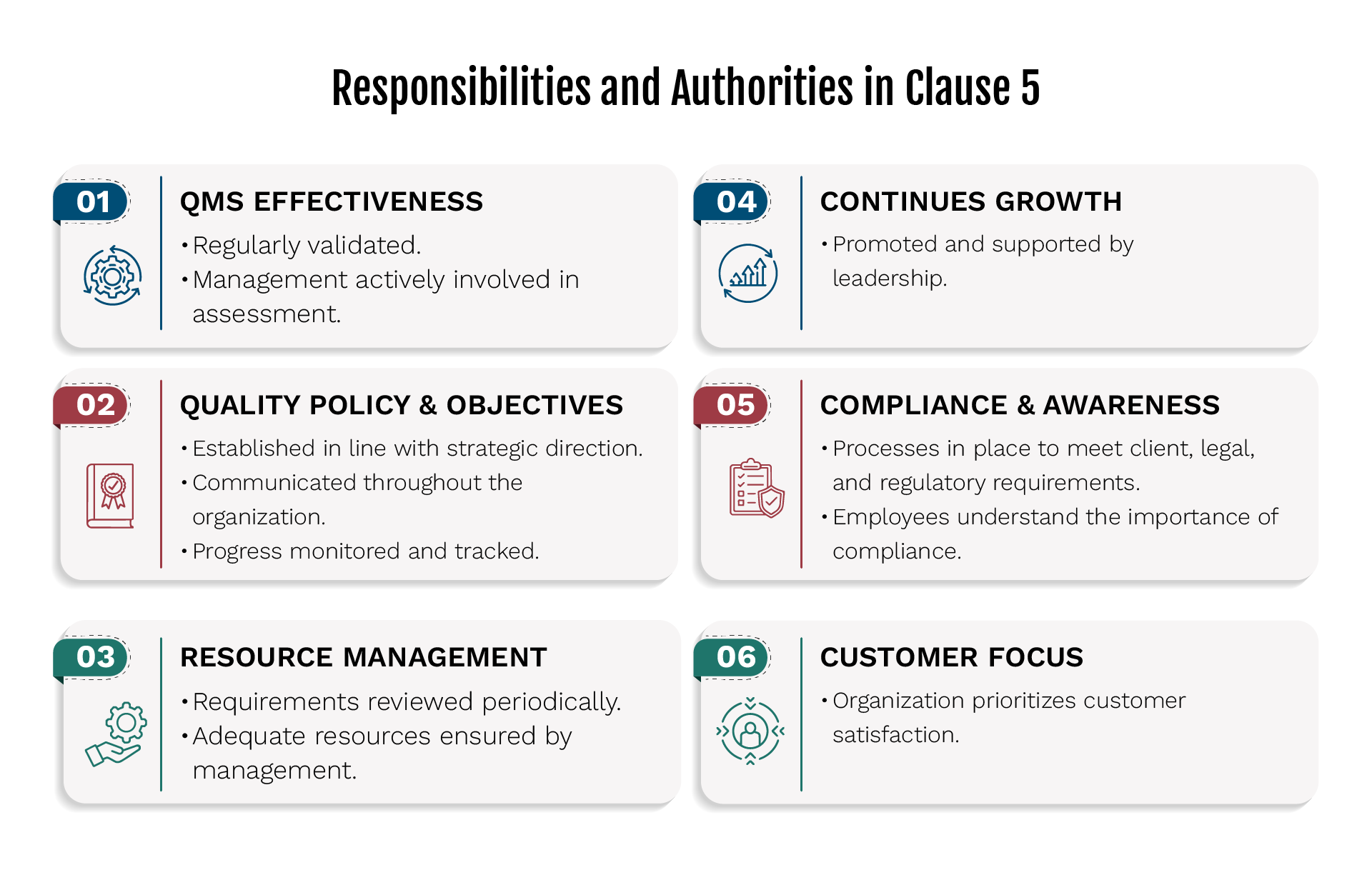
The responsibilities and authorities must be systematically defined and communicated to all organizational levels, especially in specific situations such as seasonal fluctuation of labor force, emergency situations, etc.
Clause 6: Planning
The ISO 9001:2015 standard tells us that planning is very important for the Quality Management System.
A clear understanding of threats and opportunities, current circumstances and stakeholder expectations is essential to ensure that the Quality Management System works efficiently.
Measurable goals have to be matched against timelines and the Quality Policy.
This helps identify the gaps and areas for improvement.
Clause 7: Support
The ISO 9001:2015 standard defines what is required to support our Quality Management System. It is imperative to have:
- People: The number of people required, their specific skillsets and level of skills
- Infrastructure: Infrastructure like buildings and equipment required to support the processes
- Environment: A conducive working environment that enables and empowers the employees achieve the quality goals
- Monitoring and Measuring Resources: Tools and methods to check and measure our resources to ensure that the quality standards are met
- Documentation: Prerequisite documents to keep our quality management system running that also contain the quality policy and goals.
The Quality Management System is the blueprint to ensure that the customers can be provided with services or products on time and of the best possible quality.
Clause 8: Operation Businesses
Clause 8 of the ISO 9001:2015 standard provides the guidelines for implementation of an effective quality management system (QMS) through the use of operating processes.
Operating processes assist organizations by ensuring that all products and services provided to customers consistently meet customer requirements and expectations. The major topics involved in Clause 8 of the ISO 9001:2015 standard include:
- Quality Planning: An organization identifies, defines and documents its operational requirements, quality objectives, and acceptance criteria.
- Understanding and Explaining Customer Requirements: An organization must effectively communicate with its customers to whether to identify their requirements and expectations or while providing products and services.
- Operational Control: Continuous management of production and service delivery processes to ensure efficiency, quality, and risk compliance is a must.
- Continuous Improvement: An organization should periodically review and revise its operating processes based on the results of valid and accurate data collected to demonstrate continuous improvement.
By mastering all components of Clause 8 in the ISO 9001:2015 standard, an organization can establish a solid operational foundation from which to continue meeting the needs of customers and
developing operational excellence.
Clause 9: Performance Evaluation
Clause 9 of ISO 9001:2015 pertains to Performance Evaluation which is a necessary step in evaluating the performance of an organization’s Quality Management System (QMS).
The following items must be included within Clause 9:
- Spatial Analysis and performance measures to determine the frequency of various activities associated with monitoring and measuring needs as defined
- Internal Audits as a means of evaluating conformity and effectiveness of the QMS
Senior Management should conduct reviews of the QMS at planned intervals, to ensure that the QMS stays relevant and effective.
Organizations should gather and analyze information on customer satisfaction. By implementing a solid Clause 9 framework, organizations will be able to eliminate any repetitive mistakes across multiple sites and departments, and use data and structured feedback in making sound quality decisions.
Clause 10: Improvement
Clause 10 of the ISO 9001 standard addresses the continual enhancement of the organization’s quality management system. Key components of Clause 10 include:
- Continual Improvement: Organizations are encouraged to seek opportunities for ongoing enhancements to their processes and results.
- Management of Nonconformity: The clause describes the various methods that organizations can utilize to respond to nonconformity and implementing corrective actions to prevent future instances of nonconformity.
- Customer Satisfaction: All improvement activities that focus on providing greater customer satisfaction through a preemptive response to future customer needs.
- Proactive Improvement: Organizations should seek out avenues to improve and demonstrate to customers that they have taken action to satisfy them.
Organizations that create a culture oriented towards improvement are able to respond to market demands by adhering to the above guidelines.
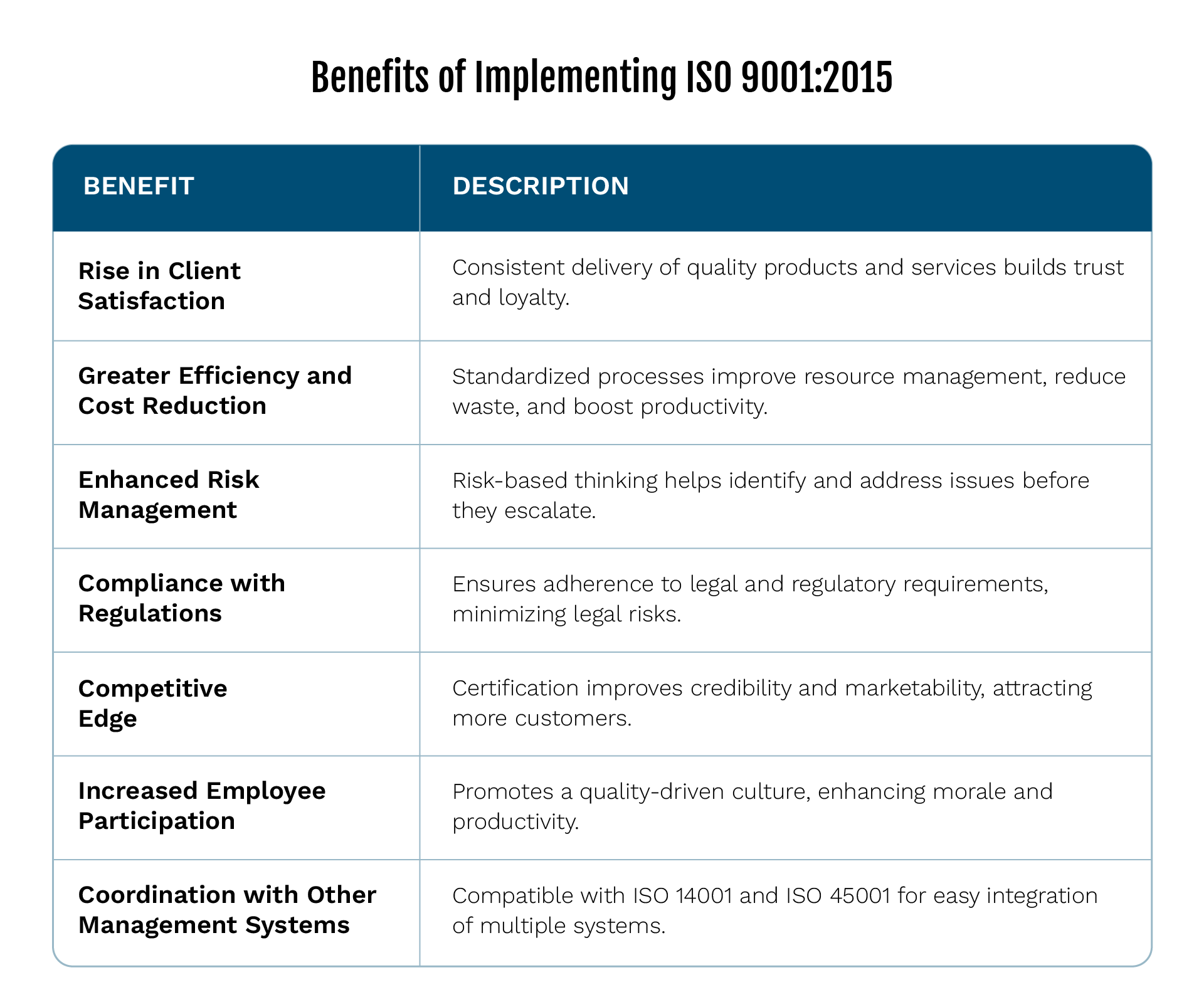
Benefits of Implementing ISO 9001:2015
ISO 9001:2015 implementation has numerous benefits, some of which are:
 Case Study: How einfochips achieved ISO 9001:2015 certification and transformed its operations
Company: eInfochips Pvt Ltd.
Project: Development of a Windows application for tuning audio technology for built-in speakers and headphones.
Team Size: 8 developers, 2 QA engineers, 1 Scrum Master, 1 Product Owner
Framework used: Agile (Scrum)
Sprints: 2-week iterations
Ceremonies: Daily stand-ups, sprint planning, story writing, product backlog, reviews, retrospectives
Artifacts: User guide, code review checklist, test cases, testcase review checklist, DoD checklist, build tracking page, weekly status report, internal metrics sheet
The case study below helps illustrate how ISO 9001:2015 can be integrated with project management practices.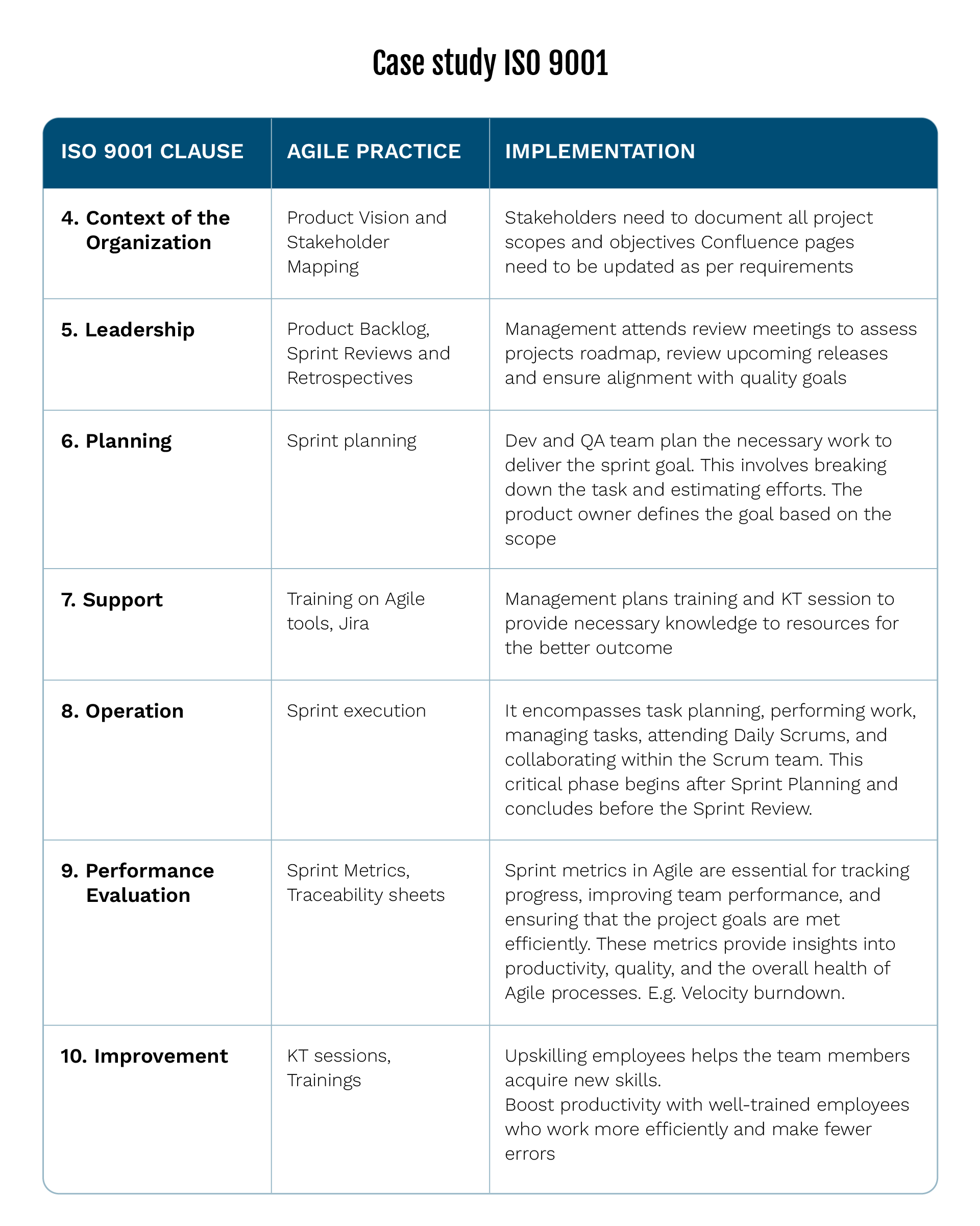
Common mistakes in ISO 9001implementation
ISO 9001 implementations will fail if they are considered secondary activities. Below are some common reasons for failure together with examples.
1. Treating it as more paperwork
Companies may focus more on generating many documents rather than using them.
Often a company creates complicated procedures that are stored in a folder, that become obsolete and are not updated. Meanwhile, workers still perform their duties without referring to those procedures.
2. Poor Training and Awareness
Employees are only provided with “what to do” and not “why to do it”.
Training programs are designed to ensure completion but not competence. This means the training only aims to make sure that the workers have signed an attendance sheet, but it does not guarantee that they understand what they were taught.
3. Inefficient Internal Audits
Internal audits are supposed to serve as “rehearsals for excellence” and provide the chance for companies to identify weaknesses in the system before customers notice them.
Internal audits are conducted as “police investigations” and “fault-finding missions”. As a result, employees would try to cover up their mistakes instead of reporting them.
Transition of ISO 9001: From 2015 to 2026- The Impact of Change
The ISO 9001:2026 new edition is expected to introduce key changes to the 2015 model, including digital technologies like AI and IoT in the quality process and making quality culture an auditable standard for leadership. Further, climate risks are considered in the context of the organization, alongside environmental impact, without linking them to risk management and strategic opportunities. Lastly, the new edition emphasizes organizational resilience in maintaining quality during unforeseen global events.
Organizations should prepare early for new standards and broader new quality management standards updates.
Transition Timeline
The final draft of the ISO 9001:2026 is expected to be published at the end of 2026. The current ISO 9001:2015 certification organizations will be required to go through a transition period of about three years (by the end of 2029).
Conclusion
We at eInfochips apply strategic solutions to enable businesses to enhance quality, productivity, and long-term achievement. As the only standard in the ISO 9000 family that organizations can certify against, ISO 9001:2015 helps companies minimize risk, enhance customer satisfaction, and achieve a competitive edge in the worldwide marketplace. Implementation should be guided by the organization’s objectives, needs, products, and services, and is often structured around the plan-do-check-act cycle for continual improvement. To begin the ISO 9001:2015 certification journey, design and build the QMS, deploy it, control and measure its effectiveness, then review and improve it based on audit results.
Frequently Asked Questions
1. Explain what ISO 9001:2015 is. Is it useful for businesses?
ISO 9001:2015 is a Quality Management System that helps enterprises provide consistent quality in their goods/services that meet clients’ needs and comply with all regulatory standards. Besides, adopting this standard offers benefits such as greater efficiency, reduced risk of errors, enhanced customer loyalty, and ongoing improvement.
2. Would an SME be able to take advantage of ISO 9001:2015?
Certainly not! One more myth concerning ISO 9001:2015 is that it is relevant only for big companies. However, organizations of any size may follow this standard’s requirements. What is more, the standard’s basic provisions can be tailored to a specific industry and the enterprise’s size.
3. What are the advantages of using ISO 9001:2015?
There are various advantages of ISO 9001:2015 in the organizational environment, including efficiency, risk management, enhanced customer satisfaction, reduced waste, and regulatory compliance. In addition to these, adopting ISO 9001:2015 offers other benefits, including improved company reputation and competitive advantage.
4. How much time will be required to become certified under ISO 9001:2015?
The required time depends on the organization’s size and its readiness for the implementation process. In general, some organizations need only a couple of months, while others require six months or even one year. It is necessary to stress that the certification process should not be rushed, but rather focused on creating a robust process.