

Cyber Threat Hunting: An Overview
Threat hunting, frequently referred to as cyberthreat hunting, is a proactive method for proactively searching for prior undiscovered or unsettled risks, such as cyber threats and cybersecurity threats, within the organization’s network.
Threat hunting is a continual cybersecurity approach which incorporates digital forensics and incident response tactics to recognize undiscovered, ongoing, and unknown threats inside the networks of an organization. The primary goal of hazard hunting is to detect any potential threats or incidents before they can impact the organization. Cyber threat hunters add an individual aspect to the company’s protection by supplementing automated technologies and advanced security systems.
There must be continuous review of system logs from the network, the Cloud, and the endpoint systems for indicators of compromise (IoCs), threat actor techniques, methods, and procedures (TTPs), and advanced persistent threats (APTs) that circumvent the existing security system. These reviews help detect malicious activity and potential threats that may not be visible through automated means.
The threat hunting process is a structured approach involving specific steps and methodologies to actively search for and mitigate hidden threats. A dedicated threat hunting team uses various threat hunting methodologies to ensure the best threat hunting fit within the organization’s overall security strategy.
Threat hunting helps improve the organization’s security posture by identifying security gaps and addressing unknown threats and cybersecurity threats. It also protects sensitive data and the integrity of the organization’s systems from cyber threats.
The Threat Hunting Methodology
- Develop a Hypothesis
Threat hunters produce a hypothesis on perceived threats or vulnerabilities to their respective organization’s environment by leveraging threat scenarios, threat modeling, and information from various threat intelligence sources and threat intelligence feeds. This process is informed by current threat intelligence, a cryptic threat actor’s TTP(s), anomalous behaviors, or an action that could be a disparate activity from baseline measurement. They should also consider insider threats and apply situational threat hunting to focus on specific assets or entities at higher risk. Threat hunters should consider their background, proficiency, and creative problem-solving capabilities to develop a threat proposition and outline it for exploration. - Begin the Investigation
During an inquiry, a threat hunter may use sophisticated and historical data sets generated by threat hunting technologies like SIEM, MDR, and User Entity Behaviour Analytics, as well as automated tools, automated security tools, data analytics, and endpoint detection solutions. These tools help identify patterns and identify potential threats, including undetected threats and new threats that may have bypassed initial defenses. The inquiry will continue until the conjecture is validated, irregularities are discovered, or the theory is proven to be harmless. - Discover New Patterns
When irregularities or evil conduct are identified, the next stage is to take an immediate and powerful response. This may involve analyzing threat scenarios and utilizing extended detection capabilities to further understand the context. Actions may include terminating users, blocking IP addresses, installing updates for security, modifying network settings, updating authorization permissions, or implementing new identification criteria. As the security teams try to address network assaults proactively, they will unintentionally understand the threat actors’ techniques and ways to mitigate these risks in future incidents. - Respond, Enrich, and Automate
The job of threat hunting is endless since hackers keep developing and generating unique risks to networks. Cyber threat hunting should be an ongoing routine in any organization, supplemented by security automation to streamline detection and response. The process should also focus on improving security controls and security measures to mitigate threats and prevent future attacks, alongside the automating detection of risk technologies and the security team’s current threat identification and response processes.
The Threat Hunting Model and Threat Intelligence
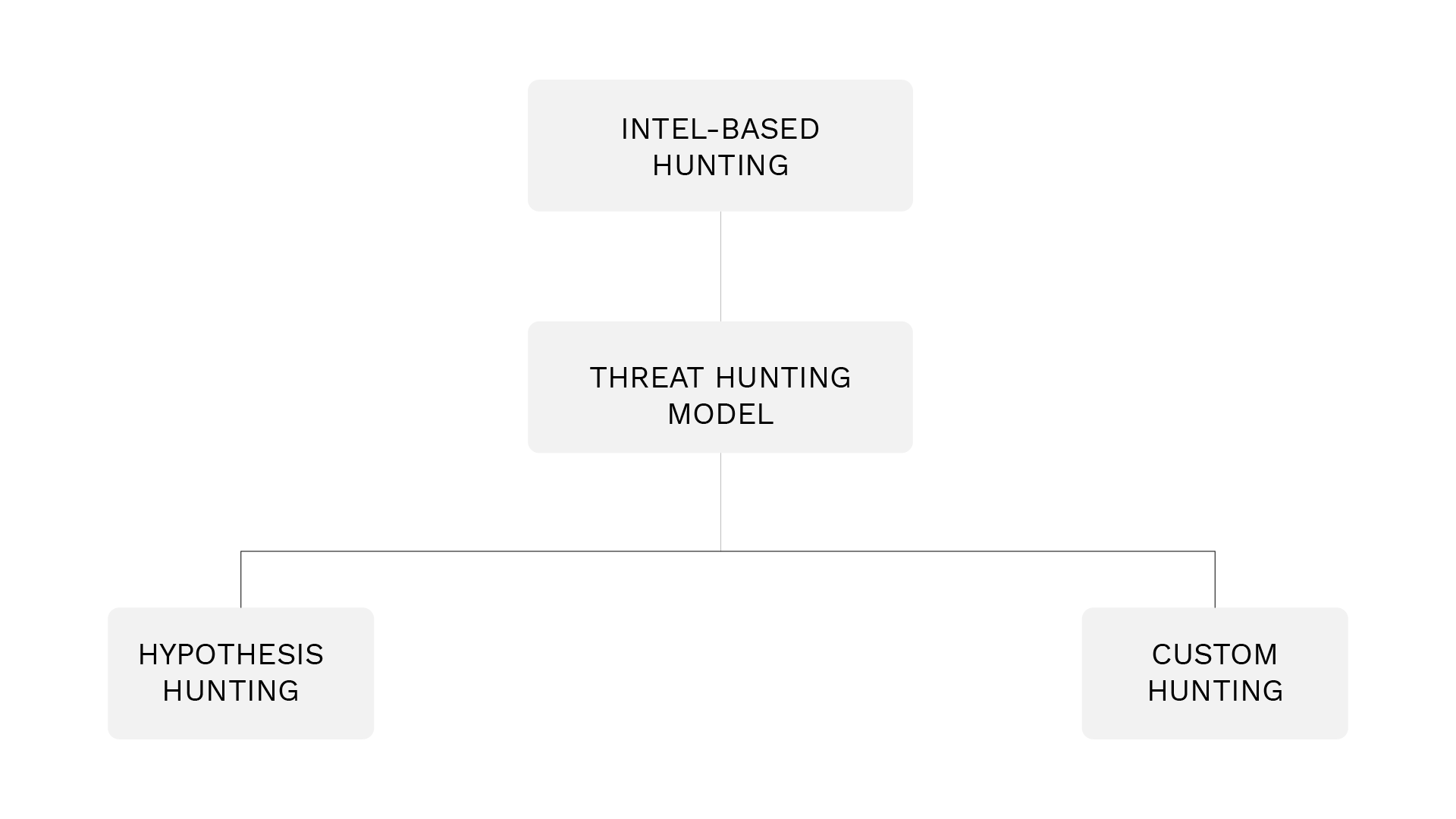
These models represent different threat hunting methodologies used by organizations to proactively identify and investigate hidden threats.
- Intel-Based Hunting|
Intel-based hunting is a response hunting approach which employs indications of compromise (IoCs) obtained from intelligence about threat sources. Following this, searching is limited to specific parameters set by the SIEM and threat intelligence.Intel-based searches might rely on indications of compromise (IoCs), hash values, IP addresses, domain names, networks, or host artefacts provided by intelligence sharing services such as computer emergency response teams (CERTs). An automatic alert generated by one of these systems can be transmitted to the SIEM as structured threat information expression (STIX) or trustworthy automated exchange of intelligence information (TAXII). Once the SIEM has generated an alarm based on an IoC, the threat hunter can study malicious conduct before and after the warning to identify any breaches in the surrounding environment. Threat intelligence feeds and threat intelligence sources play a crucial role in this model by providing up-to-date data and indicators that inform and drive the hunting process. - Hypothesis Hunting
Hypothesis hunting is a proactive hunting strategy that uses a threat hunting library. It uses the MITRE ATTACK technique and global detection playbooks to identify advanced persistent threat groups and malware attacks.Hypothesis-based hunts rely on the attackers’ IoAs and TTPs. The hunter identifies malicious actors by assessing the environment, domain, and attack behaviors utilized to generate an assumption in line with the MITRE approach. Once the conduct has been identified, the threat hunter uses patterns of activity to detect, categories, and isolate the danger. This allows the hunter to predict and remove the dangerous actors before they can damage the area. - Custom Hunting
Custom hunting relies on situational awareness and industry-specific hunting methods. It detects abnormalities in SIEM and EDR tools and is fully customizable to meet the needs of each customer.Custom or situational searches are either based on client requests or are conducted proactively in response to situations such as geopolitical concerns and targeted attacks. These hunting activities might make use of both intelligence and hypothesis-based hunting models, as well as IoA and IoC information.Organizations can also leverage a threat hunting service to access specialized expertise, round-the-clock monitoring, and advanced resources to implement these threat hunting methodologies effectively.
Types of Threat Hunting for Advanced Persistent Threats
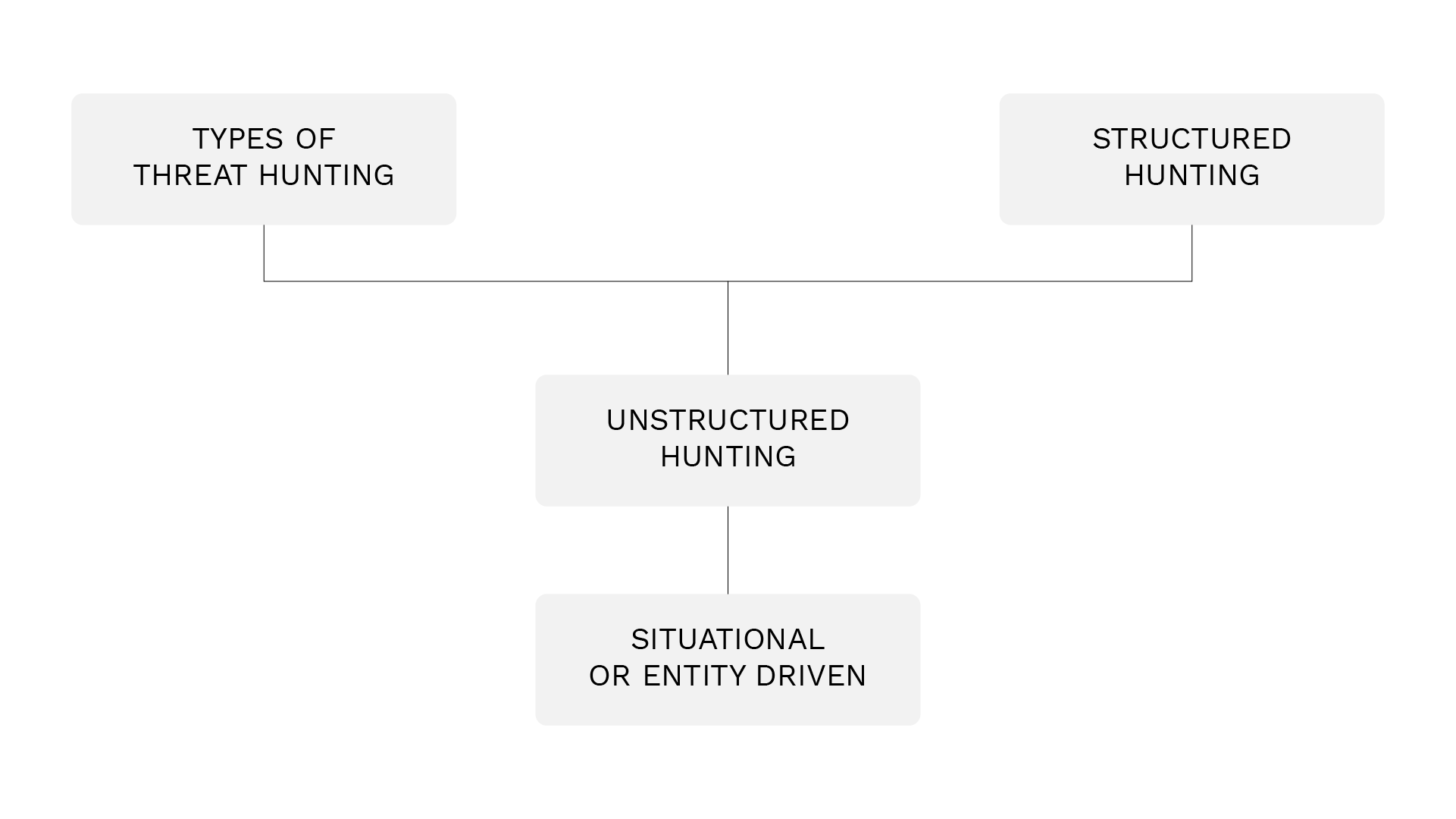
- Structured Hunting
A structured search is based on an attacker’s indication of attack (IoA) and techniques, methods, and procedures (TTPs). All hunts are synchronized and focused on the threat actor’s TTPs. As a result, the hunter can frequently detect a risky actor before the attacker does environmental damage. This hunting type employs the MITRE Adversary Tactics Techniques and Common Knowledge (ATTACK) framework (link is external to IBM.com), which includes both pre-ATTACK and enterprise frameworks. Structured hunting often utilizes threat modeling to map out attacker techniques and develop threat scenarios, guiding the hunting process by predicting and detecting adversary behaviors. - Unstructured Hunting
An unstructured search begins with a trigger, one of the several symptoms of compromise. This trigger usually prompts a hunter to check for pre- and post-detection patterns. The hunter can direct their approach by examining as far back as the data retention and previous linked offenses allow. - Situational or Entity Driven
This approach, also known as situational threat hunting, is based on a situational hypothesis derived from an organization’s internal risk assessment, or a trend and vulnerability analysis tailored to its IT environment. Situational threat hunting focuses on cybersecurity efforts on specific assets, personnel, or data that are deemed most vulnerable or at highest risk, based on threat assessments or current organizational priorities. Entity-oriented leads are generated from crowd-sourced attack data, which, when analyzed, exposes the most recent TTPs used in modern cyber-attacks. A risk hunter might seek these specific behaviors in their environment.
Security Information and Event Management
Security Information and Event Management (SIEM) plays a pivotal role in strengthening an organization’s cybersecurity posture, serving as a central hub for proactive threat hunting and the detection of advanced persistent threats. SIEM systems aggregate and correlate security information from a wide array of sources—including endpoints, network devices, cloud services, and applications—enabling comprehensive event management and real-time monitoring of potential security threats.
By leveraging advanced technologies such as machine learning and entity behavior analytics, SIEM platforms empower threat hunters to identify hidden threats and detect sophisticated threats that may evade conventional security tools. These intelligent analytics help security teams recognize patterns of potentially malicious behavior, flagging anomalies that could indicate the presence of advanced threat actors or previously unknown attack vectors.
For threat hunters, SIEM provides a rich environment for proactive threat hunting, offering the ability to sift through vast amounts of security data to uncover subtle indicators of compromise. This capability is essential for identifying and responding to potential security threats before they escalate into full-scale security incidents. By integrating SIEM into their detection and response strategies, organizations can enhance their ability to uncover hidden threats, improve situational awareness, and stay ahead of emerging threats in an ever-evolving threat landscape.
Threat Hunting Tools
Cyber threat hunters rely on a variety of cyber threat hunting tools, such as MDR, SIEM, and security analytics platforms, as essential resources to guide their searches. These cyber threat hunting tools, along with other resources like packer analyzers, enable network-based searches and proactive threat detection. SIEM and MDR solutions are integral components of an organization’s security systems, requiring the integration of all essential sources and technologies in an environment. This relationship ensures that IoA and IoC tips provide proper hunting instructions.
- Managed Detection and Response (MDR)
MDR identifies and responds to advanced attacks by combining threat intelligence and proactive threat hunting. As a key part of security systems, this type of security solution can help decrease the dwell time of the attack, while also allowing for an element of speed and decisiveness in responding to attacks on the network. - SIEM
Security information and event management (SIEM), which combines SIEM and SEM, provides real-time monitoring and analysis of events, as well as tracking and logging of security data. As a foundational element of security systems, SIEM can detect severe behavior abnormalities and other irregularities, providing valuable clues for further investigation. - Security Analytics
Security analytics attempts to provide more in-depth insights into the security data than traditional SIEM solutions provide. By combining the massive data created by security technologies with quicker, more intelligent, and more integrated machine learning and AI, security analytics leverages data analytics to speed up threat investigations by delivering detailed observability data for cyberthreat hunting.Challenges Cyber threat hunting is an active and hands-on process of learning and reacting to threats; many companies find this security strategy challenging. For a cyber threat hunting program to be effective, an organization must ensure that the following three components work together: - Expert Threat Hunters
The human capital engaged in cyber threat hunting is undoubtedly the most crucial factor. A dedicated threat hunting team must be threat landscape specialists who can immediately recognize the warning indicators of complex assaults. - Comprehensive Data
To properly detect threats, hunters require access to a wide range of data (both current and historical) that provides insight into a whole infrastructure. Without this aggregated data, threat hunters will not be able to build educated threat hypotheses based on your endpoints, network, or cloud infrastructure. - Timely threat information
Cyber threat hunters must always have access to the latest threat data that they can utilize to match current cyberattack trends with the internal data. Not having the most recent, specific, or trending threats will hinder the efforts of the threat hunters from analyzing potential network security risks effectively.
Additionally, security automation is increasingly important in supporting the threat hunting process, helping the threat hunting team streamline detection, monitoring, and response to threats.